Unknown Swedish Girl. c.1890–1900.
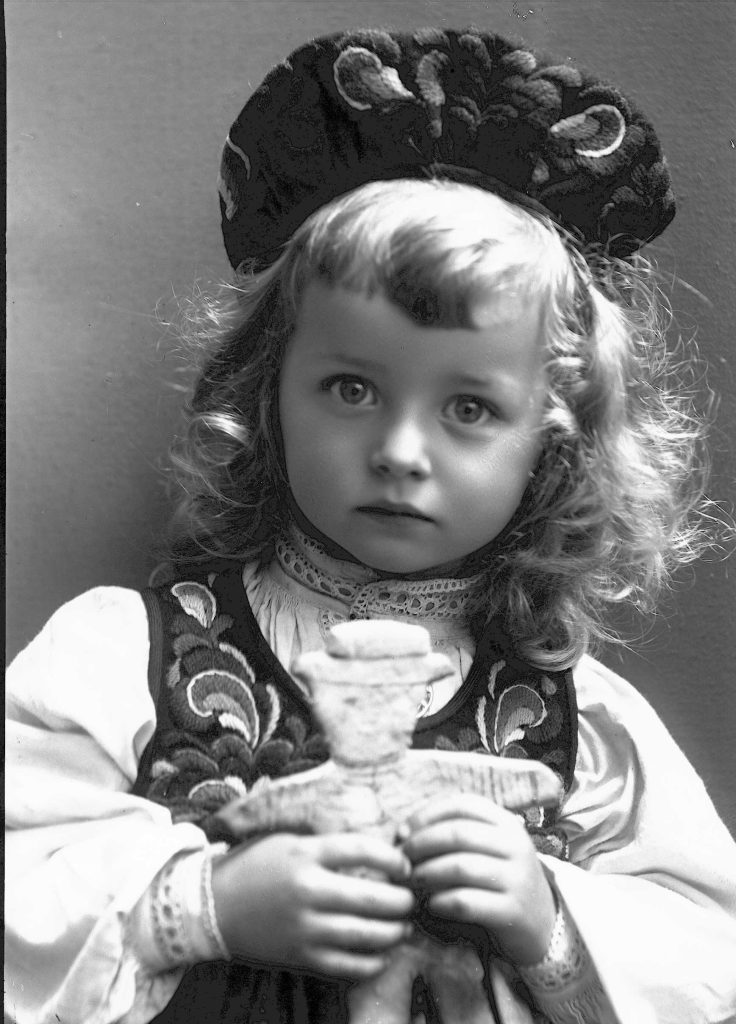
Unknown Little Girl from Sweden, c.1890–1900: A Forgotten Child in Folk Dress Brought Back to Life
Some old photographs stop you immediately. Not because they show a famous person, a grand house, or a major historical event, but because of the quiet human presence inside them. This portrait of an unknown little girl from Sweden, taken around 1890 to 1900, is one of those images.
We do not know her name. We do not know the photographer. We do not know the exact town, village, or family she came from. All we have is the photograph itself, a small window into Swedish history, childhood, traditional clothing, and late 19th century studio photography.
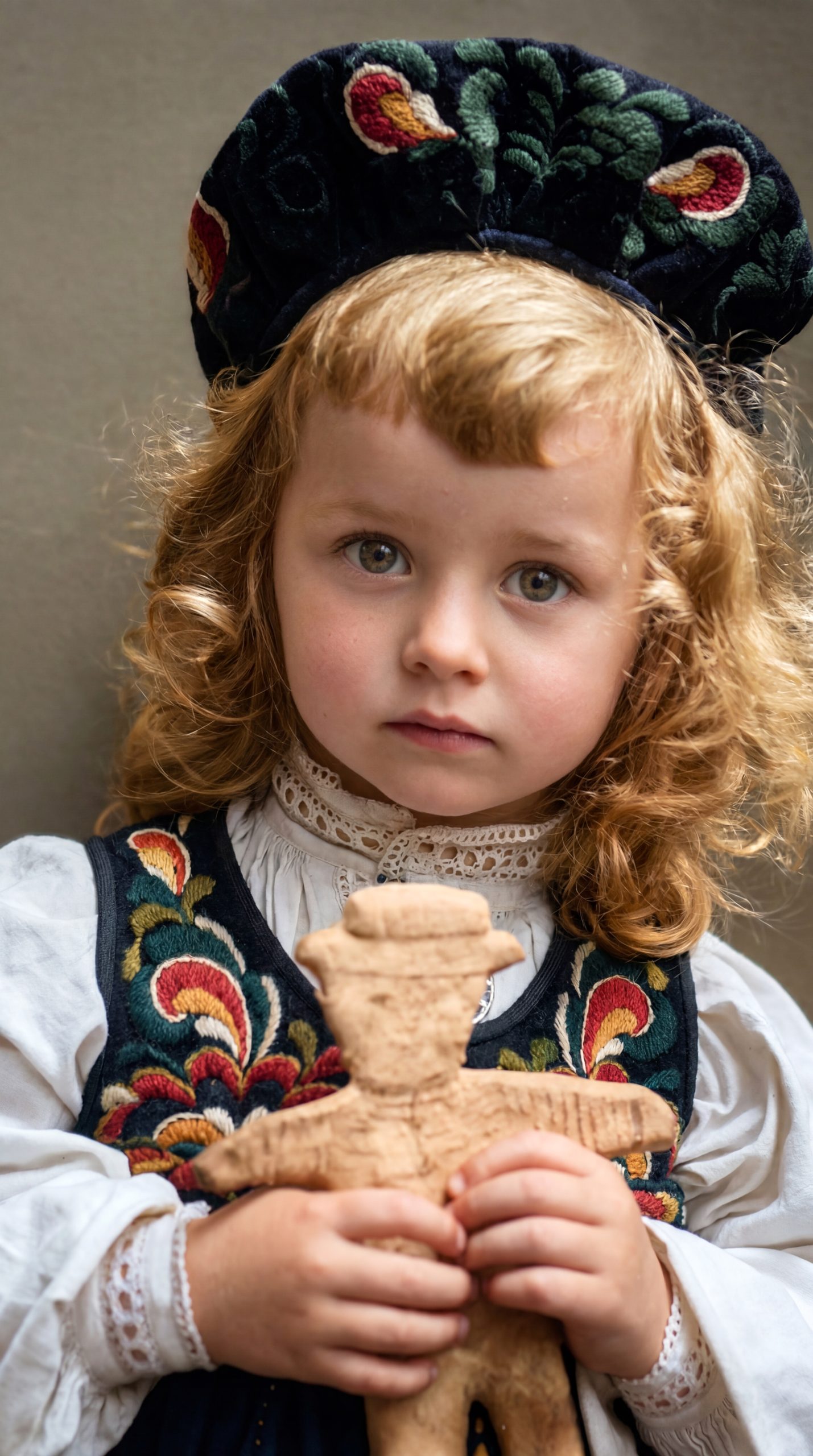
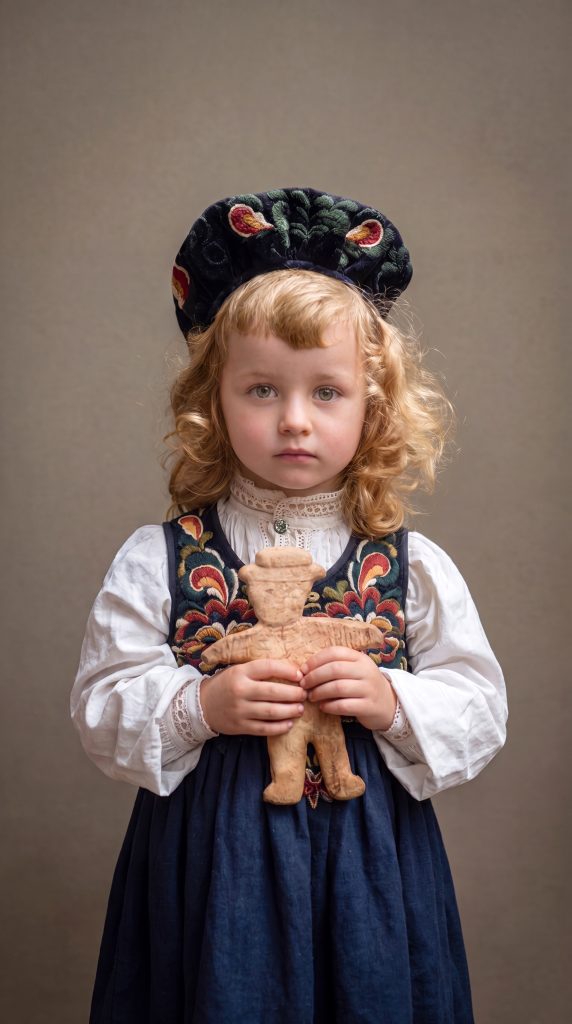
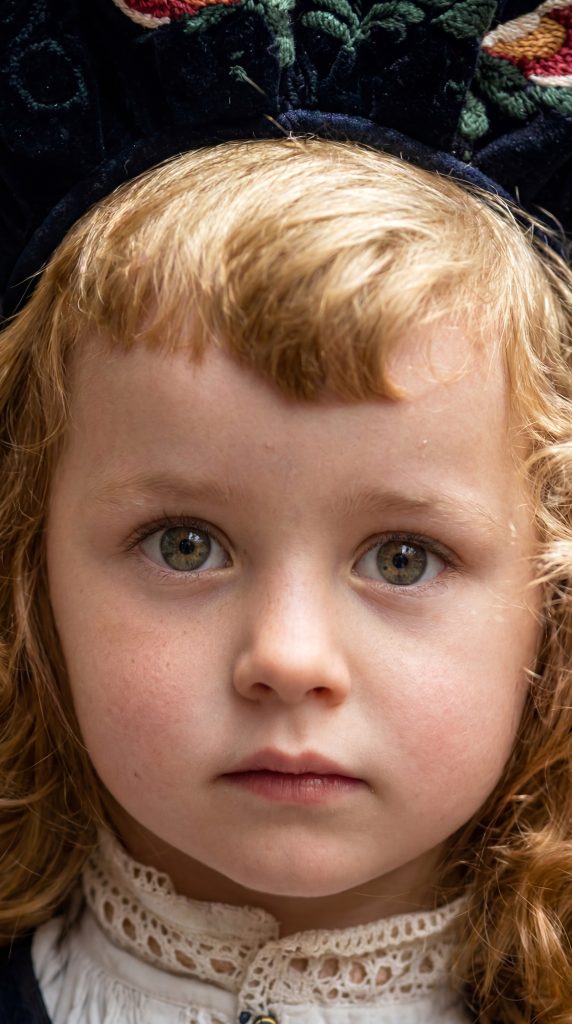
In the image, the little girl looks directly into the camera with wide, serious eyes. She appears young, perhaps around three to five years old. Her expression is calm, but there is something deeply emotional about it. She is not smiling. Many Victorian and Edwardian era portraits have that same stillness, partly because early cameras needed careful posing, and partly because studio portraits were treated as formal occasions.
This was not a quick family snapshot. Around the 1890s, a photograph was still something special. Families often dressed children in their best clothing for a studio portrait. The child had to sit or stand still while the photographer prepared the camera, adjusted the light, and captured the image. That alone makes this portrait feel important. Someone wanted to remember her.
The Girl’s Traditional Swedish Clothing
One of the most beautiful parts of this old Swedish portrait is the girl’s clothing. She appears to be wearing a traditional Scandinavian folk-inspired outfit, possibly a Swedish folk costume or a child’s regional festive dress. Without a confirmed location, it is impossible to say exactly which province or district the clothing comes from, but the style has strong Nordic folk dress elements.
She wears a pale blouse with full sleeves and a high lace-trimmed collar. The blouse has a soft, gathered look, which was common in children’s clothing and traditional dress styles of the period. Over the blouse is a dark embroidered bodice or vest. The bodice is decorated with floral embroidery, with curling stitched shapes across the front. These details give the outfit a handmade, ceremonial feeling.
Her hat is one of the most striking features in the photograph. It looks like a soft, dark folk-style cap with raised floral embroidery. The decoration across the crown gives it a rich, textured look. This type of headwear may have been worn for a special occasion, a family portrait, a local celebration, or simply as part of traditional dress. In many parts of Scandinavia, folk clothing carried regional identity, family pride, and a connection to older customs.
The little girl is also holding a small object in her hands. It may be a carved wooden toy, a small cup, or another folk craft item. The photograph is not clear enough to identify it with certainty, but it adds a tender detail. Children in old studio portraits were often given something to hold to help them stay still. In this case, the object also makes the portrait feel more personal. It connects her hands, her clothing, and her childhood in one small detail.
A Swedish Child Lost to History
The saddest part of this photograph is also what makes it powerful. This little girl had a name. She had a family. She may have had siblings, parents, grandparents, and a home somewhere in Sweden. Someone may have brushed her curls, fastened her clothing, and placed that embroidered hat carefully on her head before the portrait was taken.
Yet today, her identity is gone.
This is the reality of many antique photographs. Thousands of Victorian photographs, cabinet cards, cartes de visite, glass plate negatives, and early studio portraits survive without names attached. Over time, albums are separated from families. Captions are lost. Photographs are sold, donated, or forgotten. A face that once meant everything to someone becomes anonymous.
That is why images like this matter. They remind us that history is not only kings, wars, inventions, and famous names. History is also ordinary children, family pride, handmade clothing, local tradition, and quiet moments preserved by chance.
Bringing the Original Photo to Life
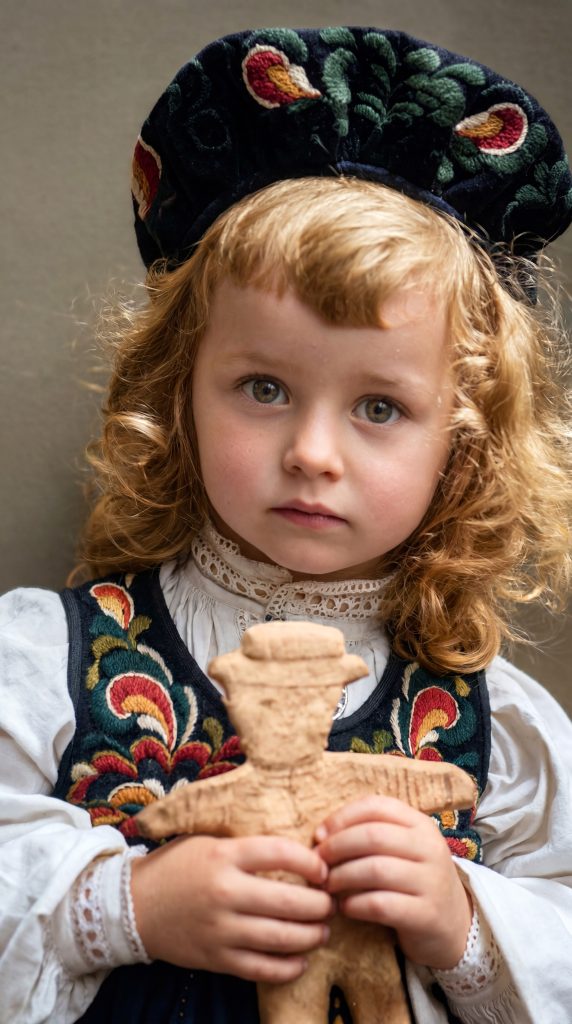
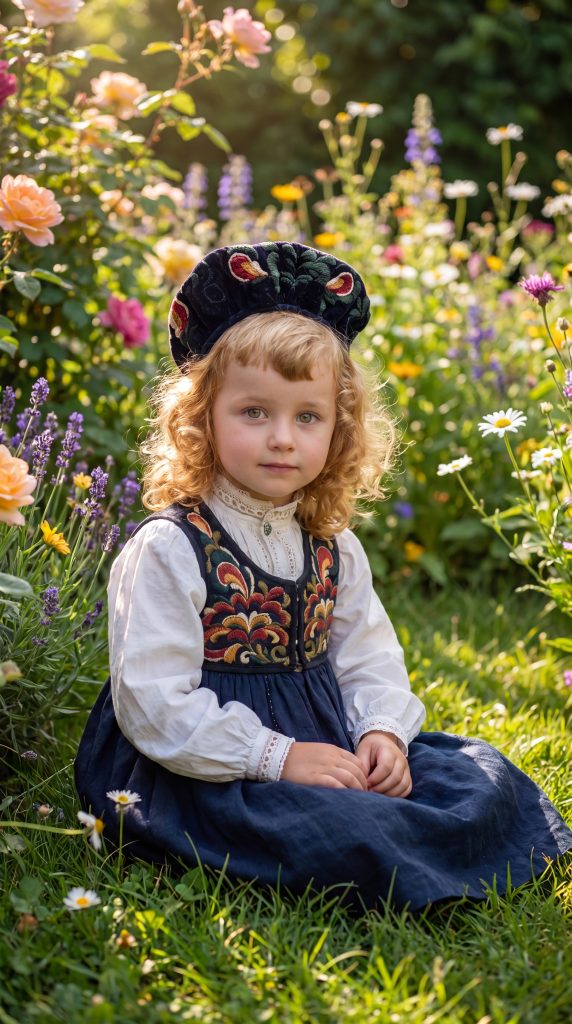
For this project, I took her original image and created new angles to get a better feel of how she may have looked that day. The goal was not to replace the original photograph or change who she was. The goal was to help modern viewers connect with her more closely.
Old black and white portraits can sometimes feel distant. By carefully restoring, enhancing, colorizing, and creating lifelike angles from the original image, we can see details that might otherwise be overlooked. Her curls feel softer. Her eyes feel more alive. The embroidery on her bodice and hat becomes easier to appreciate. The child behind the old photograph starts to feel real again.
This kind of historical photo restoration and AI-assisted photo animation can be powerful when handled with care. It allows us to slow down and notice the human being in the image. It helps bring forgotten faces from the past into the present, not as fantasy, but as a respectful reimagining based on the original photograph.
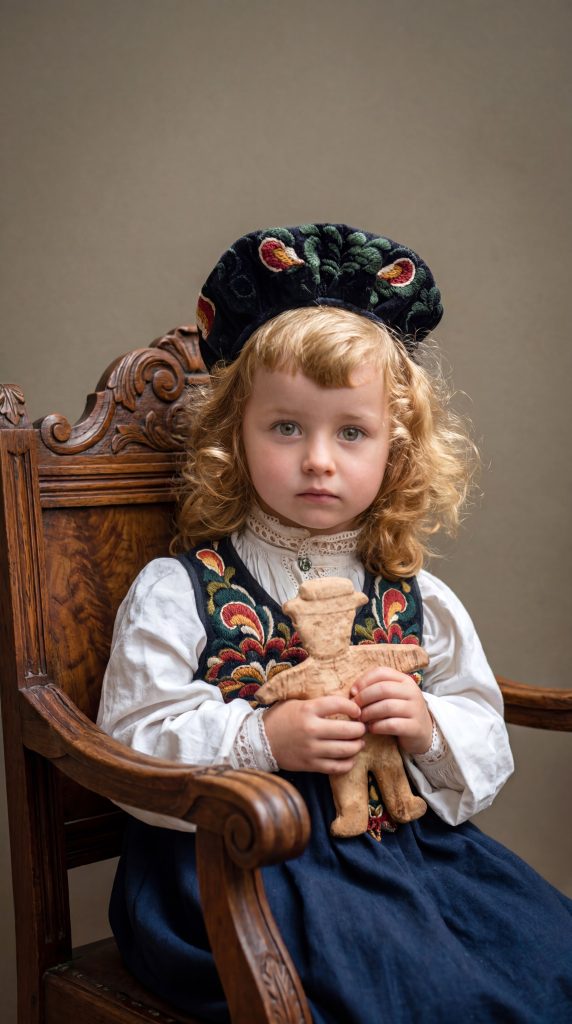
In this case, the new angles give us a more complete sense of the little girl’s presence. We can imagine her standing in that studio, dressed in her traditional Swedish clothing, holding her small object, waiting while the photographer worked. She may not have understood why the moment mattered, but more than 120 years later, we are still looking at her.
Watch the Video
“Unknown little girl from Sweden, c.1890–1900. No name, no photographer. I took her original portrait and created new angles to get a real feel for how she may have looked that day.”
Why This Portrait Still Matters
This unknown Swedish girl may never be identified. We may never know her village, her surname, or what became of her. She may have lived a long life, married, had children, and passed her memories on to another generation. Or perhaps her life was short, as many children’s lives sadly were in the 19th century.
But the photograph remains.
Her clothing tells us something about Swedish culture and Scandinavian folk dress. Her portrait tells us about late 19th century photography. Her expression tells us something universal about childhood, stillness, and memory. Her anonymity tells us how easily personal history can disappear.
That is why old photos deserve to be restored, preserved, shared, and remembered. Every antique portrait has a story, even when the name has been lost. Every face belonged to someone. Every child once had a world around them.
This little girl from Sweden, photographed around 1890 to 1900, is no longer just a forgotten face in an old image. Through restoration, colorization, and new angles, she becomes visible again. We may not know her name, but we can still pause for her. We can still notice the careful lace at her collar, the floral embroidery on her hat, the soft curls around her face, and the small hands holding something close.
More than a century later, she is still here in some way.
Not fully known, but not completely lost.
Get Your Images Done Too
If you want your images brought to life message me on Instagram.
Follow my other socials:
Facebook: bringinghistory2life
Instagram: bringing_history_to_life