Napoleon Bonaparte: His Life, Wives, Children, and Legacy
Napoleon Bonaparte rose from a Corsican family to become Emperor of the French. His victories redrew the map of Europe, while his government reshaped French law and administration. His story also includes two marriages, a much-wanted heir, catastrophic wars, and a final exile thousands of miles from France. To understand him means looking at both his remarkable abilities and the suffering his rule caused.
Early life in Corsica
Napoleon was born on August 15, 1769, in Ajaccio, Corsica, shortly after the island came under French control. His parents were Carlo Bonaparte and Letizia Ramolino. The family belonged to the minor nobility, a background that helped him gain access to education in mainland France.
He attended military school at Brienne and later studied in Paris. In 1785, he became an artillery officer. The French Revolution opened opportunities for ambitious officers as the old political and military order broke apart. Napoleon’s skill with artillery and his ability to act decisively helped him advance. Source: Fondation Napoléon timeline.
How Napoleon became famous
His role at the siege of Toulon in 1793 helped establish his military reputation. In 1795, he suppressed a royalist uprising in Paris. He was still in his twenties when he took command of the Army of Italy in 1796, winning victories that made him a national figure.
Napoleon’s success depended on rapid movement, concentration of force, and an ability to exploit an opponent’s mistakes. He also understood the value of publicity. Reports, portraits, and carefully presented victories helped build the image of an exceptional commander.
His 1798 expedition to Egypt had mixed results. French troops won on land, but Admiral Horatio Nelson’s destruction of the French fleet at the Battle of the Nile damaged the campaign. Napoleon returned to France in 1799, leaving his army behind. His growing political ambitions soon took him beyond the battlefield.
From First Consul to Emperor
In November 1799, Napoleon helped overthrow the Directory in the coup of 18 Brumaire. As First Consul, he became the dominant figure in the new government. He presented his rule as a way to restore order after years of revolution and instability.
On May 18, 1804, he became Emperor of the French. His coronation took place at Notre-Dame Cathedral in Paris on December 2. In the presence of Pope Pius VII, Napoleon crowned himself and then crowned Joséphine empress. The ceremony advertised a new hereditary dynasty built around a man whose rise had depended on the Revolution. Read about the coronation.
Who did Napoleon marry?
Napoleon married twice. His first wife was Joséphine de Beauharnais, a widow with two children from her earlier marriage: Eugène and Hortense. Napoleon and Joséphine married on March 9, 1796. Their relationship became famous through his passionate letters, but it was also troubled by separation, jealousy, and affairs.
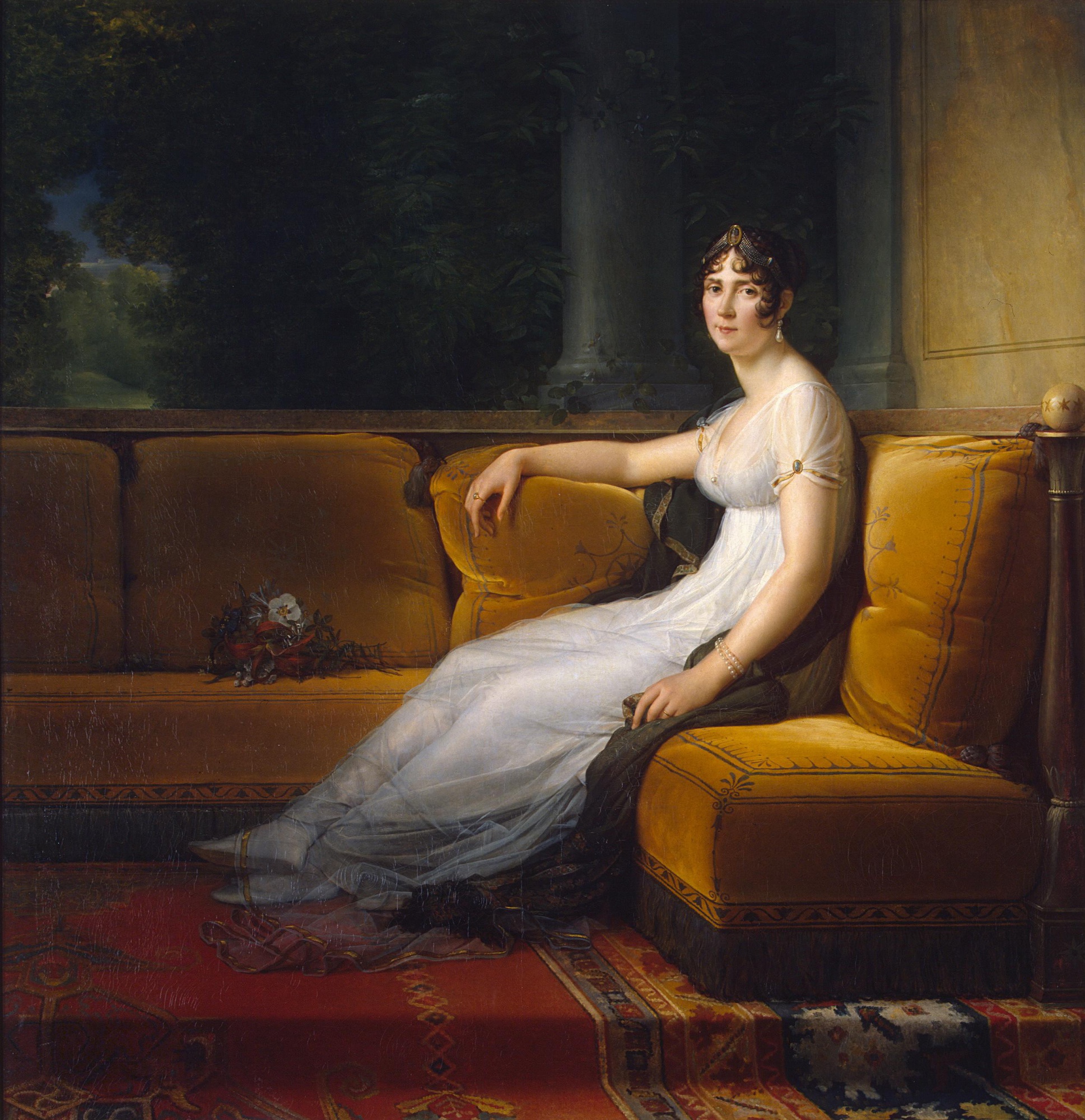
They had no children together. Napoleon wanted a direct heir to secure his dynasty, and their civil marriage was dissolved in December 1809. Joséphine retained the title of empress and retired to Malmaison. Their separation illustrates how dynastic ambition could outweigh even a powerful personal attachment. Source: biography of Joséphine.
In 1810, Napoleon married Archduchess Marie-Louise of Austria, daughter of Emperor Francis I. The marriage connected the new Bonaparte dynasty with one of Europe’s oldest ruling families. Their son was born the following year, giving Napoleon the legitimate male heir he had sought.
How many children did Napoleon have?
Napoleon had one legitimate son and two other well-documented biological sons. Other paternity claims exist, so these three should not be treated as a proven total covering every claim. Joséphine’s children, Eugène and Hortense, were his stepchildren, not his biological children.
Napoleon II, the King of Rome
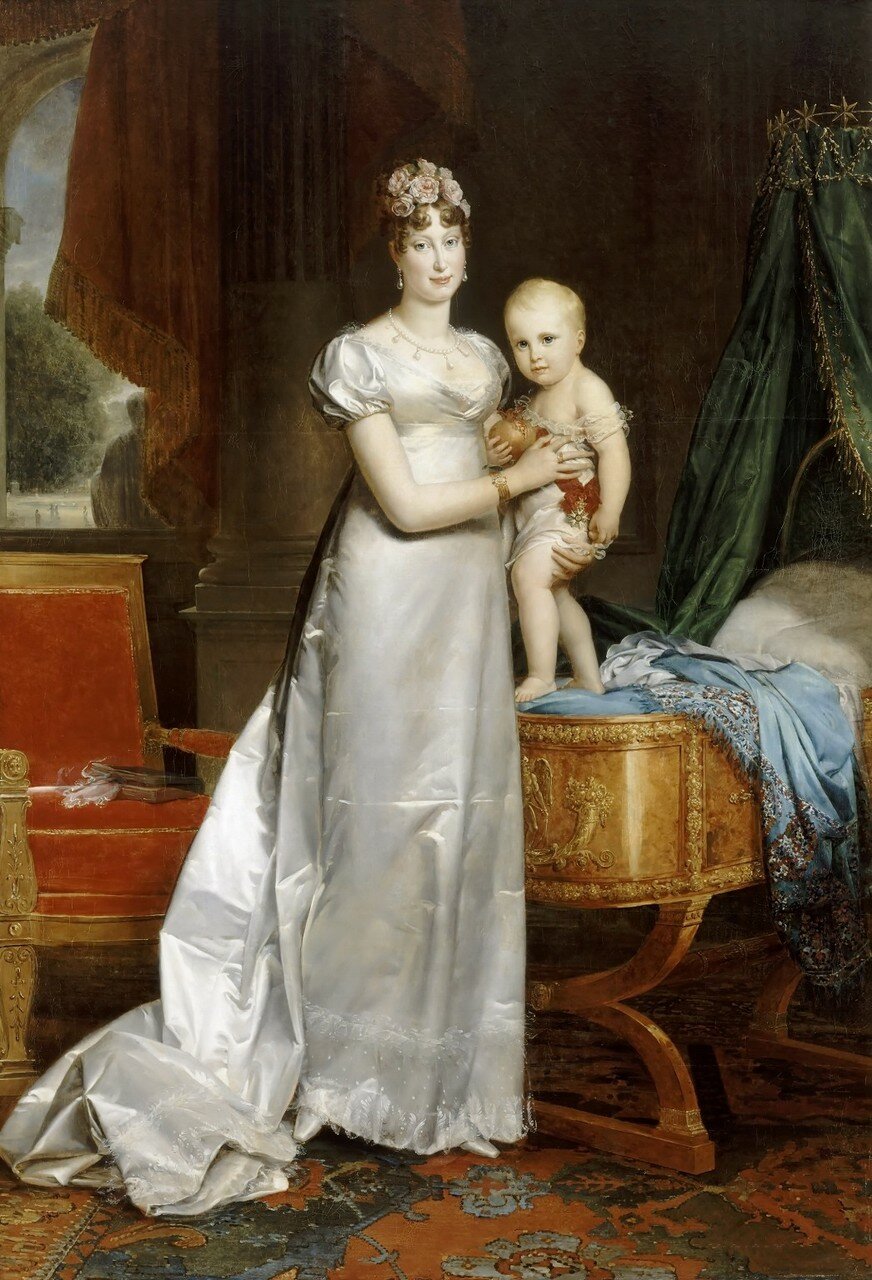
Napoléon François Charles Joseph Bonaparte was born to Marie-Louise on March 20, 1811. Known from birth as the King of Rome, he was intended to inherit the empire. After his father’s fall, he grew up in Austria and later held the title Duke of Reichstadt. He died in 1832, aged 21, without ever exercising effective rule over France. Explore the imperial family tree.
Charles Léon
Charles Léon was born in 1806 to Éléonore Denuelle de La Plaigne. Commonly known as Count Léon, he was Napoleon’s son outside marriage. His birth helped convince Napoleon that he could father a child, strengthening the question of a dynastic successor. Charles Léon lived until 1881. Source: the marriage and divorce timeline.
Alexandre Walewski
Alexandre Walewski was born in 1810 to the Polish countess Maria, or Marie, Walewska. He later became a French diplomat and foreign minister under Napoleon III, who was Napoleon I’s nephew. Alexandre died in 1868. His career gave him a significant public life of his own. Read about Marie Walewska and her son.
Military triumph and the cost of empire
One of Napoleon’s greatest victories came at Austerlitz on December 2, 1805, when he defeated Austrian and Russian forces. His influence spread across continental Europe through conquest, alliances, and rulers drawn from his own family. Yet victories on land did not give him control of the seas. Britain remained a persistent enemy. Source: British Museum biography.
The struggle in Portugal and Spain became a costly drain on French resources. Napoleon tried to isolate Britain economically through the Continental System, but enforcing his dominance provoked resistance. The Peninsular War combined regular military campaigns with fierce local opposition. Source: National Army Museum.
In 1812, his invasion of Russia ended in disaster. Reaching Moscow did not force the settlement he wanted. Supply failures, disease, exhaustion, combat, and bitter weather devastated his army during the campaign and retreat. It was a major turning point, exposing the limits of an empire that depended heavily on continued military success. Read about the Russian campaign.
Reforms, repression, and slavery
Napoleon’s influence extended beyond warfare. The Civil Code of 1804, later known as the Napoleonic Code, helped organize French civil law and reinforced important principles concerning property and legal status. His government also strengthened centralized administration. Many institutions associated with his rule survived his defeat.
Those achievements did not amount to equal freedom for everyone. Napoleon restricted political opposition, while married women faced serious legal inequalities. The Library of Congress describes how his policies strengthened husbands’ authority and reduced women’s independence. Source: Women in Napoleonic France.
His colonial policy also reversed emancipation. In 1802, his government maintained slavery in colonies where abolition had not taken effect and restored it in places including Guadeloupe. Efforts to reassert French control in Saint-Domingue failed, and Haiti became independent in 1804. Enslavement and violent colonial repression are central to assessing his legacy. Read about the restoration of slavery.
Elba, Waterloo, and the final exile
Military defeats brought the empire down in 1814. Napoleon abdicated and went into exile on Elba, a small Mediterranean island. He escaped in 1815 and returned to power in France during the period remembered as the Hundred Days.
On June 18, 1815, he fought his final battle at Waterloo, in present-day Belgium. The Duke of Wellington’s multinational army and the Prussians under Gebhard von Blücher defeated him. The Prussians’ arrival was decisive in a battle Napoleon had hoped would break the coalition against him.
He abdicated again and eventually surrendered to the British. This time, exile meant the remote South Atlantic island of Saint Helena. There would be no second return. Source: National Army Museum’s account of Waterloo.
Death and a complicated legacy
Napoleon died at Longwood House on Saint Helena on May 5, 1821, aged 51. Medical studies of the surviving evidence support stomach cancer as the cause of death. His remains were returned to France in 1840 and are now housed at Les Invalides in Paris. Sources and documents on his death.
His legacy remains contested because it contains such different realities. He was an exceptionally successful commander and an influential administrator, but also an authoritarian emperor whose ambitions helped prolong devastating wars. His laws left a lasting mark, while his treatment of women, opponents, and colonized people reveals the limits of his claim to represent revolutionary progress.
Reading David’s portrait: soldier, lawgiver, and public image
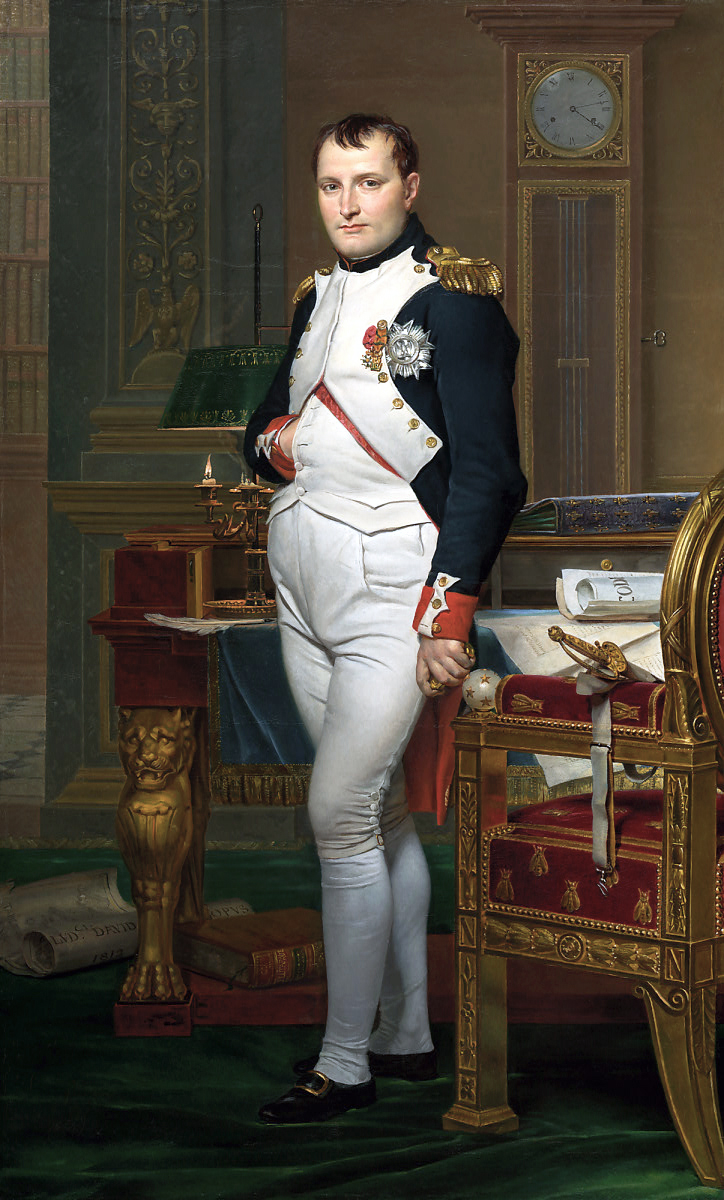
Look past Napoleon’s familiar hand-in-waistcoat pose in Jacques-Louis David’s 1812 portrait. The military uniform and sword identify a commander, while the desk, papers, books, and clock place him in a world of administration. This arrangement presents several kinds of authority within a single image.
The National Gallery of Art’s record identifies the work and describes the clock as reading 4:13. The late hour, papers, and candle help construct an image of sustained work. That is an interpretation of the painting’s presentation, not proof that David recorded an actual night at the desk.
A painted portrait can document how a ruler was represented without providing a neutral view of his government. Nothing in this orderly interior shows the experience of a conscript, an occupied community, or an enslaved person under French colonial rule. The biography’s accounts of war and slavery must therefore be read alongside the portrait, rather than allowing the flattering image to stand for the whole regime.
About the illustrations
The images in this article are public-domain reproductions of historical paintings, with artist credits and source links in their captions. They are artworks, not photographs. Napoleon died before photography became an established medium, so there are no authentic photographic portraits of him.
Editorial and source note
Prepared for Bringing History To Life with AI-assisted research and drafting. Historical sources and image records are linked for readers to check. The image commentary is editorial interpretation of the reproductions shown, with limits and uncertainties identified.
If you want your photos bringing back to life, send me a message on any of my social media accounts. Follow me across social media for historical photo restorations, AI colorizations, and videos bringing the past to life!
Instagram: https://www.instagram.com/bringing_history_to_life/
Facebook: https://www.facebook.com/bringinghistory2life |
TikTok: https://www.tiktok.com/@bringing_history_to_life |
YouTube: https://www.youtube.com/@bringing_history_to_life