Nikola Tesla: His Life, Inventions, and Extraordinary Legacy
Nikola Tesla helped shape the electrical world we live in. His work on alternating-current motors and power systems made him one of the most influential inventors of his age. Yet his life also included failed ventures, financial uncertainty, and ambitious dreams that remained unfinished. Behind the familiar portrait was an immigrant engineer whose achievements deserve to be understood alongside their limits.
Early life: from Smiljan to electrical engineering
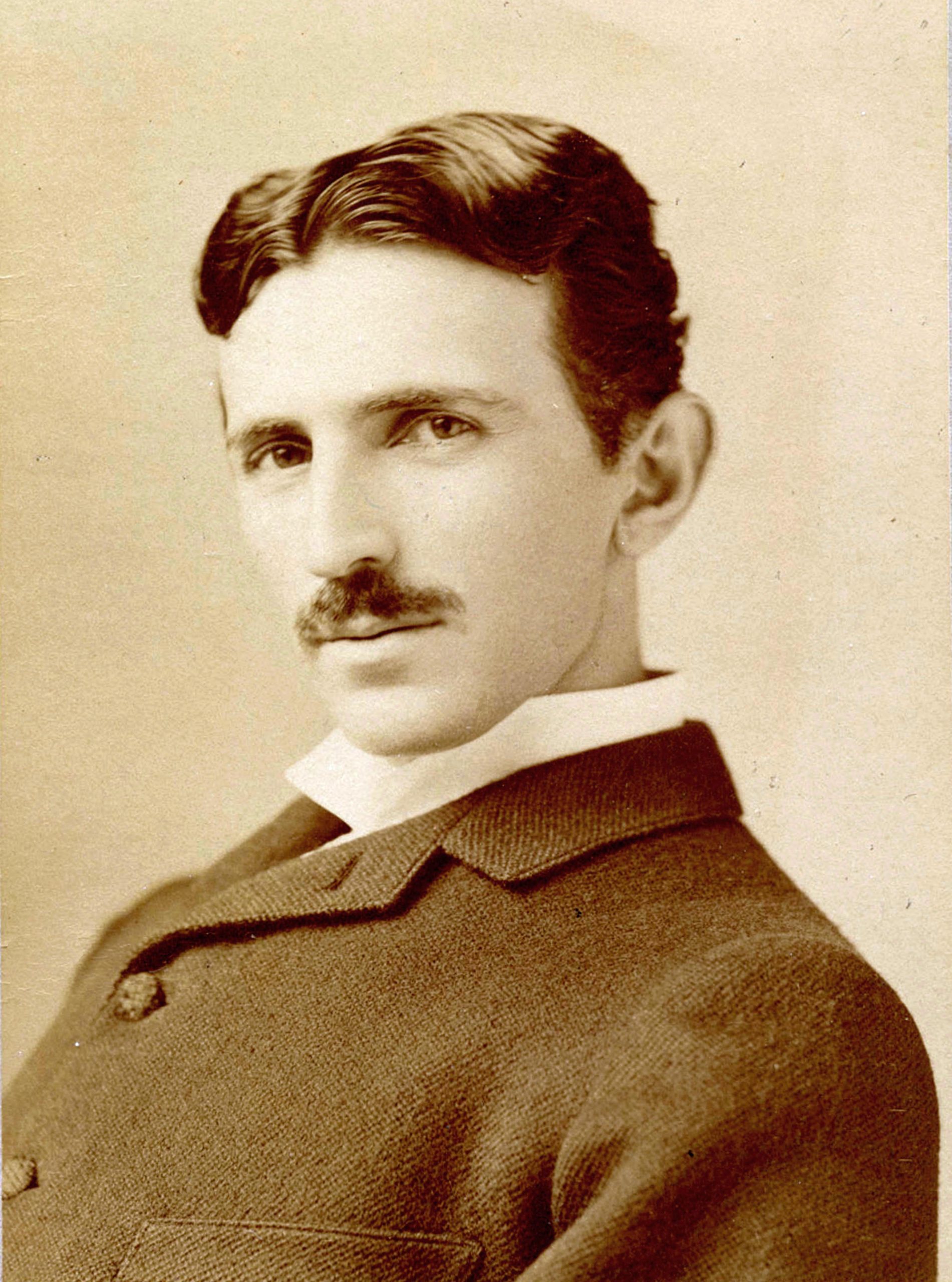
Tesla was born on July 10, 1856, in Smiljan, then part of the Austrian Empire and now in Croatia, into a Serbian family. His father was a Serbian Orthodox priest. His mother, who made ingenious household devices, helped inspire his fascination with invention. Electricity eventually became the central interest of his life.
He studied at the technical school in Graz but did not complete a degree. His early career took him to Budapest and then Paris, where he worked with electrical equipment. These experiences helped turn an imaginative young man into an engineer determined to improve the way motors worked. The Tesla Science Center traces the development of his rotating magnetic-field idea to his Budapest years. Read the Tesla Science Center biography.
Arriving in America and working for Edison
In 1884, Tesla moved to the United States and worked for the Edison Machine Works in New York. His job involved dynamo design and the practical problems of electrical machinery. The association did not last, and he went on to pursue his own projects.
The famous Edison versus Tesla story can make their careers sound like a simple contest between two men. In reality, electrical development depended on many inventors, engineers, investors, and companies. Tesla’s lasting contribution came from the particular systems and devices he developed, rather than from a single personal rivalry.
What did Nikola Tesla invent?
Tesla’s most important achievements included an induction motor using a rotating magnetic field and a system of related alternating-current patents. An induction motor can turn electrical energy into motion without the same mechanical switching arrangements required by some earlier motors. His polyphase approach used alternating currents working together to create the rotating field.
He developed the work through his own experimental shop in New York. In 1888, George Westinghouse acquired rights to Tesla’s important AC patents, and Tesla spent time in Pittsburgh helping put the technology into practice. The National Inventors Hall of Fame identifies the induction motor and power-transmission system as central to his achievement.
Tesla did not invent alternating current itself. His contribution was to make essential parts of AC power more practical. In 1891, he also developed the Tesla coil, a resonant transformer associated with high-voltage, high-frequency experiments. Its spectacular electrical effects became an enduring symbol of his laboratory work. Explore his inventions.
The War of the Currents
During the late nineteenth century, rival businesses competed over electrical distribution. Direct current flows in one direction, while alternating current reverses direction. Transformers made AC particularly useful because voltage could be raised for transmission and lowered for use, helping electricity travel efficiently over longer distances.
Westinghouse’s AC system gained a prominent showcase at the 1893 World’s Columbian Exposition in Chicago. Hydroelectric development at Niagara Falls supplied another landmark: electricity from the project reached Buffalo on November 16, 1896. Tesla’s motor and polyphase work formed an important part of this wider engineering story. Both AC and DC remain useful today. Source: U.S. Department of Energy.
Wireless experiments and a remote-controlled boat
Tesla became an American citizen in 1891. Throughout the 1890s, he explored high-frequency currents, lighting, and wireless effects. His demonstrations made electricity feel almost theatrical, but they also investigated real questions about how energy and signals could be transmitted.
In 1898, he publicly demonstrated a radio-controlled boat in New York. At a time when wireless technology was still developing, a vessel responding to commands without an obvious physical connection was an extraordinary sight. It was an early demonstration of remote control, a field that would later become part of everyday technology.
Tesla also contributed to the development of radio. That history involved several researchers and competing patents, so it is misleading to describe radio as the work of one inventor alone. His achievements are impressive enough without assigning him every later wireless invention.
Colorado Springs and the dream of Wardenclyffe
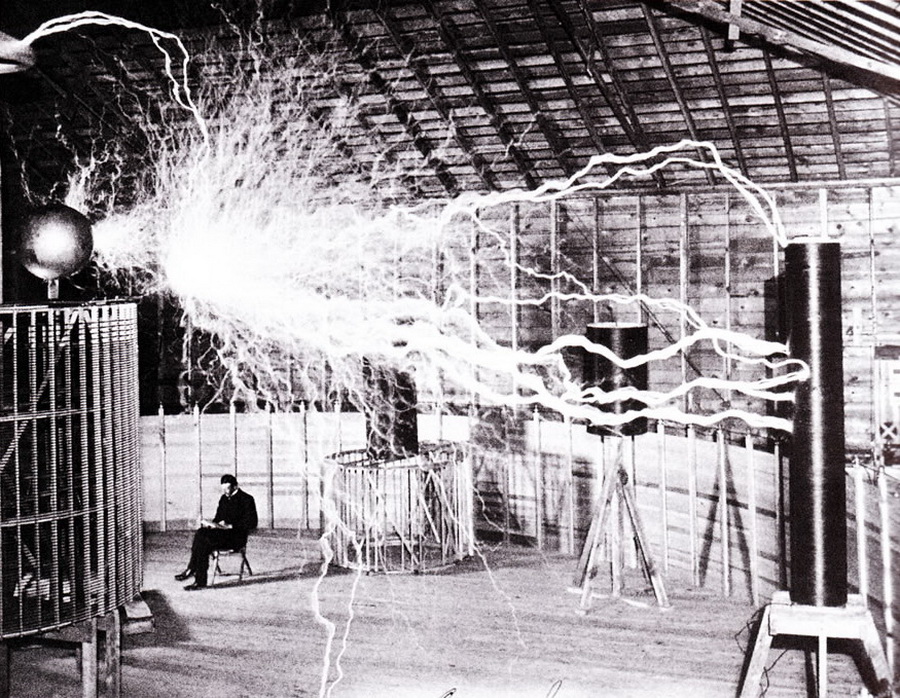
In 1899, Tesla carried out large-scale electrical experiments in Colorado Springs. The dramatic photographs from this period helped create his public image as a man surrounded by artificial lightning. One especially famous picture combines separate exposures of Tesla and the electrical discharges. It does not show him sitting safely beside an operating apparatus at that moment.
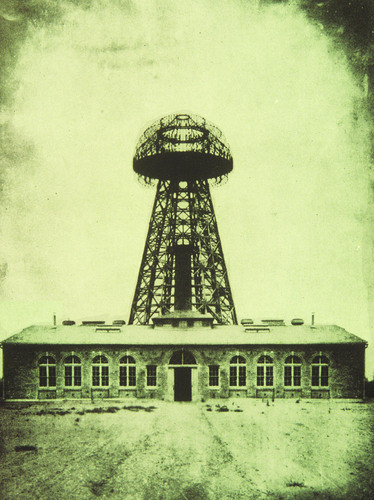
His ambitions grew further with Wardenclyffe on Long Island. Backed initially by financier J. P. Morgan, the project began in 1901 and was intended to develop worldwide wireless communication. Tesla also hoped to transmit electrical power wirelessly on a vast scale.
Funding and commercial difficulties prevented the project from becoming the global system he imagined. The tower was dismantled in 1917. Wardenclyffe remains an important part of his story because it shows both the reach of his vision and the distance between an experimental idea and a successful working service. It never demonstrated a worldwide supply of wireless electricity.
Did Nikola Tesla marry or have children?
Nikola Tesla never married and had no children. His working life was largely organized around research, experiments, and invention. He could be a striking public figure, yet his later years were far removed from the prosperity people might expect from someone so famous.
He lived in New York hotels and became known for feeding pigeons. Financial difficulties accompanied his later life, while some of his increasingly ambitious proposals failed to secure lasting support. The contrast between his public reputation and his circumstances has helped make his biography so compelling. Read Smithsonian’s account of his life.
Death and a legacy that outlived him
Tesla died at the New Yorker Hotel on January 7, 1943, aged 86. His papers and belongings were later brought to Belgrade through his nephew, Sava Kosanović. The Nikola Tesla Museum now preserves a substantial record of his life and work. Learn about the museum and its collection.
In 1960, the name tesla was adopted for the SI unit of magnetic flux density. It is a fitting memorial to an inventor whose most influential work concerned electricity and magnetism. His name has since become familiar far beyond engineering.
Tesla’s life is best remembered through what he actually accomplished: important advances in AC motors and power systems, inventive high-frequency experiments, and an early demonstration of radio remote control. His unfinished projects add human complexity to that record. He helped change the modern world, even when the world he imagined remained beyond his reach.
How the laboratory photograph creates Tesla’s legend
In the Colorado Springs image, Tesla sits small and composed below a huge web of bright discharges. The contrast makes the inventor appear to command an extraordinary force. It is a powerful visual argument, but it is not a single exposure of him sitting beside live discharges.
As the caption explains, the picture combines exposures made separately. The image record documents that construction. The photograph is therefore useful both as a record of the laboratory and as an example of how technical work became public spectacle. The surrounding apparatus is historical evidence; the apparent simultaneity of Tesla and the sparks is not.
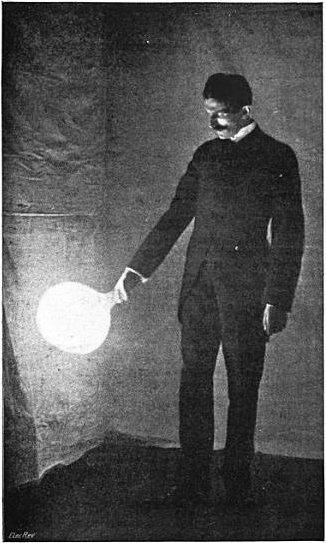
The wireless-light demonstration should be read just as carefully. A lamp working under experimental conditions does not, by itself, establish an economical system for powering cities. Keeping a demonstrated effect separate from a proposed commercial system helps explain the distance between Tesla’s successful inventions and Wardenclyffe’s unrealized ambitions. It also prevents a dramatic photograph from becoming evidence for claims of unlimited or cost-free energy.
About the historical photographs
The four photographs accompanying this article are public-domain historical images sourced through Wikimedia Commons. Individual captions link to their source and reuse information. The Colorado Springs photograph is a double exposure, as explained in its caption. No AI-generated photographs are used.
Editorial and source note
Prepared for Bringing History To Life with AI-assisted research and drafting. Historical sources and image records are linked for readers to check. The image commentary is editorial interpretation of the reproductions shown, with limits and uncertainties identified.
If you want your photos bringing back to life, send me a message on any of my social media accounts. Follow me across social media for historical photo restorations, AI colorizations, and videos bringing the past to life!
Instagram: https://www.instagram.com/bringing_history_to_life/
Facebook: https://www.facebook.com/bringinghistory2life |
TikTok: https://www.tiktok.com/@bringing_history_to_life |
YouTube: https://www.youtube.com/@bringing_history_to_life