Adolf Hitler: His Life, Rise to Power, Crimes and Death
Editorial statement: Bringing History To Life does not condone, glorify, endorse, or agree with Adolf Hitler, the Nazi Party, or their ideology, policies, persecution, and crimes. This article is for historical education and remembrance, with respect for the victims of Nazism.
Adolf Hitler’s life is a history of political radicalisation, dictatorship, aggressive war, and genocide. Born in Austria in 1889, he became German chancellor in 1933 and destroyed the country’s democracy. Under his leadership, Nazi Germany and its allies and collaborators murdered six million Jewish people in the Holocaust and persecuted and killed millions of other victims.
This biography follows his early years, the choices that brought him to power, the machinery of Nazi rule, and his death in 1945. Understanding that history requires more than studying one man. It also means examining institutions, supporters, collaborators, resistance, and the lives his regime sought to erase.
Adolf Hitler: Childhood and early life
Adolf Hitler was born on 20 April 1889 in Braunau am Inn, then part of Austria-Hungary. His parents were Alois Hitler, a customs official, and Klara Hitler. The family moved several times before settling near Linz, where Adolf attended school and struggled academically.
He later pursued ambitions as an artist, but the Academy of Fine Arts in Vienna rejected his applications. In Vienna he experienced periods of poverty and lived in a men’s hostel. He encountered an environment in which ethnic nationalism and antisemitic politics were already established. The United States Holocaust Memorial Museum’s account of his early years places these influences in their wider setting.
Personal disappointment does not explain away political violence. Many people experienced bereavement, rejection, or hardship without embracing racism and dictatorship. In addition, Hitler’s later autobiographical claims served his political image. They need to be assessed against independent evidence rather than treated as a reliable account of how his beliefs developed.
Adolf Hitler in the First World War
In 1913 Adolf Hitler moved to Munich. During the First World War he served in the Bavarian army as a dispatch runner, was wounded, and received decorations. Germany’s defeat in 1918 and the upheavals that followed became central to his political outlook.
He adopted the false claim that Germany had been betrayed from within. Antisemites and nationalist extremists used this “stab-in-the-back” myth to blame Jews, socialists, and democratic politicians for military defeat. Such accusations replaced evidence with scapegoating. Hitler later used his service record to give his political message the appearance of a veteran’s authority.
Adolf Hitler and the early Nazi Party
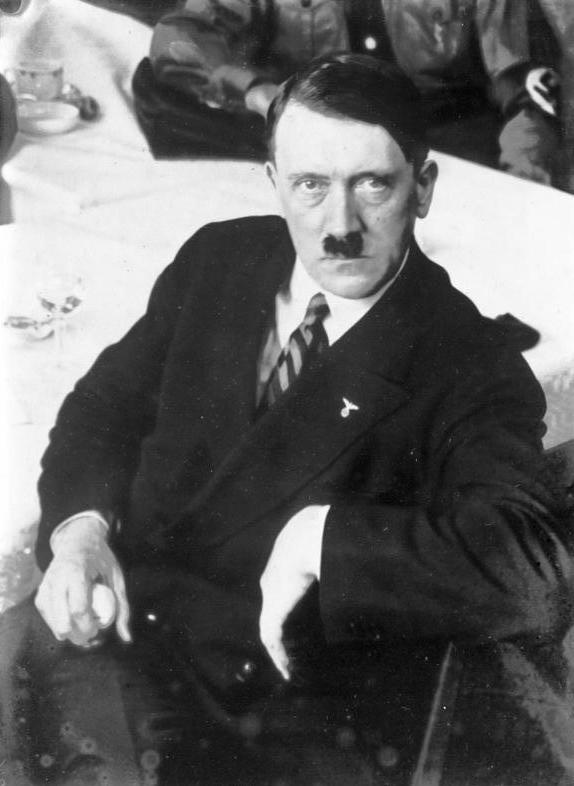
After the war, Hitler entered Munich’s radical political circles. He joined the small German Workers’ Party in 1919. It became the National Socialist German Workers’ Party, usually called the Nazi Party, in 1920. By 1921 he had established his leadership.
The party opposed democracy and promoted extreme nationalism and racial antisemitism. Its claims about racial hierarchy were false. Nevertheless, those ideas became a basis for exclusion, violence, and eventually mass murder. The party’s SA paramilitary force also used street violence against opponents.
Hitler’s public speaking helped attract supporters, but speeches alone did not produce a dictatorship. Organisation, intimidation, money, political opportunities, and the cooperation of people beyond the party all mattered. A portrait such as the one above records his appearance; it cannot explain the political system that allowed him to acquire power.
Adolf Hitler: The failed coup and Mein Kampf
On 8–9 November 1923, Hitler and his allies attempted a coup in Munich. The Beer Hall Putsch failed when police stopped the movement. Hitler was tried for treason, received a five-year sentence, and served less than nine months.
The trial gave him publicity. His lenient treatment also revealed how some conservative authorities regarded the radical right more sympathetically than its opponents. After prison, he increasingly pursued office through elections and political negotiation while retaining the aim of destroying democracy.
In prison he began Mein Kampf, published in two volumes in 1925 and 1926. It combined a self-serving life story with racist and antisemitic arguments. As the Holocaust Museum’s explanation of the book makes clear, it also promoted territorial expansion in eastern Europe. Historians study it as evidence of an extremist worldview, not as a credible explanation of society or a source of political guidance.
How did Adolf Hitler come to power?
The Nazi rise was neither automatic nor the result of a single election. During the Great Depression, mass unemployment and political instability helped the party gain support. Nazi propaganda promised national recovery while blaming democratic leaders and invented racial enemies.
In July 1932 the Nazis became the largest party in the Reichstag, but they did not win an outright parliamentary majority. Their support declined in the November election. Even then, conservative political leaders continued negotiations that eventually brought Hitler into government.
On 30 January 1933, President Paul von Hindenburg appointed Hitler chancellor. Some conservative elites believed they could control him. That calculation was disastrous. The Holocaust Museum’s history of the Nazi rise explains the combination of popular support, violence, institutional weaknesses, and elite bargaining.
Saying simply that Germany “voted Hitler into power” therefore obscures the process. Elections mattered, but so did decisions made by powerful people who opened the door to an openly anti-democratic movement.
From chancellor to dictator: the destruction of democracy
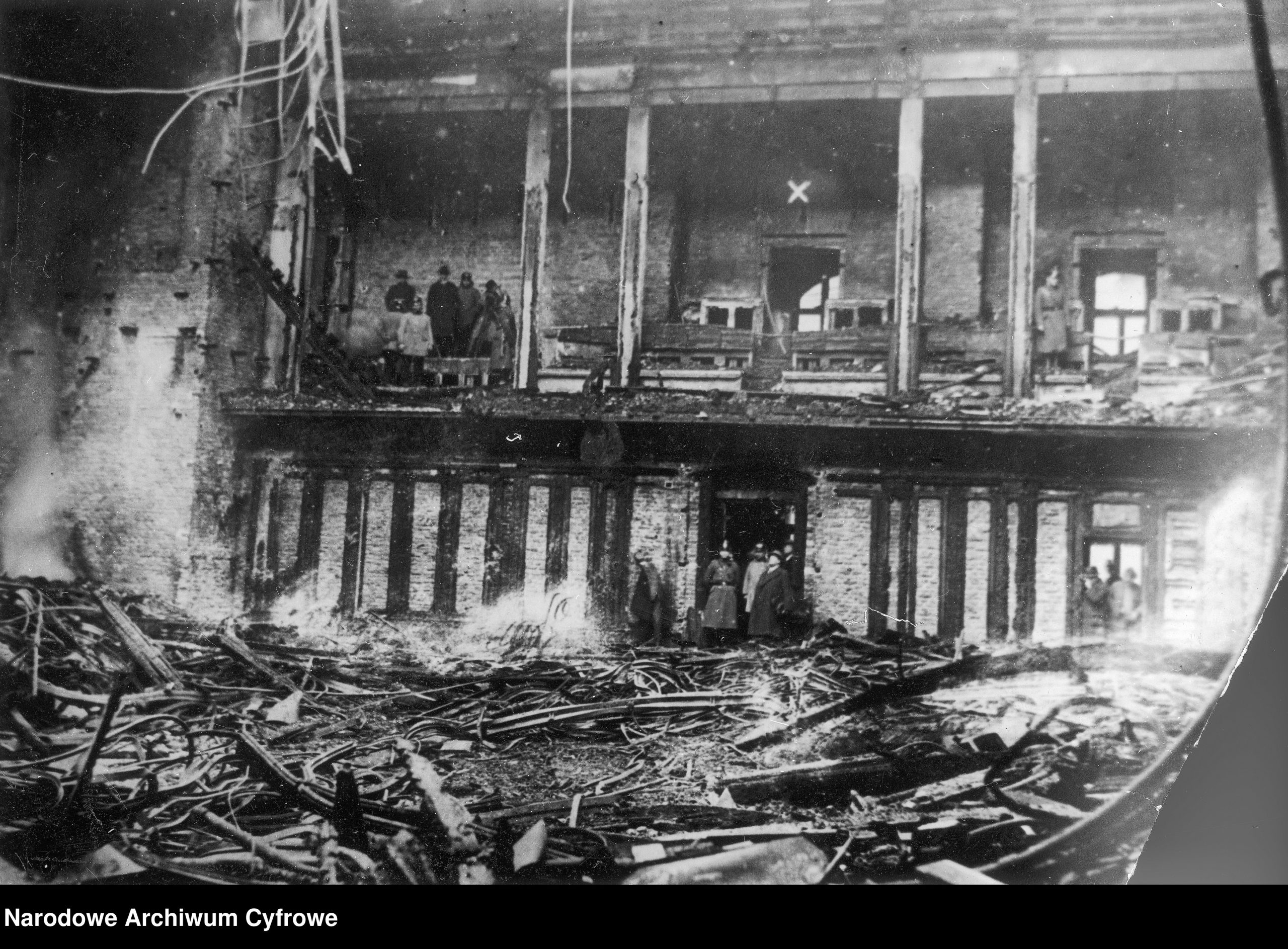
The Reichstag fire on 27 February 1933 gave the new government an opportunity to intensify repression. The following day’s emergency decree suspended basic freedoms. Police could arrest opponents, search homes, and restrict speech and publication. The Nazis presented repression as protection against a supposed communist emergency.
On 23 March, parliament passed the Enabling Act amid intimidation and the exclusion of many opposition deputies. It allowed the government to make laws without parliamentary approval, including laws that departed from the constitution. Only the Social Democrats present voted against it.
The destruction of democracy involved both violence and institutions. Officials, judges, and politicians helped implement measures that removed meaningful checks on government. A law’s formal passage did not make the surrounding process free or democratic.
The regime broke independent trade unions and eliminated rival political parties. Concentration camps imprisoned political opponents. During the 1934 purge known as the Night of the Long Knives, Hitler had perceived rivals murdered. After Hindenburg died that August, he combined the offices of president and chancellor. A government appointment had become personal dictatorship.
Propaganda, censorship, and everyday control
Joseph Goebbels’s propaganda ministry helped control newspapers, broadcasting, film, and cultural life. Carefully staged appearances presented Hitler as a uniquely necessary national leader. At the same time, censorship restricted competing accounts of what the regime was doing.
The Nazi propaganda system encouraged loyalty, spread antisemitic lies, and prepared people to accept persecution. Schools and youth organisations helped carry its messages into daily life. The resulting images were designed to persuade, not simply to document.
For this reason, photographs of mass rallies require context. A cheering crowd does not show the people already imprisoned, excluded, or frightened into silence. Nor does it prove universal support. Studying propaganda means asking who produced an image, what it leaves out, and whose interests it served.
Persecution before the war: the Nuremberg Laws and Kristallnacht
The regime progressively pushed Jewish people out of public, professional, and economic life. On 15 September 1935, it introduced the Nuremberg Laws. These stripped Jews of full citizenship rights and prohibited marriages and sexual relations between Jews and people classified as being of German or related blood.
The definitions relied on ancestry and Nazi racial ideology, not simply on religious practice. Consequently, people who were Christian or did not practise Judaism could still be persecuted as Jews. Bureaucratic categories became tools for removing rights, separating families, and deciding who belonged.
On 9–10 November 1938, the Nazis unleashed the anti-Jewish pogrom known as Kristallnacht. Synagogues burned, businesses were attacked, and Jewish people were assaulted and murdered. Authorities arrested about 30,000 Jewish men and sent them to concentration camps.
The familiar name, often translated as the “Night of Broken Glass,” can conceal the event’s human violence. Broken windows were only one part of an organised assault on people and communities. It marked a severe escalation of persecution before the war.
Disabled people and other targets of Nazi violence
Nazi persecution also targeted Roma and Sinti, disabled people, political opponents, Jehovah’s Witnesses, gay men, and other groups. Their experiences differed, and they should not be reduced to a single interchangeable category of victimhood.
In 1939 the regime began organised killings of disabled children and expanded the murder of institutionalised adults. Hitler authorised the adult programme through a document backdated to 1 September 1939. The term “euthanasia,” used by the Nazis, was a deceptive label for murder without the victims’ consent.
Doctors, administrators, and care institutions participated in identifying and killing people. Some personnel and methods later passed into the killing centres used against Jews. This history exposes the danger of giving professional authority to a state that treats certain human lives as expendable.
Territorial expansion and the outbreak of the Second World War
Hitler sought to overturn the postwar European settlement and expand German control. Germany annexed Austria in March 1938. Later that year, the Munich Agreement allowed German annexation of the Sudetenland. In March 1939, German forces occupied the Czech lands, exposing the limits of assurances about territorial demands.
On 1 September 1939, Germany invaded Poland. Britain and France declared war on Germany two days later. The invasion began the Second World War in Europe. Poland faced occupation, destruction, and widespread violence against civilians.
In 1940 German forces conquered several western European countries, including France. Britain continued the war. These campaigns cannot be separated from occupation policies, forced labour, and persecution. A map of military advances records changing control of territory, but not the human cost imposed on the people living there.
The invasion of the Soviet Union and a war of annihilation
On 22 June 1941, Germany invaded the Soviet Union. The invasion was an ideological and racial war, as well as a military campaign. Nazi leaders intended to seize territory, exploit resources, and destroy people they defined as enemies.
German forces and associated killing units carried out mass shootings. Jews, Soviet prisoners of war, and civilians suffered deliberate starvation and murder. Parts of the regular German armed forces participated in these crimes; responsibility cannot be confined to the SS alone.
The scale of violence shows why the phrase “military ambition” is inadequate by itself. Hitler’s expansionism involved plans for domination and population destruction. Those objectives shaped the conduct of the war from the beginning.
Adolf Hitler, the Holocaust, and responsibility for genocide
The Holocaust was the systematic, state-sponsored persecution and murder of six million European Jews by Nazi Germany and its allies and collaborators. Antisemitism stood at the centre of Hitler’s worldview and the regime he led.
Persecution escalated into continent-wide mass murder during the war. Victims were confined in ghettos, deported, exploited, shot, starved, and murdered in killing centres. Auschwitz-Birkenau, Treblinka, Bełżec, Sobibór, Chełmno, and other sites became part of this system of destruction.
Hitler bears central responsibility for establishing the ideological direction, political authority, and conditions for genocide. The absence of one surviving comprehensive written order does not negate that responsibility. His leadership operated through a state and party apparatus whose officials developed and implemented murderous policies.
At the same time, explaining the Holocaust solely through Hitler would conceal the involvement of ministries, police, soldiers, railway officials, businesses, collaborators, and individual perpetrators. Their participation made mass murder possible. Remembering the victims requires confronting both leadership and the many decisions that translated persecution into action.
Forced labour and the people behind economic statistics
The regime’s claims about national revival excluded those whose rights, property, and freedom it took away. During the war, Germany increasingly relied on the forced labour of people from occupied Europe, prisoners of war, and concentration camp prisoners.
Workplaces could be sites of coercion, malnutrition, abuse, and death. Private businesses and public institutions benefited from labour that people could not freely refuse. The economic history of the regime therefore cannot be told only through production figures, roads, or weapons.
The relevant questions are who performed the work, under what conditions, and who profited. Treating exploitation as an incidental detail repeats the regime’s preferred picture of achievement while excluding the people who paid for it.
Resistance, refusal, and the risks of opposition
People resisted Nazism in different ways, including underground political work, rescue, sabotage, armed struggle, and the preservation of evidence. Jewish resistance included fighting as well as cultural, religious, and communal efforts to survive persecution.
Inside Germany, the White Rose movement distributed leaflets condemning the regime and its crimes. Hans and Sophie Scholl and Christoph Probst were executed in February 1943. Their actions challenged the claim that obedience was the only possible response.
On 20 July 1944, military conspirators attempted to kill Hitler and overthrow his government. The plot failed, and the regime exacted brutal reprisals. However, opponents had different motives; opposition to Hitler did not automatically mean rejection of every aspect of Nazism or antisemitism.
Resistance was dangerous and often isolated. Its history should acknowledge courage without turning it into a comforting account that hides widespread cooperation. Both refusal and complicity belong in the record.
Defeat, liberation, and the collapse of Nazi Germany
Germany’s defeat at Stalingrad in 1943, Allied advances from several directions, and the Normandy landings in June 1944 helped bring the regime towards collapse. By spring 1945, Soviet troops were fighting into Berlin while western Allied forces advanced across Germany.
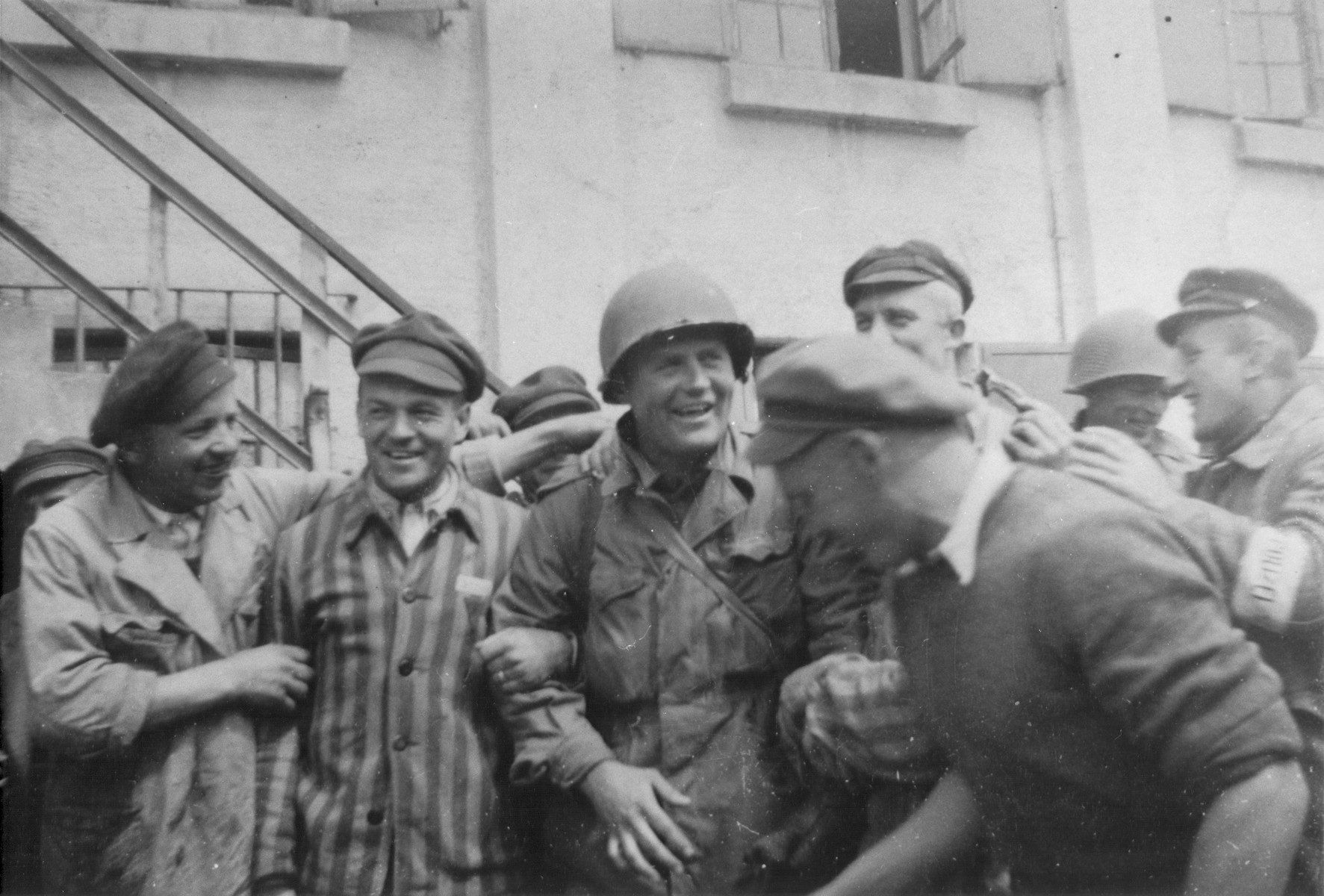
Meanwhile, the SS forced prisoners onto deadly evacuations and marches. Liberation did not instantly end suffering. Many survivors remained gravely ill, had lost relatives and homes, or faced the uncertainty of displacement. The British report on Bergen-Belsen’s liberation documents the urgent work needed to care for people the camp system had devastated.
The photograph above shows survivors with an American soldier at Dachau in April 1945. It records living people emerging from imprisonment. Their survival should not obscure those who were murdered, nor suggest that liberation could restore everything the regime had taken.
Adolf Hitler: Death in Berlin
Adolf Hitler spent his final months in the bunker beneath the Reich Chancellery. As Soviet forces closed in, he continued to issue orders while the state he had built disintegrated. His final political testament repeated his antisemitism and transferred blame rather than accepting responsibility.
He married his longtime partner Eva Braun in the early hours of 29 April 1945. On 30 April, both died by suicide in the bunker. Hitler was 56. Staff burned their bodies outside the bunker. The U.S. National Archives preserves documents connected with his will, marriage, and final days.
Claims that he escaped to live abroad are not supported by credible historical evidence. British intelligence investigated eyewitness accounts after the war; MI5’s account of that investigation explains how investigators examined his death. Unverified “sightings” do not carry the same weight as corroborated evidence.
The aftermath: evidence, trials, and remembrance
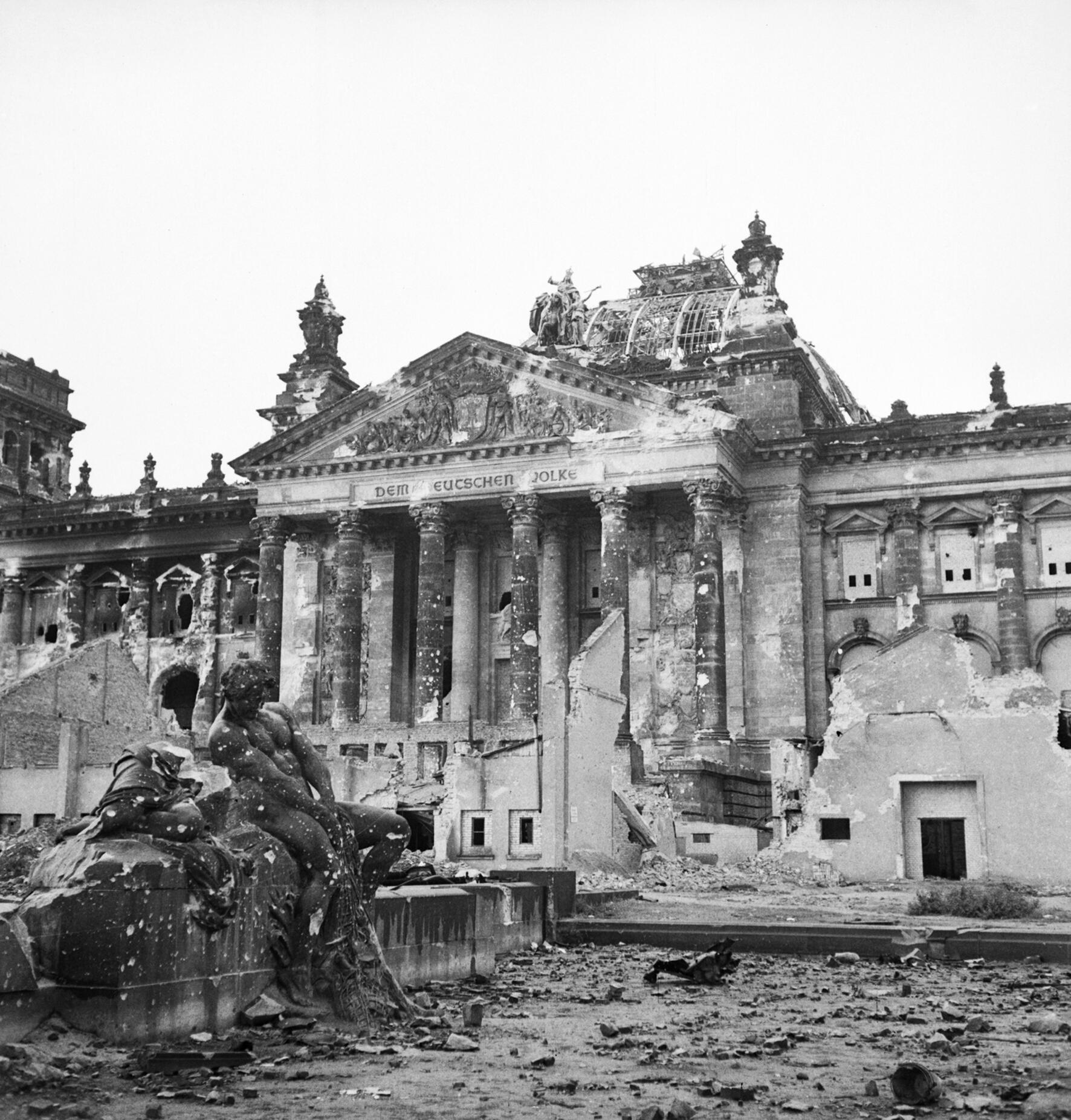
Germany’s unconditional surrender took effect in May 1945. Hitler died before he could face trial. Surviving Nazi leaders were prosecuted at Nuremberg, where documents, testimony, and other evidence exposed aggressive war, war crimes, and crimes against humanity. The U.S. National Archives’ war-crimes collections preserve a substantial part of this record.
The ruined Reichstag above shows the physical aftermath in Berlin. Yet shattered buildings are only one part of the legacy. Murdered families, destroyed communities, displaced survivors, and lives permanently altered by persecution cannot be represented by architectural destruction alone.
Studying Adolf Hitler is necessary because the consequences of Nazism remain part of the modern world. The purpose is to understand how prejudice became policy, how democratic safeguards failed, and how people participated in or opposed mass violence. Historical explanation must keep responsibility and the dignity of victims in view.
Frequently asked questions about Adolf Hitler
Where was Adolf Hitler born?
He was born in Braunau am Inn, Austria-Hungary, on 20 April 1889. The town is in present-day Austria.
Was Hitler elected chancellor?
No. President Hindenburg appointed him on 30 January 1933. Nazi electoral support helped create the political circumstances, but Hitler did not win an outright parliamentary majority in a free election.
What was Hitler responsible for?
He led the Nazi dictatorship, drove aggressive war, and bore central responsibility for the Holocaust and the regime’s wider persecution and mass murder.
When did Adolf Hitler die?
He died by suicide in Berlin on 30 April 1945, as Soviet forces fought into the city.
Explore more biographies and historical stories in the Bringing History To Life article collection.
Sources and image credits
This article draws on museum research, archival records, and documented historical evidence. The photographs are genuine historical images, with individual credits and rights links beneath each. No photograph has been generated with AI. Historical Nazi material is reproduced solely for critical educational context.
- Early years: museum research
- Biographical overview
- The Nazi rise to power
- Beer Hall Putsch
- Mein Kampf: historical context
- Nazi terror and the removal of rights
- The Enabling Act
- Nazi propaganda
- Nuremberg Laws
- The November 1938 pogrom
- The murder of disabled people
- World War II in Europe
- The invasion of the Soviet Union
- Introduction to the Holocaust
- Forced labour
- The White Rose
- German resistance to Hitler
- Bergen-Belsen liberation report
- Hitler’s final documents
- The investigation of Hitler’s death
- Nazi war-crimes records
If you want your photos bringing back to life, send me a message on any of my social media accounts.
Follow me across social media for historical photo restorations, AI colorizations, and videos bringing the past to life!
Instagram: https://www.instagram.com/bringing_history_to_life/
Facebook: https://www.facebook.com/bringinghistory2life
TikTok: https://www.tiktok.com/@bringing_history_to_life
YouTube: https://www.youtube.com/@bringing_history_to_life