
Queen Elizabeth II: Her Life, Reign and Final Days
Queen Elizabeth II lived through a century of upheaval, but her own future changed in a single year. Born in 1926 as the daughter of a younger royal son, she was not initially expected to become monarch. She eventually reigned for more than 70 years, becoming the longest-serving sovereign in British history. Her life connected the world of George V with the age of smartphones, a global pandemic, and a monarchy facing new questions about its place in society.
This Queen Elizabeth II biography follows that extraordinary journey: her childhood, wartime service, marriage to Prince Philip, accession, coronation, public duties, family crises, and death at Balmoral. It also looks beyond the crown to ask what she actually did, what changed during her reign, and why her legacy remains both admired and debated.
At a glance: Elizabeth Alexandra Mary was born on 21 April 1926, became Queen on 6 February 1952, was crowned on 2 June 1953, and died on 8 September 2022, aged 96. She was Queen of the United Kingdom and other Commonwealth realms, rather than simply “Queen of England.”
Queen Elizabeth II’s childhood: a princess before she was an heir
Elizabeth was born at 17 Bruton Street in Mayfair, London, the home of her maternal grandparents. Her parents were Albert, Duke of York, and Elizabeth Bowes-Lyon, later King George VI and Queen Elizabeth. She stood third in the succession, behind her uncle Edward and her father. If Edward had married and had legitimate children, Elizabeth would have moved further from the throne.
Her early world revolved around family homes, relatives, and the countryside. Her younger sister, Margaret, arrived in 1930. The sisters grew up close, although their eventual public roles would differ sharply. Elizabeth’s family divided its time between London and royal or family estates, including Royal Lodge at Windsor.
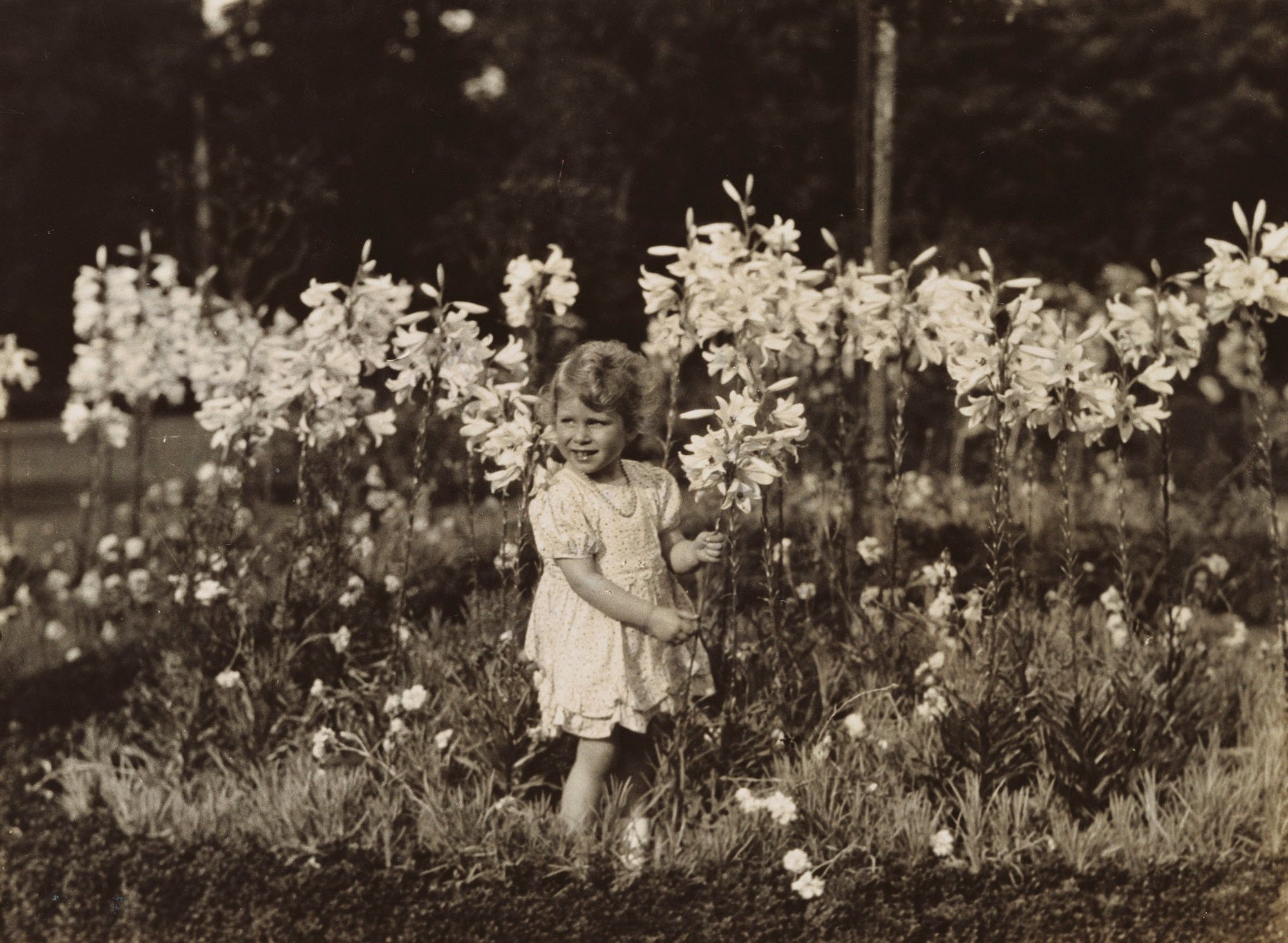
The photograph above captures a life before the burden of sovereignty. Taken by her father in 1929, it shows a small child beside lilies at St Paul’s Walden Bury. It is a family photograph, not a portrait designed to establish the authority of a queen. Looking at it beside her later coronation image makes the scale of the change unusually clear.
The abdication that changed her future
In 1936, George V died and Edward VIII became king. Before the year ended, Edward abdicated so that he could marry Wallis Simpson. Elizabeth’s father succeeded as George VI, and the ten-year-old princess became heir presumptive. That term mattered: a younger brother, had one been born, would then have taken precedence under the succession rules of the period.
A child who had been important within the royal family now needed preparation for the highest office within it. In May 1937 she attended her parents’ coronation in Westminster Abbey. The building, ceremony, and symbols she watched as a daughter would later surround her as sovereign.
Education and preparation for royal life
Queen Elizabeth II did not follow a conventional school or university education. She and Margaret received lessons at home. Her preparation later included constitutional history and law, with guidance from her father and Henry Marten of Eton. Religious instruction and French also formed part of her education.
This was an education designed for a particular role. It prepared her to understand the machinery of monarchy, recognise constitutional boundaries, and deal with people whose backgrounds differed from her own. Yet it also kept her childhood unusually sheltered. The contrast between immense public expectation and limited personal freedom would remain central to her life.
Wartime Britain and the young Princess Elizabeth
The Second World War shaped Elizabeth’s adolescence. She and Margaret spent most of the war at Windsor Castle, while their parents continued public duties and visits to bombed communities. In 1940 Elizabeth made an early radio broadcast to children affected by the war, including those separated from their families.
Her wartime experience was protected, but it was not detached from national anxiety. Air raids, rationing, and the possibility of invasion formed the background to her teenage years. The public image of a royal family remaining in Britain helped connect the institution to a wider story of endurance. It also provided the setting in which Elizabeth began to learn how reassurance could itself become a royal duty.
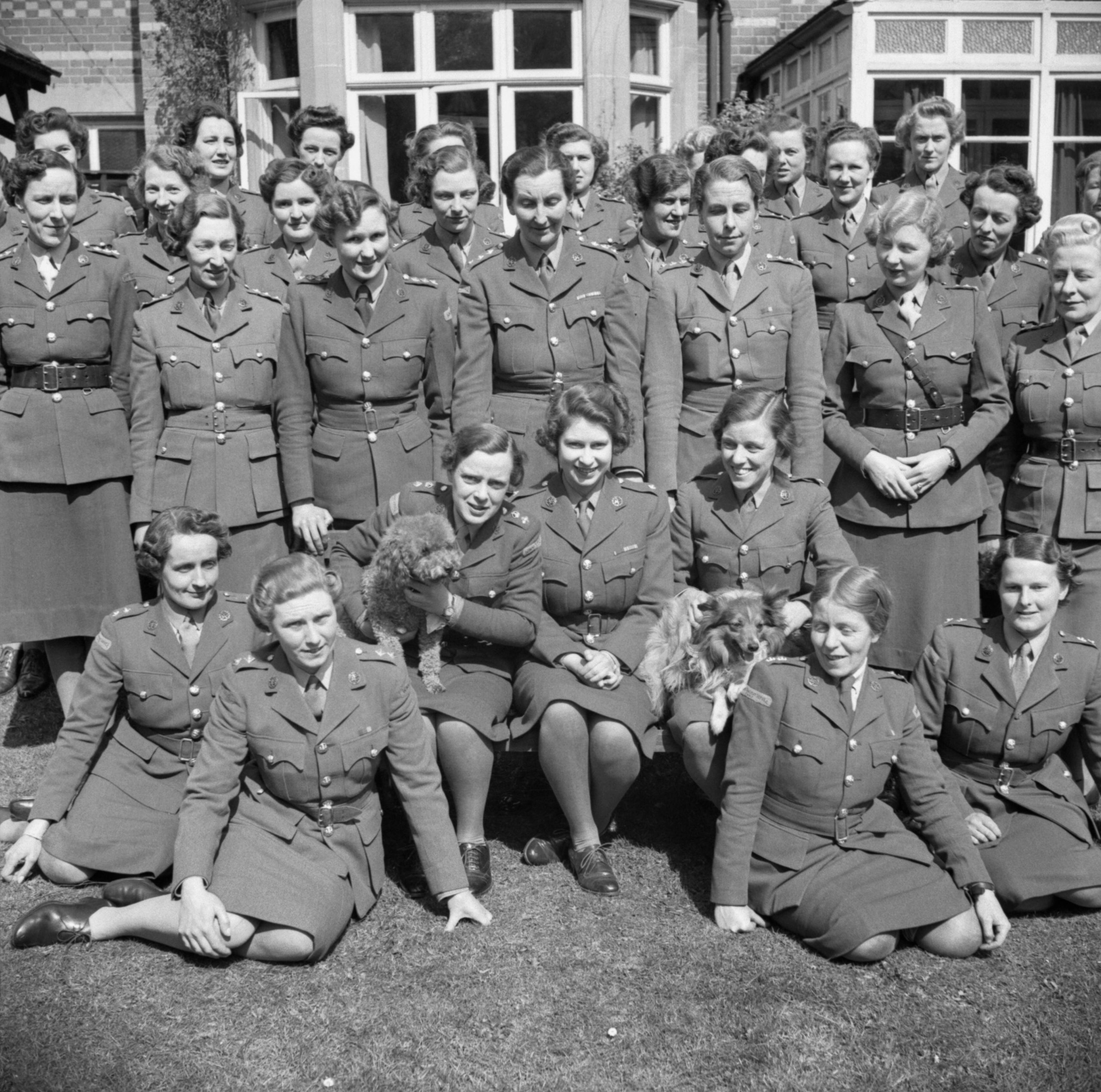
In February 1945, aged 18, she joined the Auxiliary Territorial Service. She trained as a driver and mechanic, learning practical skills rather than serving in a combat role. Photographs of the princess in uniform became an enduring part of her biography because they show her doing something tangible: working with vehicles and taking instruction.
It is easy to turn this episode into a legend of complete normality. She remained a princess with royal responsibilities and unusual protection. Nevertheless, her training was real, and it offered a different kind of experience from the ceremonial world in which she had grown up.
Marriage to Prince Philip and the beginning of family life
Elizabeth and Philip had met as children and encountered one another again during the royal family’s visit to Dartmouth in 1939. They stayed in touch during the war. Their engagement was announced on 9 July 1947, and they married at Westminster Abbey on 20 November that year. Elizabeth was 21; Philip was 26.
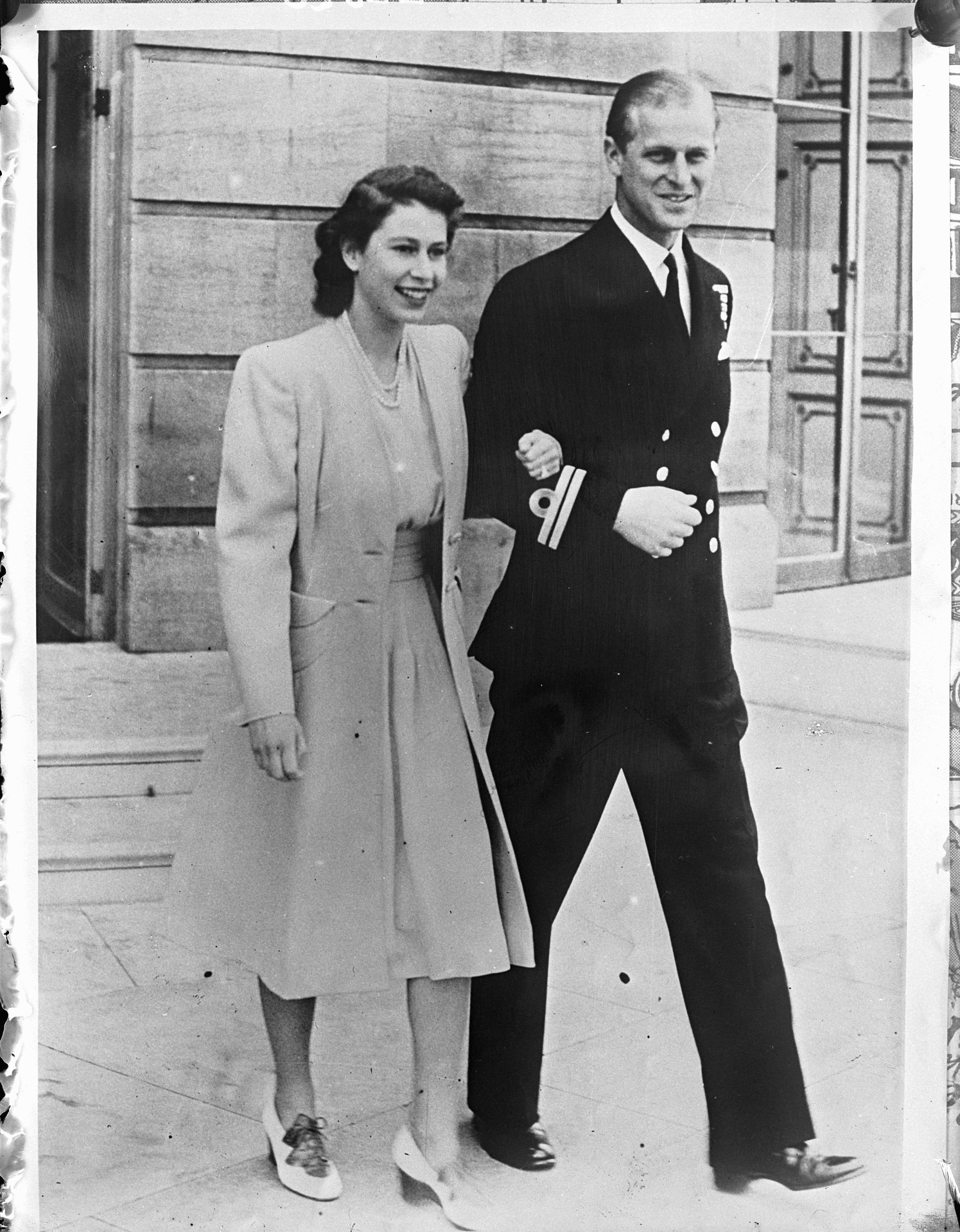
The marriage took place in a country still recovering from war. Even a royal wedding existed against a background of rationing and austerity. Elizabeth used clothing coupons for her wedding dress, an often-remembered detail that places the occasion firmly in its postwar setting.
Charles was born in 1948 and Anne in 1950. During Philip’s naval service, Elizabeth spent periods in Malta, where married life offered a measure of privacy that would become harder to find after her accession. Andrew and Edward were born later, in 1960 and 1964. The couple eventually had four children, eight grandchildren, and an expanding family whose private lives attracted relentless public attention.
How Queen Elizabeth II came to the throne in 1952
George VI’s worsening health brought Elizabeth into an increasing number of official duties. In early 1952, she and Philip began an overseas tour in his place. They were in Kenya when the King died at Sandringham on 6 February. Elizabeth was 25.
She became Queen immediately upon her father’s death. The coronation did not create her legal authority, and there was no interval during which the throne stood empty. The planned journey ended, and she returned to Britain as both a bereaved daughter and the new head of state.
That distinction helps explain the emotional weight of accession. For the public, it was the beginning of a reign. For Elizabeth, it was also the loss of a father whose guidance had shaped her understanding of duty. She now had to perform a role for which she had prepared for years, but at a moment she could not choose.
Queen Elizabeth II’s coronation: 2 June 1953
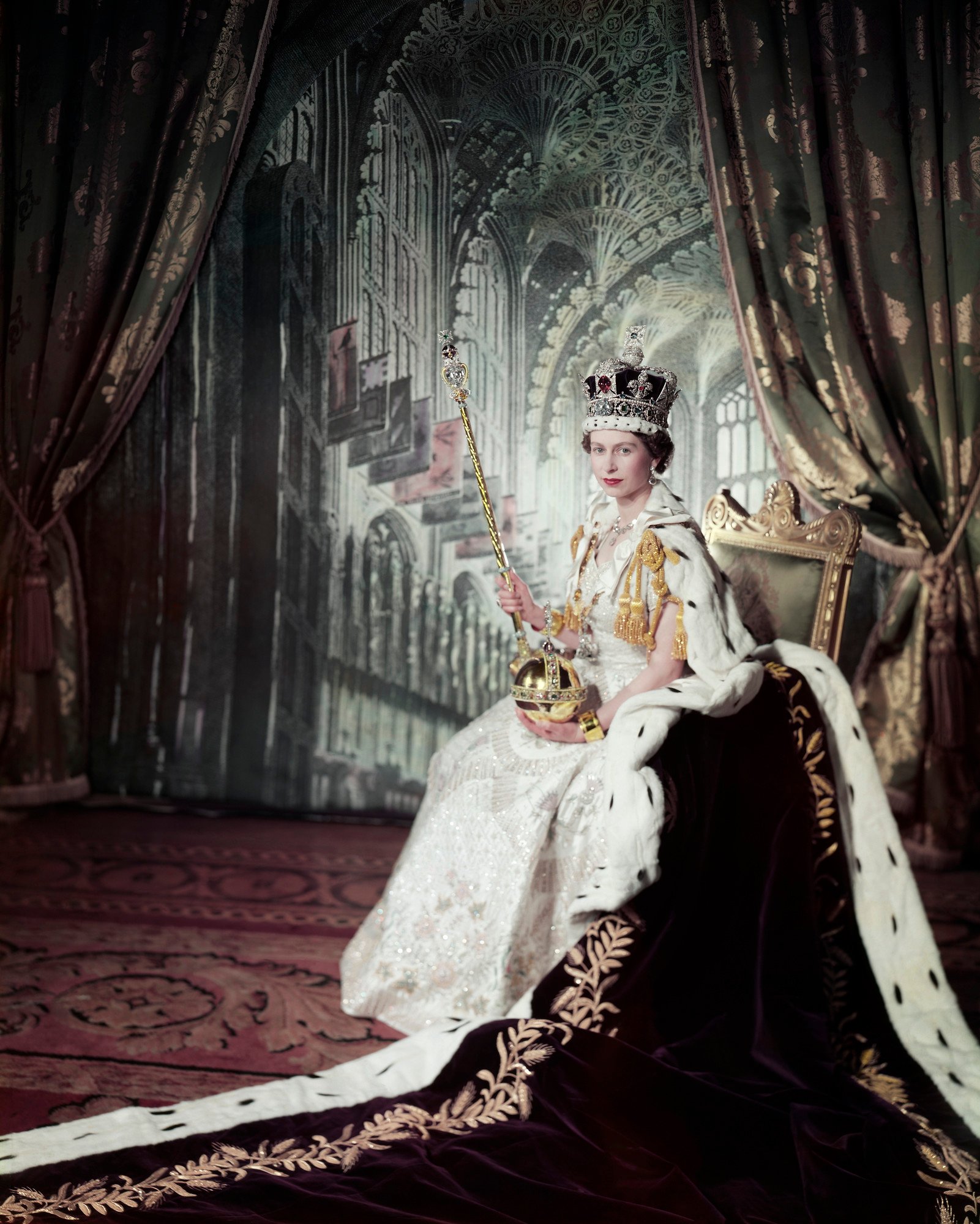
The coronation took place at Westminster Abbey on 2 June 1953, when Elizabeth was 27. Geoffrey Fisher, Archbishop of Canterbury, conducted the service. Preparations transformed the Abbey to accommodate thousands of guests and the practical demands of a ceremony watched far beyond its walls.
The service combined constitutional promises with religious ritual. Elizabeth took the oath, was anointed, received the regalia, and was crowned with St Edward’s Crown. Her dress was designed by Norman Hartnell. The crown seen in Cecil Beaton’s official portrait above is the Imperial State Crown, not the St Edward’s Crown used at the central moment of crowning.
The symbolism was ancient, but its presentation was modern. An estimated 27 million people in Britain watched on television, with millions more listening by radio. Television made a ceremony associated with a privileged congregation into a shared event in homes, halls, and neighbours’ living rooms.
The broadcast did not remove the ceremony’s boundaries: the sacred anointing was kept from the cameras. That balance between visibility and reserve would become a recurring feature of her monarchy. People were invited closer, but some things remained deliberately private.
What did Queen Elizabeth II actually do?
Queen Elizabeth II was a constitutional monarch. Elected governments made policy and governed; the sovereign carried out formal state duties within constitutional rules and conventions. Her role included appointing prime ministers, giving Royal Assent to legislation, receiving ambassadors, and representing the state at home and abroad.
Much of the work was less visible than a balcony appearance or a state banquet. Government papers arrived in red boxes. She held regular private audiences with prime ministers, offering the benefit of experience while maintaining public political neutrality. Fifteen British prime ministers served during her reign, from Winston Churchill to Liz Truss.
It is therefore misleading to credit her personally with every success, or blame her for every policy, of the governments that served during her reign. Her influence depended largely on continuity, access, experience, ceremony, and the relationships she developed. Those forms of influence could be substantial without being the same as democratic political power.
A changing Commonwealth and the end of empire
Elizabeth inherited a monarchy still closely connected to the British Empire. During her reign, independence movements and constitutional change reshaped that world. The Commonwealth became a voluntary association of independent countries, many of which were republics. Being Head of the Commonwealth did not mean being sovereign of every member state.
She devoted sustained attention to the association, attending meetings, receiving its leaders, and making more than 200 visits to Commonwealth countries. Her last overseas visit was to Malta in 2015 for the Commonwealth Heads of Government Meeting.
This relationship should not be described only as a smooth royal achievement. Decolonisation was driven by the people and political movements of the countries concerned. Colonial rule left painful legacies that royal friendship could not erase. Elizabeth’s role was to help maintain relationships through profound change, while the institution she represented remained part of the history people were reassessing.
The working Queen on the world stage
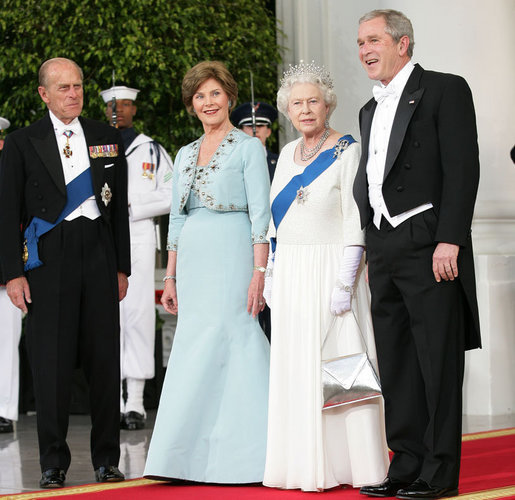
State visits, tours, remembrance ceremonies, and charity engagements gave Queen Elizabeth II a public role that extended far beyond Britain. The White House photograph above, taken in 2007, shows one familiar aspect of that work: diplomacy performed through a royal visit, shared ceremony, and carefully observed protocol.
Royal patronage also brought attention to charities, professional organisations, and public service. Elizabeth had connections with more than 500 such bodies as patron or president. Her presence could recognise work that otherwise received little publicity, from local volunteering to national institutions.
One of the most significant visits of her later reign was to Ireland in May 2011. At Dublin Castle she acknowledged the weight of history and spoke about reconciliation, cooperation, and the work behind the peace process. The importance lay in the setting as much as the words: a British monarch recognising a difficult shared past in an independent Irish state.
Horses, corgis, and life beyond the public image
Elizabeth’s interests were not simply decorative details added to a royal biography. Horses, breeding, racing, and dogs gave structure to a private world distinct from constitutional duties. She followed the development of her horses closely and took a knowledgeable interest in bloodlines and performance.
Her association with corgis began early. Susan, given to her for her eighteenth birthday in 1944, became the ancestor of many of the dogs linked with her household. The combination of formal authority and practical country interests helped create a public image that could appear both remote and recognisable.
These glimpses still have limits. Familiar photographs do not grant access to a person’s complete inner life. A serious biography can examine documented habits and public choices without treating imagined conversations, television drama, or affectionate anecdotes as established historical fact.
1992: family breakdown and the Windsor Castle fire
Long service did not protect the monarchy from crisis. In 1992, the marriages of several of Elizabeth’s children were breaking down, while a major fire damaged Windsor Castle. Anne divorced Mark Phillips; Andrew and Sarah separated; Charles and Diana’s separation was announced in December.
In a speech at Guildhall on 24 November, Elizabeth described the year as an annus horribilis, a horrible year. The phrase endured because it briefly broke through the usual language of royal composure. She also reflected on criticism and the relationship between institutions and the public.
The problems were larger than one difficult year. A monarchy built on family symbolism had to operate in a media environment increasingly interested in the tensions inside that family. Privacy, public funding, inherited status, and personal conduct became part of the same argument about what the institution owed the country.
Diana’s death and a monarchy under pressure
Diana, Princess of Wales, died in a car crash in Paris on 31 August 1997. The scale of public grief exposed a gap between the palace’s restrained response and the emotional reaction outside it. Elizabeth was at Balmoral with her family, including Diana’s sons, William and Harry.
On 5 September, the Queen returned to the public conversation through a live broadcast from Buckingham Palace. She paid tribute to Diana and addressed the sense of loss being felt across the country. The speech also reflected her position as a grandmother trying to support grieving children.
The episode showed that political neutrality did not exempt a monarch from public judgment. People wanted visible empathy, and old habits of reserve could be interpreted as indifference. It became one of the clearest examples of the pressure on Elizabeth to adapt royal behaviour to changing expectations.
Jubilees, longevity, and the later reign
The Silver Jubilee in 1977 marked 25 years on the throne. The Golden Jubilee followed in 2002, and the Diamond Jubilee in 2012. These occasions brought together public celebration, tours, community events, and reflection on the passage of time. In 2015 she surpassed Queen Victoria’s reign to become Britain’s longest-reigning monarch.
The milestones mattered partly because so much else had changed. Generations had grown up, governments had come and gone, and Britain’s international position had been transformed. Elizabeth’s presence linked those periods without making them identical. Continuity was the achievement most closely associated with her, even by people who disagreed about the monarchy itself.
In 2022 she became the first British monarch to celebrate a Platinum Jubilee, marking 70 years of service. The celebrations were also a reminder of age and physical limits: other members of the family increasingly shared the public workload.
The pandemic and the loss of Prince Philip
During the coronavirus pandemic, Elizabeth delivered a special televised address on 5 April 2020. She thanked those working through the emergency and acknowledged the pain of separation. Her reference to her own wartime broadcast linked the experiences of children separated in 1940 with families kept apart eight decades later.
The circumstances gave familiar royal language a different setting. Duty meant isolation as well as public appearances. Reassurance came through a broadcast, while many of the ordinary rituals of national and family life had stopped.
Philip died on 9 April 2021, aged 99. Their marriage had lasted more than 73 years. His death removed the companion who had shared her adult life, from naval postings and early parenthood to the repeated ceremonies and journeys of a long reign.
Queen Elizabeth II’s final days and death
On 6 September 2022, Elizabeth accepted Boris Johnson’s resignation and appointed Liz Truss as prime minister at Balmoral. Truss’s first Downing Street statement confirmed that she had accepted the Queen’s invitation to form a government. It was a final demonstration of the constitutional work that continued behind the public image.
Two days later, on 8 September, Elizabeth died at Balmoral, aged 96. Her death certificate recorded the time as 3:10 p.m. and the cause as old age. The public announcement came that evening. Later claims about other illnesses should not be presented as if they were the official recorded cause of death.
Charles became King immediately. As with Elizabeth’s own accession in 1952, succession did not wait for a proclamation or coronation. A reign that many people had experienced as the permanent background to their lives had ended, but the constitutional institution continued.
The state funeral and her final resting place
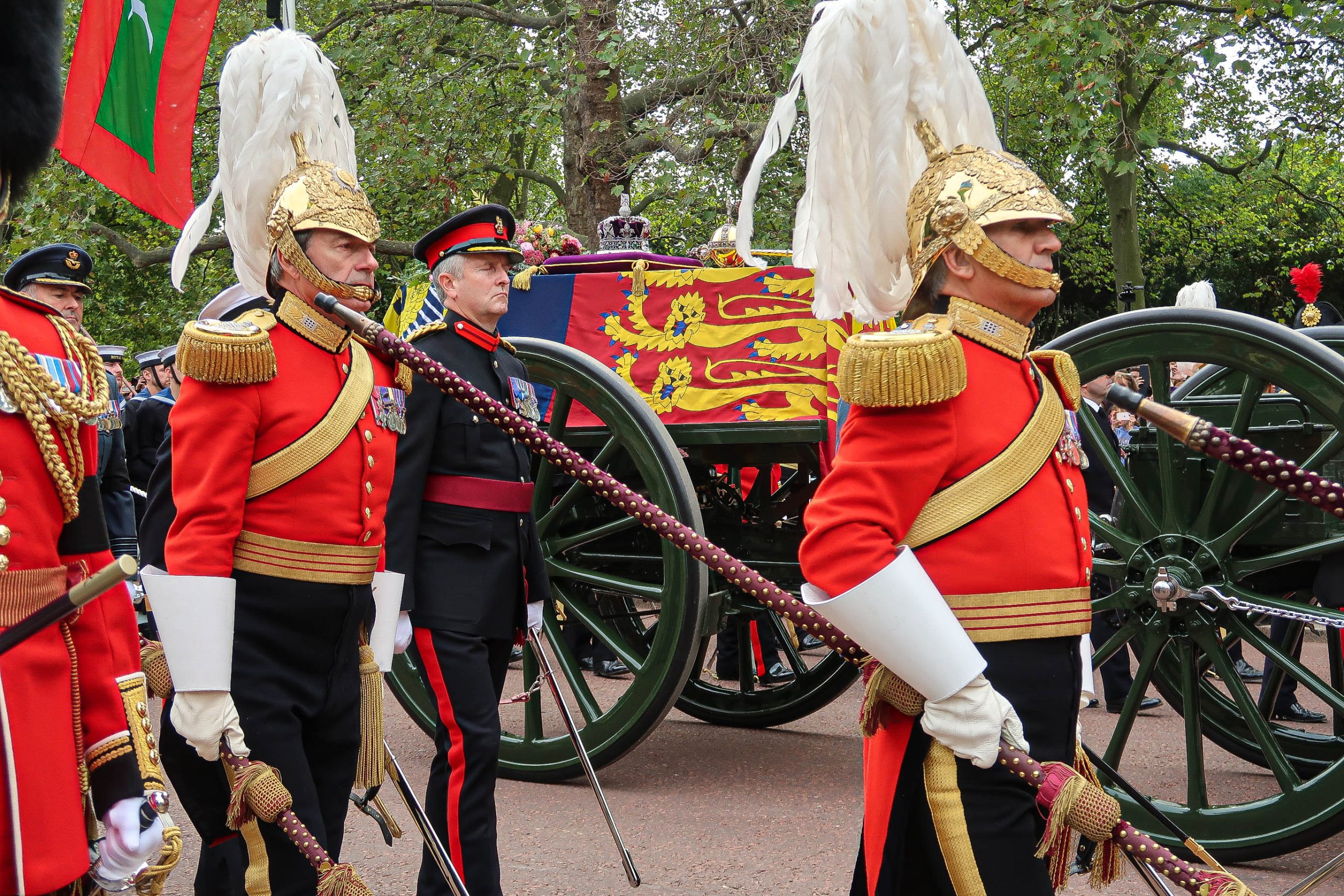
Elizabeth’s state funeral took place at Westminster Abbey on 19 September 2022. Beforehand, her coffin lay in state in Westminster Hall, where members of the public paid their respects. The funeral brought together heads of state, royal families, representatives of the Commonwealth, and people recognised for public service.
After the London ceremonies, the coffin travelled to Windsor for a committal service at St George’s Chapel. The crown, orb, and sceptre were removed from the coffin, a powerful visual separation of the office from the person who had held it. A private burial followed that evening in the King George VI Memorial Chapel, where she was buried alongside Philip.
Queen Elizabeth II’s legacy: continuity and difficult questions
Queen Elizabeth II’s most durable achievement was keeping an ancient institution recognisable through extraordinary change. She did so through repetition as much as spectacle: reading papers, attending ceremonies, receiving leaders, and returning to the work over decades.
That achievement does not settle the wider debate. Admiration for her discipline can coexist with questions about hereditary privilege, public accountability, colonial history, and the conduct of members of the royal family. Her personal popularity and the case for monarchy are related questions, but they are not identical.
The photographs tell part of the story. A child among flowers became a young woman in uniform, a bride, a crowned sovereign, and an elderly head of state. Finally, the symbols of monarchy accompanied her coffin through London. The distance between those images explains why her life continues to fascinate: it was a private human lifetime lived inside an office designed to outlast its holder.
Queen Elizabeth II: frequently asked questions
How old was Queen Elizabeth II when she became Queen?
She was 25 when her father died on 6 February 1952. She was 27 at her coronation on 2 June 1953.
How long did Queen Elizabeth II reign?
From 6 February 1952 until 8 September 2022: 70 years and 214 days, the longest reign in British history.
Did Queen Elizabeth II serve in the Second World War?
Yes. She joined the Auxiliary Territorial Service in 1945 and trained as a driver and mechanic. Her service was not a combat posting.
Where is Queen Elizabeth II buried?
In the King George VI Memorial Chapel within St George’s Chapel at Windsor Castle, alongside Prince Philip.
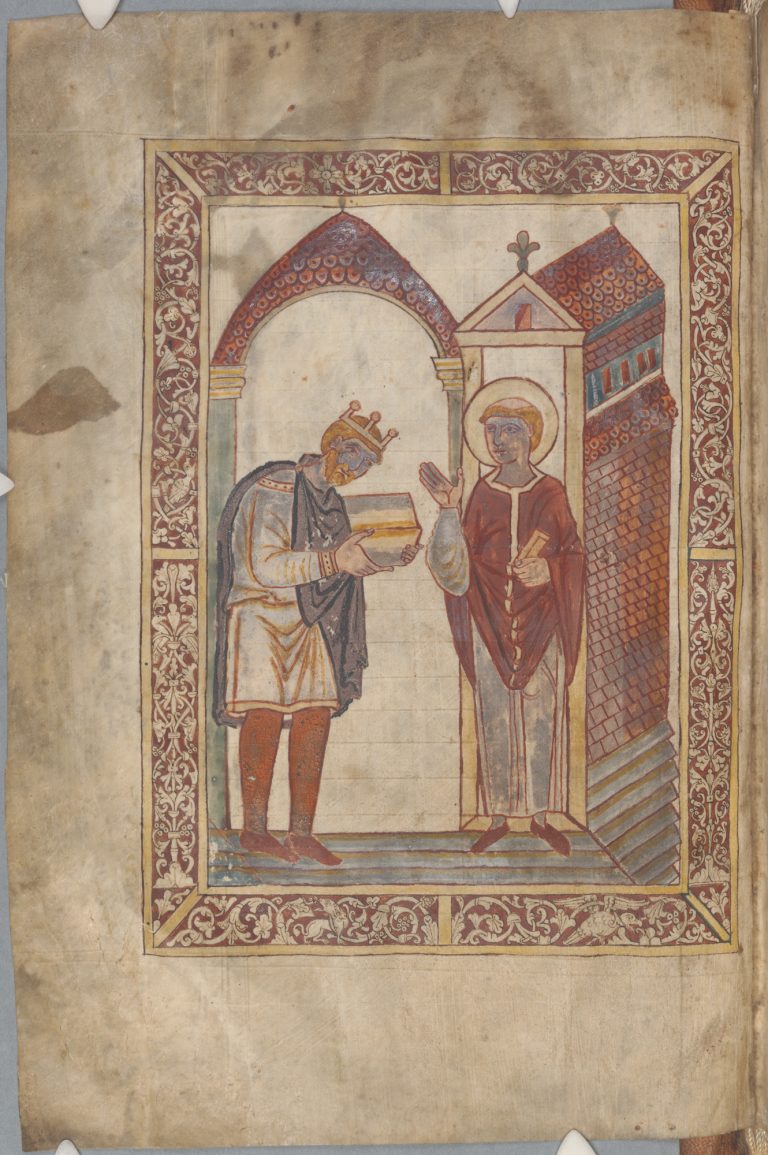
For more royal history, read about Æthelstan and the making of a united England, or browse all history articles.
Sources and image credits
This biography draws on official records, museum material, contemporary speeches, and reporting. Royal Household sources are especially useful for dates and duties; independent reporting helps distinguish the institution’s account from wider assessments. All six photographs have individual source and rights links in their captions. Five are public domain or CC0; the funeral image is CC BY 2.0 and requires attribution. No AI-generated image is presented here as a historical photograph.
- Early life and education
- Elizabeth II: coronation and life
- Wartime ATS service
- Family life and marriage
- Accession and coronation
- Life and constitutional duties
- Elizabeth II and the Commonwealth
- Hobbies and interests
- 1992 anniversary speech
- Broadcast following Diana’s death
- Irish state banquet speech, 2011
- Jubilees and milestones
- Platinum Jubilee facts
- Coronavirus broadcast, ITV News
- Liz Truss’s first statement, 6 September 2022
- Death certificate reporting, RTÉ
- State funeral and burial
- Assessment of the reign, Reuters
- Timeline of the Queen’s life, Reuters
- The life and long reign, Reuters report
- Focus on the life of Queen Elizabeth II, Royal Collection Trust
If you want your photos bringing back to life, send me a message on any of my social media accounts.
Follow me across social media for historical photo restorations, AI colorizations, and videos bringing the past to life!
Instagram: https://www.instagram.com/bringing_history_to_life/
Facebook: https://www.facebook.com/bringinghistory2life
TikTok: https://www.tiktok.com/@bringing_history_to_life
YouTube: https://www.youtube.com/@bringing_history_to_life


_%E2%80%93_Royal_Collection.jpg)


.jpg)
.jpg)