London’s Poor in the 1800s: Work, Hunger and Survival
London’s poor kept the nineteenth-century capital running. They carried its market baskets, sold its food, cleaned its rooms and repaired its cast-off clothes. Yet a day without customers, an illness or the loss of a place to sleep could push a working household into crisis.
The photographs below bring that uncertainty into focus. They come from John Thomson and Adolphe Smith’s Street Life in London, published in 1877. This article looks across the 1800s, with particular attention to the later Victorian decades documented in those pictures.
The six photographs are by John Thomson and appeared in Street Life in London (1877), with accounts by Adolphe Smith. The photographs are public domain in the UK and US. The selected LSE Library reproductions are labeled “no known copyright restrictions”; each caption links to its file and rights record. The opening reproduction is credited through the National Library of Scotland and Wikimedia Commons. These are historical photographs, not AI-generated reconstructions.
The book’s accounts are valuable eyewitness journalism, but they also contain class prejudice and moral judgments. Claims about individuals are attributed to Smith. Wider context comes from London Museum and The National Archives, linked throughout. The photographs document the later nineteenth century rather than the entire period from 1800 to 1899.
Why were London’s poor so vulnerable?
The short answer is that earning money and having enough to live on were different things. Casual jobs offered no promise of tomorrow’s work. Small traders needed money for stock before they could sell anything. Illness could remove an income just when a family most needed it.
London’s growth brought opportunity, but housing and basic services failed to keep pace for many residents. Poverty concentrated in overcrowded districts, including parts of Stepney, Spitalfields, Covent Garden and Borough. Conditions varied between streets and households. A skilled worker with regular wages did not face the same risks as an elderly widow without a room. London Museum’s overview of Victorian life explains these contrasts.
This matters because the familiar explanation that poor people simply refused to work does not fit the evidence. The surviving accounts repeatedly show people searching for customers, taking small jobs and finding new uses for almost anything they could sell.
A day’s work was not a week’s security
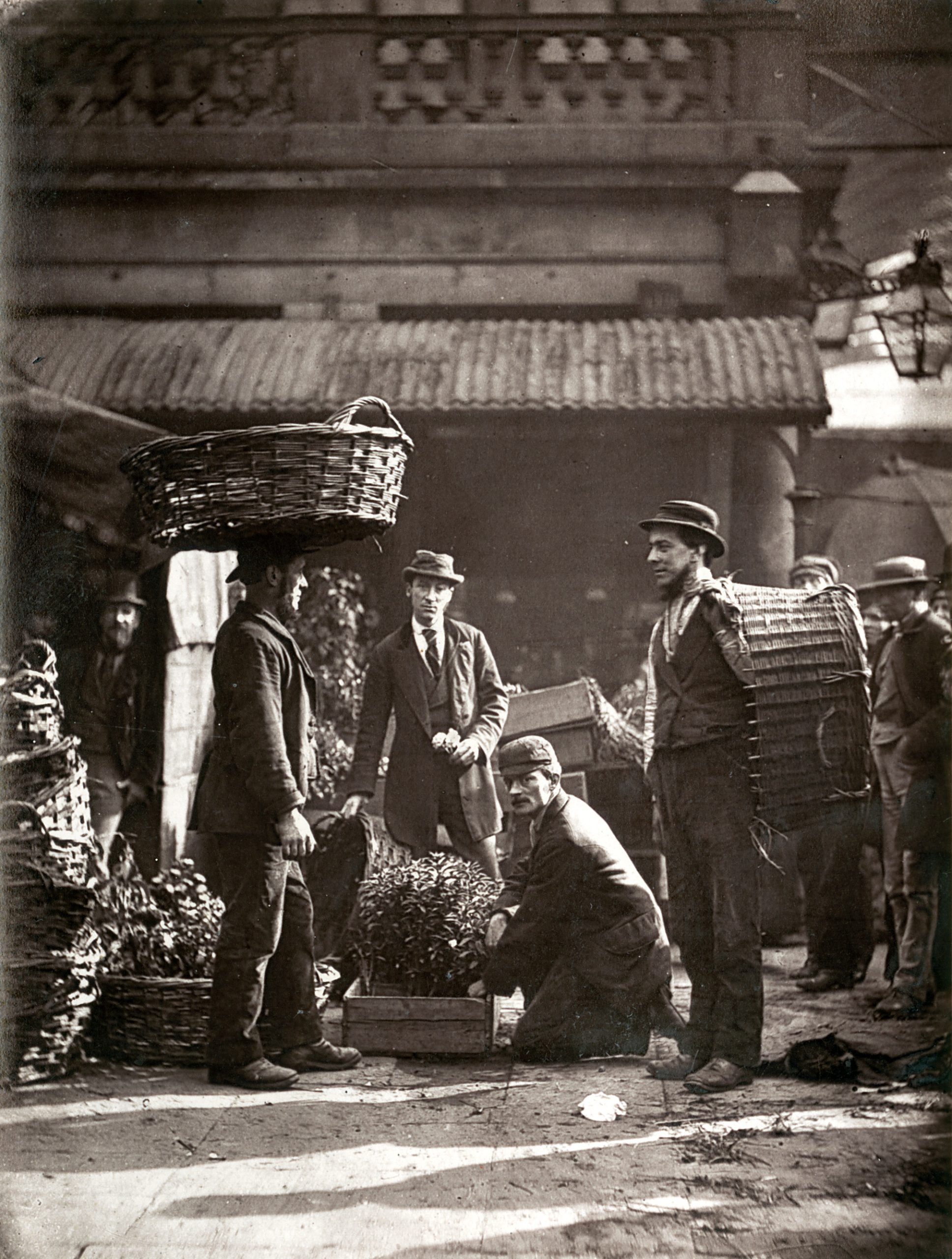
At Covent Garden, Smith distinguished regular employees from men paid for individual jobs. The latter carried parcels or delivered purchases. In busy periods they could earn useful money. In quiet seasons, however, entire days might pass without earnings.
The men in Thomson’s photograph worked in the flower trade. Their labour connected growers and market stalls with customers across London. Some regular hands began before five in the morning, carrying stock and preparing displays. Tips could supplement their wages.
Smith’s account of the market laborers also exposes his own prejudices. He blamed irregular workers for failing to save. Yet his description records a basic problem: their income arrived unevenly, while the need to eat continued every day. A good week could not guarantee that enough remained for a long bad spell.
How London’s poor made a living on the street
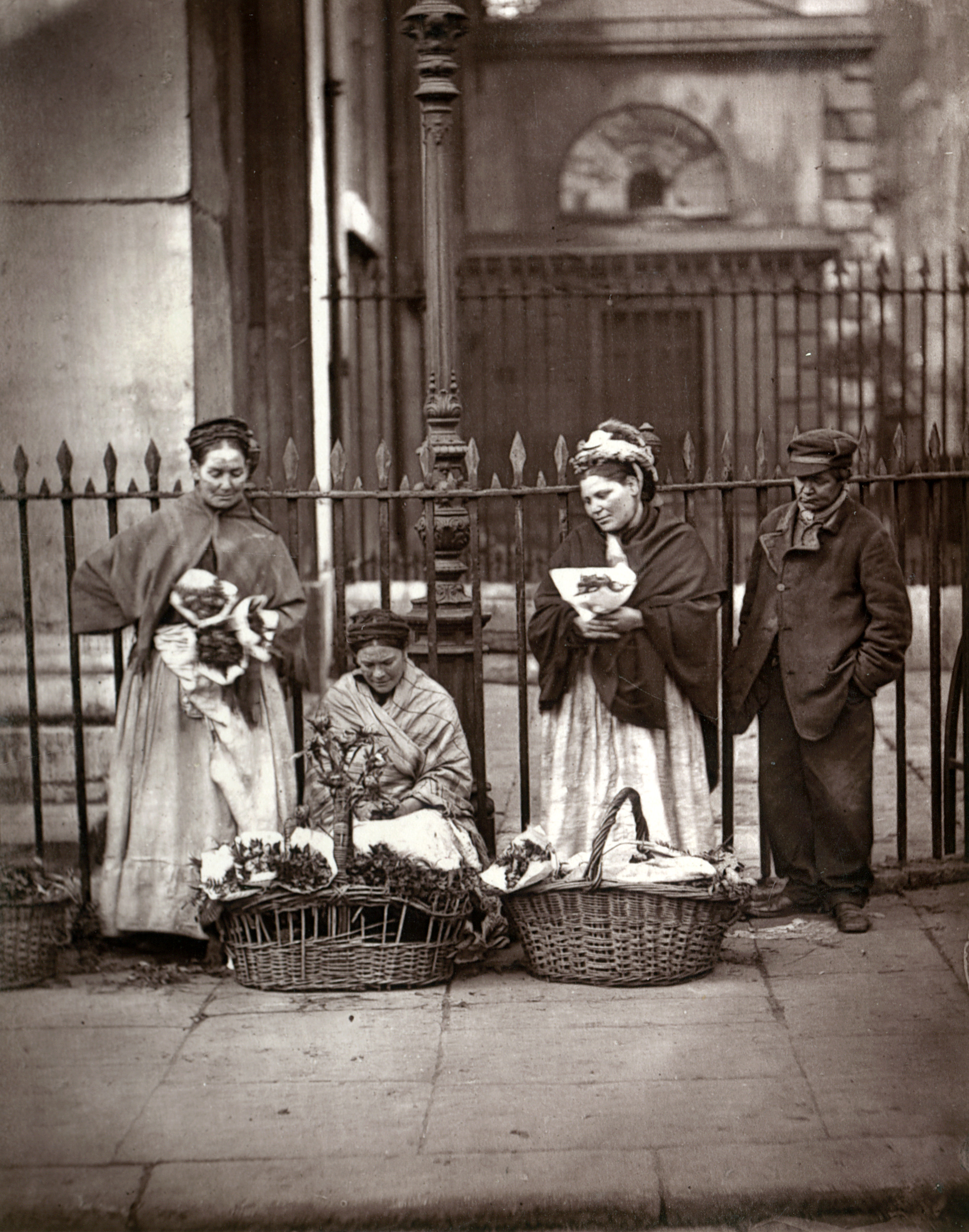
For some women, selling flowers offered a way to earn without owning a shop. The Covent Garden sellers bought flowers, arranged small bunches and offered them to passers-by. But even this modest trade required stock and a place to stand.
Smith described pitches outside St Paul’s Church passing through generations of flower-selling families. Those connections mattered. Knowing the market, its traders and its customers could help someone defend a small livelihood. A newcomer could not simply assume that the most useful selling place was available.
The same chapter describes a former brickfield worker known as Corduroy. After his health weakened, he sought lighter jobs, watching barrows or opening carriage doors for small payments. His story shows why a change of occupation did not always mean advancement. Sometimes it meant doing whatever the body could still manage. Read the original flower-sellers chapter.
Hunger, herrings and the economics of a barrow
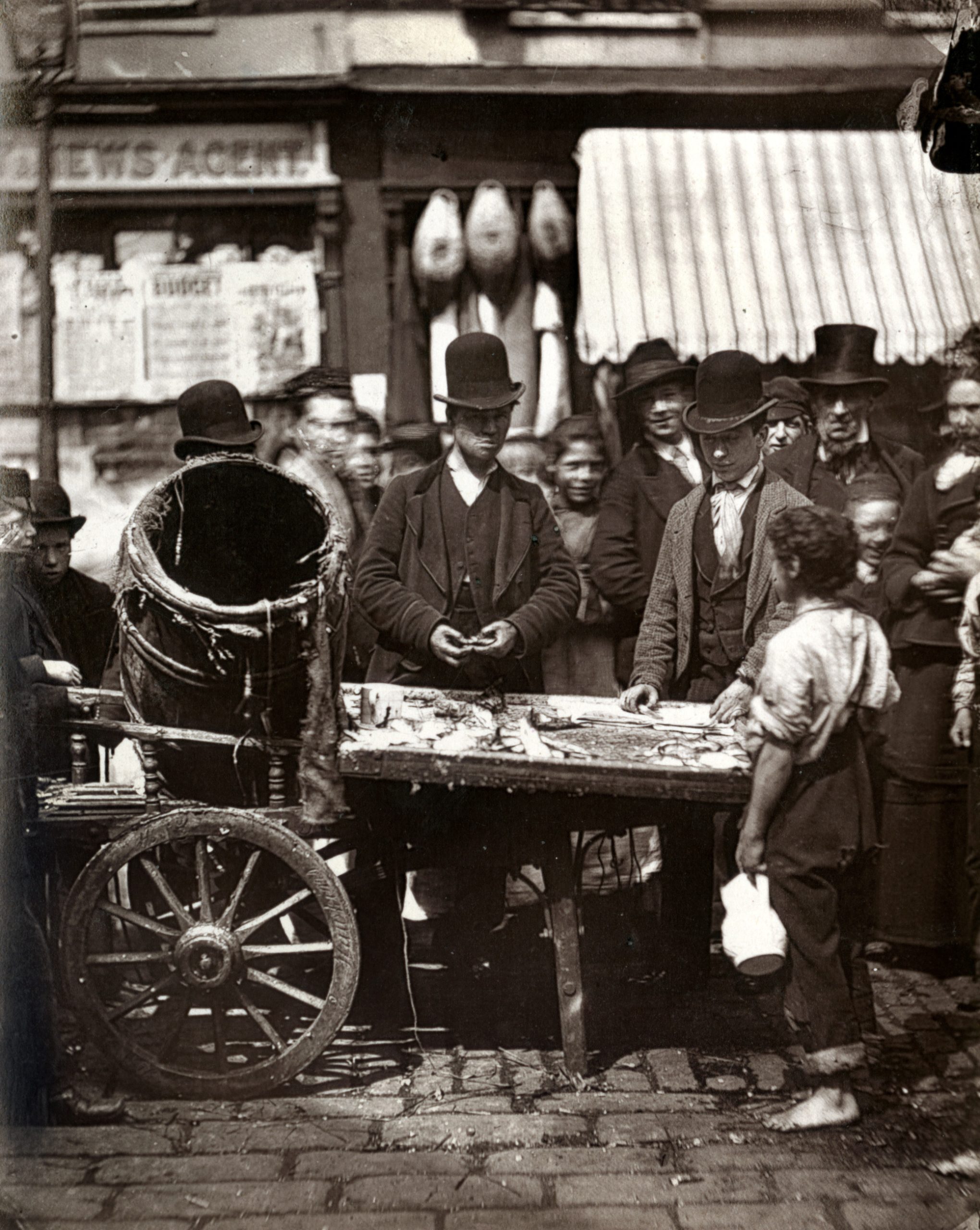
Joseph Carney, the fish seller in this photograph, traded between Seven Dials and Five Dials. On the day Thomson photographed him, Smith recorded that he had bought 500 herrings for 25 shillings. Carney sold larger fish for a penny and smaller ones for a halfpenny. Those are the prices in this particular account, not a fixed London price list.
A barrow helped keep overheads below those of a shop. Nevertheless, it had to be bought or hired. Smith described clubs through which traders paid towards obtaining one. Police action against street obstruction could also bring fines and the loss of access to a trader’s equipment.
Cheap fish linked the survival of sellers and customers. However, stock could sell quickly or take more than a day to clear. Carney changed what he sold according to supply and price. His trade demanded judgment as well as effort. Smith’s account gives the details of Carney’s business.
Selling yesterday’s possessions to pay for today
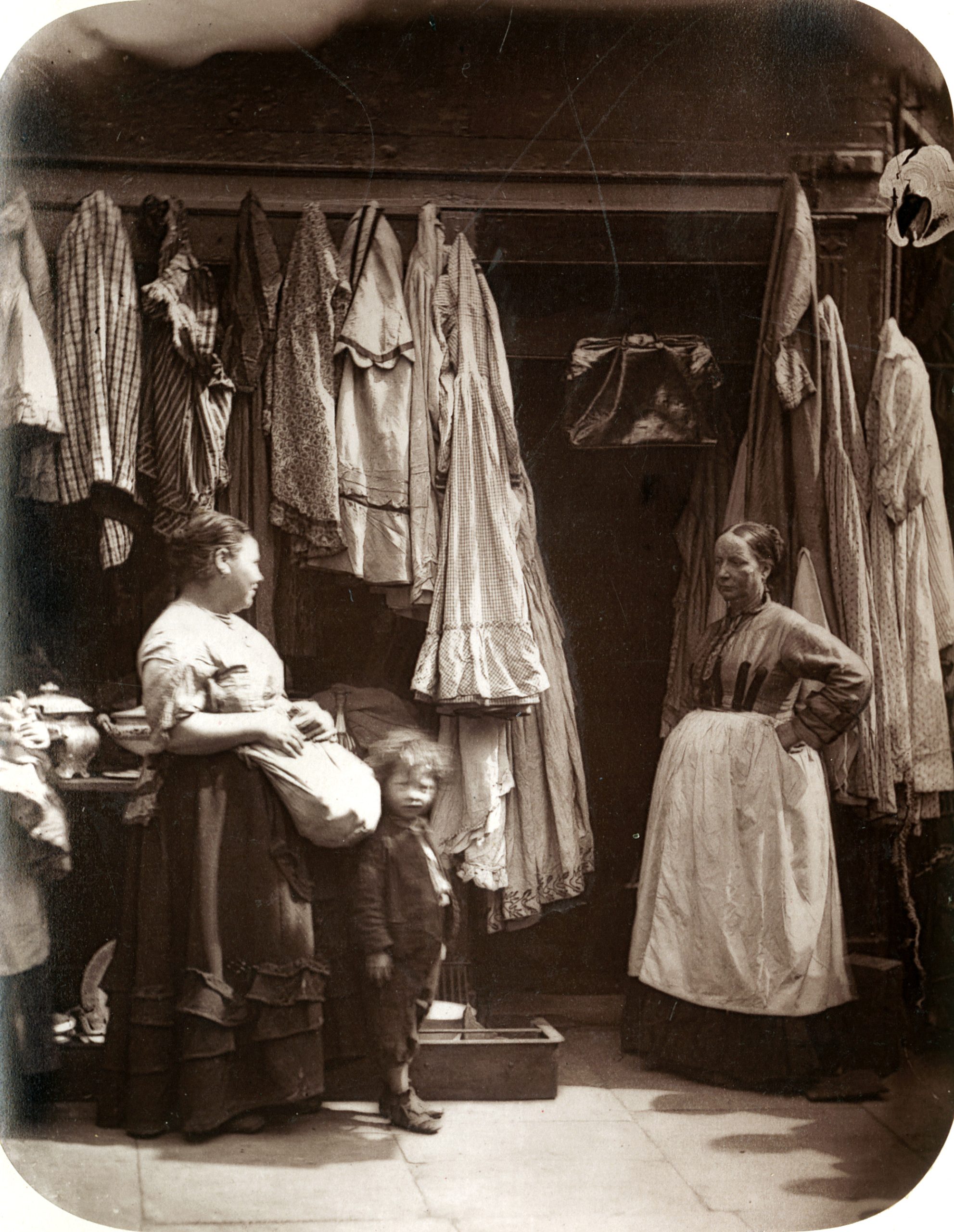
In Lumber Court, St Giles, second-hand dealers bought and sold clothing and household goods. Smith watched people offer tools, children’s clothes and even a pair of forks. The dealer did not necessarily want them. Having something to sell was no guarantee of finding a buyer.
Used clothes also supported skilled work. Garments were cleaned, patched and cut down into other articles. The less worn parts of a coat could become a child’s jacket or a waistcoat. Eventually, woollen rags could enter industrial recycling and return as cloth.
For London’s poor, this trade made clothing cheaper and belongings convertible into cash. But selling an essential item could deepen the next problem. Tools helped a worker earn. Clothes offered warmth and could affect an employer’s first impression. Disposing of them might solve today’s shortage while making recovery harder. That is the trap visible in the original account of the old-clothes trade.
Where did London’s poor sleep?
A rented room offered more than shelter. It provided a place to keep belongings and an address to give a potential employer. Yet the poorest households often faced overcrowded accommodation, and people without a home might seek a lodging house or a workhouse. Others remained outside.
The term “slum” can make these districts sound like a separate world. They were part of the same city as prosperous shops and comfortable homes. Cheap lodging could exist close to the people who bought a porter’s labour or a flower seller’s bunches. The boundary between relative security and destitution was often much narrower than a map suggests.
When illness took away the ability to earn
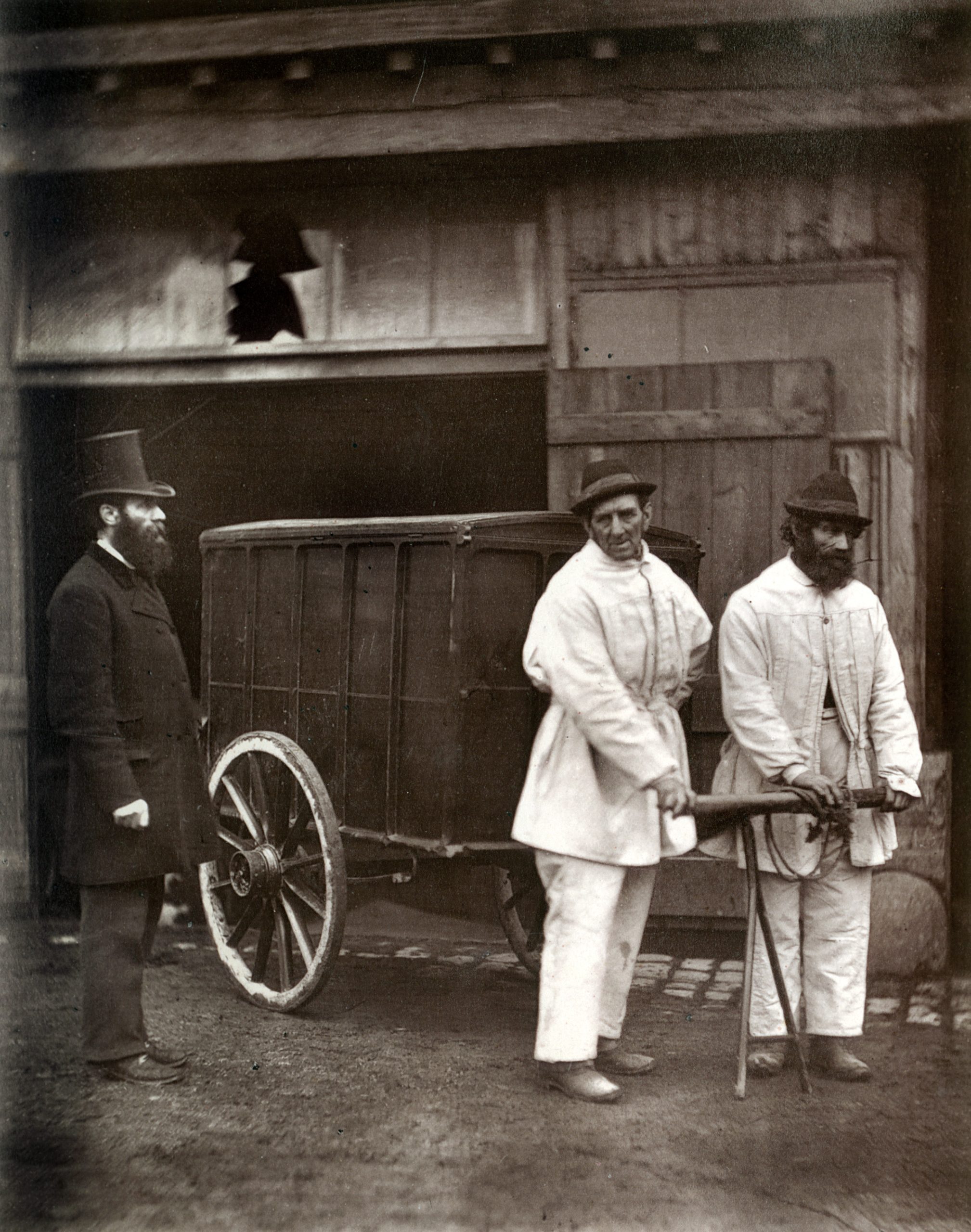
Crowding and poor sanitation helped diseases spread. Cholera was especially frightening because contaminated water could kill quickly. During the 1854 Soho outbreak, John Snow investigated deaths around the Broad Street pump and argued that water, rather than foul air alone, carried the disease.
London’s later sewer works improved the city’s defences. Nevertheless, the 1866 cholera outbreak struck parts of east London whose water supply remained vulnerable. Public-health improvements arrived unevenly. London Museum traces Snow’s investigation and the sanitation changes.
Thomson’s disinfectors show another response. Smith described workers treating rooms and belongings after infectious illness. They wore protective outer clothing and moved equipment in a closed handcart. Their work reminds us that public health depended on manual labour, not only on famous doctors and engineers.
For a household living from one payment to the next, sickness could create two crises at once: someone needed care, and someone could no longer earn. The chapter on public disinfectors also records resistance to official visits and anxiety over the expense of disinfection.
The workhouse: help that many people feared
The Poor Law Amendment Act of 1834 reorganised relief in England and Wales. It grouped parishes into unions and placed the workhouse at the centre of a deliberately discouraging system. Officials wanted assistance to seem less attractive than supporting oneself outside.
Inside, families could be separated into different departments. Residents faced uniforms, strict rules, a limited diet and work such as breaking stones or picking oakum, which meant separating fibres from old rope. These conditions help explain why people might struggle outside rather than enter.
However, the system did not operate identically everywhere. Poor relief also included assistance outside institutions, and the experiences of children, older people and sick residents differed from those of able-bodied adults. It is misleading to say that every poor Londoner entered a workhouse, or that every applicant met the same rules. The National Archives’ poor-law guide and its 1834 Poor Law resource explain the system and its records.
The woman on the steps had a plan
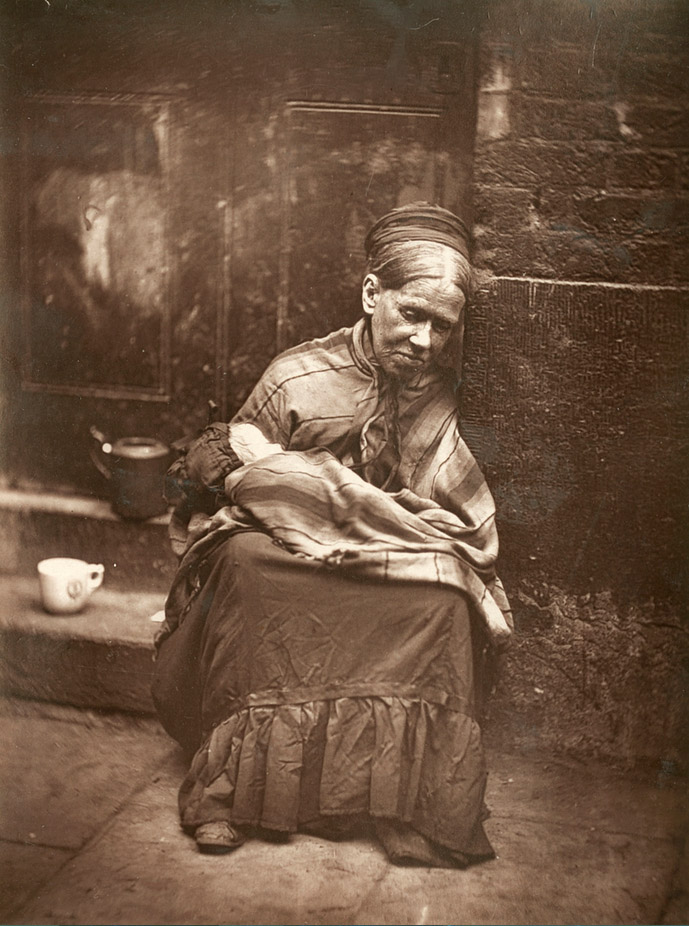
The woman holding the baby near the beginning of this article was not simply waiting for charity. According to Smith, she had worked as a tailoress until failing eyesight prevented it. Homelessness then made even cleaning work difficult to obtain.
Her proposed escape was practical: find enough money to reach the hop fields, earn a small reserve, rent a room and obtain work from that address. Meanwhile, she cared for another woman’s baby in return for bread and tea, although even that payment was uncertain.
The baby’s mother worked in a coffee shop. This was childcare arranged between women who had almost nothing to spare. Smith’s account accompanying “The Crawlers” preserves both the deprivation and the attempt to get out of it. The title is the publication’s harsh historical label, not a description we need to adopt.
Could London’s poor change their circumstances?
Individual strategies kept people alive, but collective action could change the terms of work. In 1889, London dock laborers challenged a hiring system that made men gather at the gates without knowing whether they would obtain even a few hours’ employment.
Their demands included sixpence an hour for ordinary day work and a minimum four-hour engagement when hired. Donations helped sustain the strike, including substantial support from Australia. The settlement conceded most of the demands, and the dockers returned to work in September.
The dockers’ and tailors’ strikes show that poor workers were organizers and negotiators as well as recipients of help. Better pay and more predictable hiring mattered because no amount of clever budgeting could make an absent wage appear.
What the poverty maps revealed
Late in the century, Charles Booth’s investigation gave poverty a scale that individual stories could not. His surveys found that 30.7% of Londoners lived in poverty under the inquiry’s classifications. That is a late-Victorian finding, not a figure for every year of the 1800s.
Booth’s colored maps also showed how sharply conditions could change between nearby streets. They help us resist the idea that the whole East End was uniformly destitute or that the rest of London was comfortable. His categories nevertheless reflected the judgments of his age, including language that modern readers should question. Explore the museum’s explanation of Booth’s maps.
Look again at the six photographs
These pictures show people pausing for a camera. They do not let us measure every person’s income, hear every conversation or know what happened after the photograph. Nor should we assume that every worker pictured was destitute.
Read alongside the accounts, however, they reveal the distance between having a trade and having security. A flower pitch, a barrow, a pair of tools or a room could keep a livelihood possible. Losing one could start a chain of losses. London’s poor understood those connections because they had to make decisions about them every day.
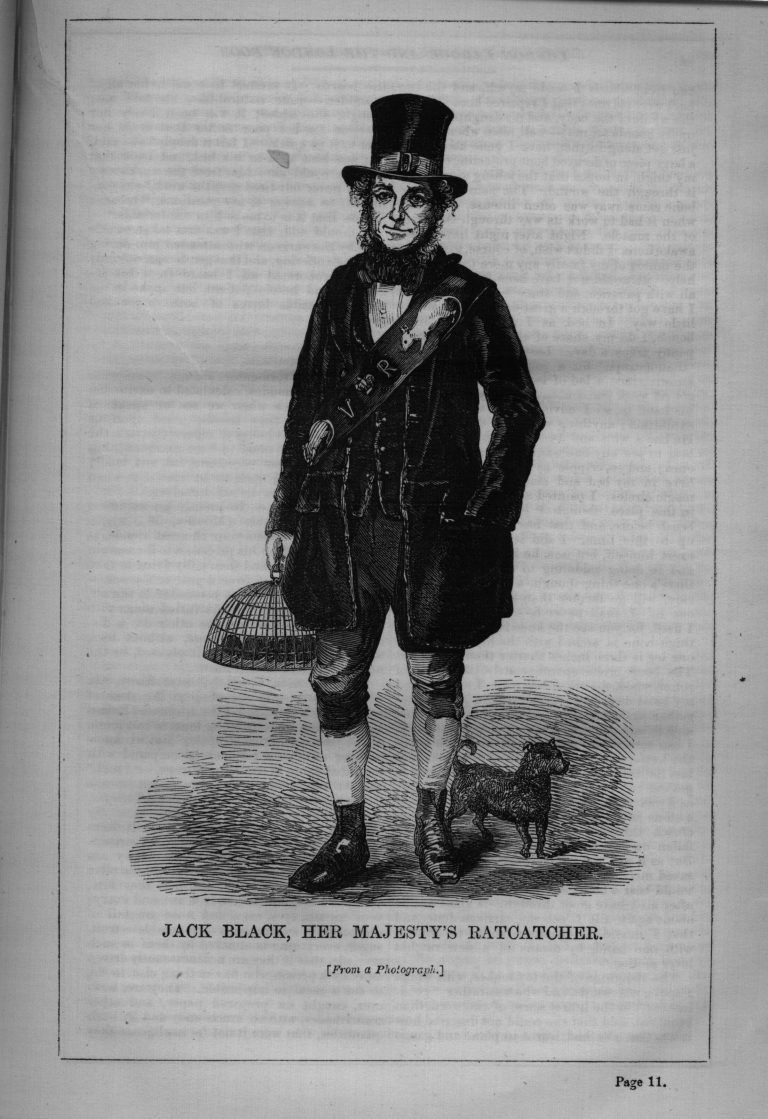
For another view of the city’s working lives, read about Jack Black, London’s Victorian rat-catcher, or browse our history articles.
Get Your Images Done Too
If you want your photos bringing back to life, send me a message on any of my social media accounts.
Follow me across social media for historical photo restorations, AI colorizations, and videos bringing the past to life!