Martin Luther King Jr.: His Early Life, Achievements, and Death
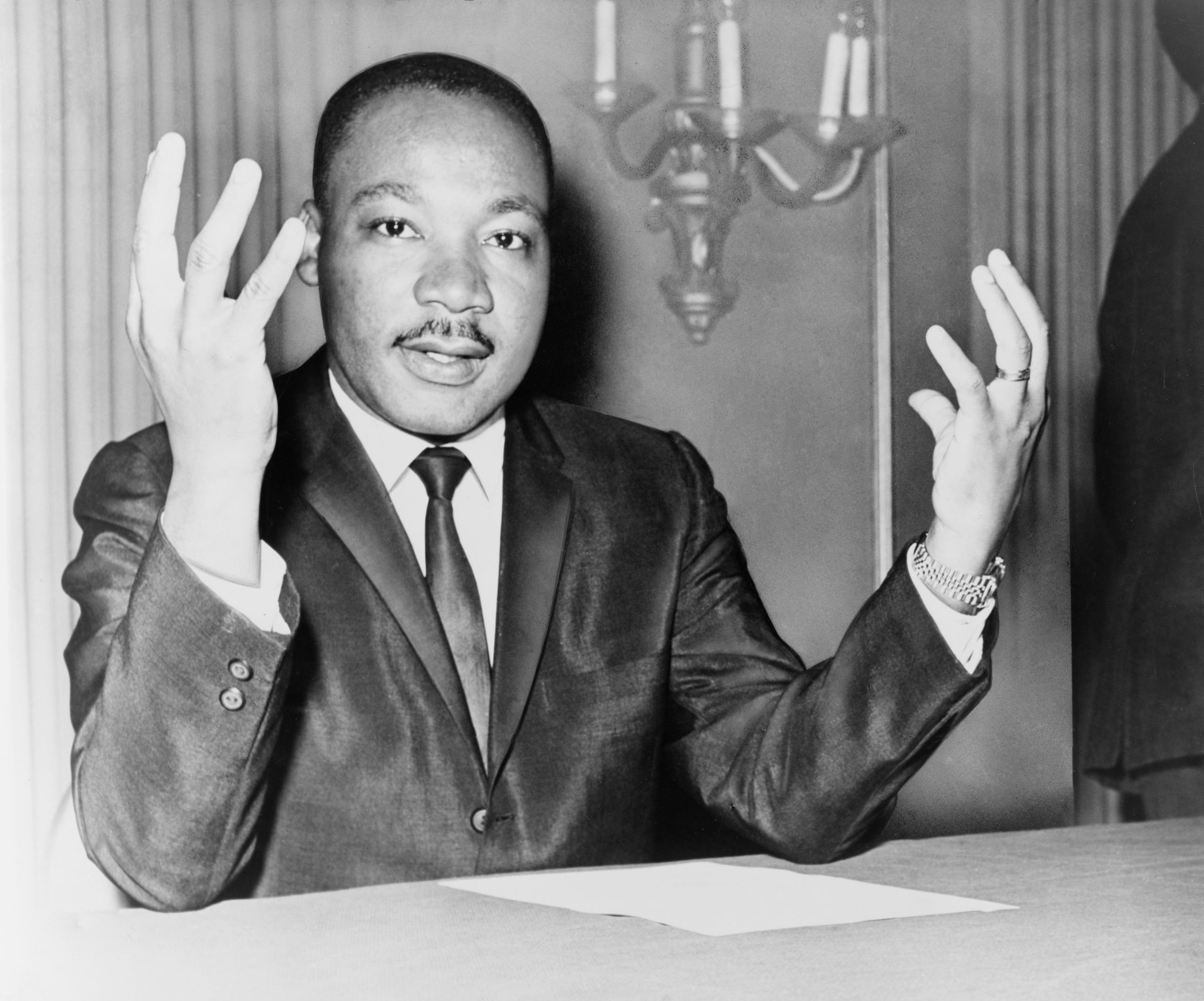
Martin Luther King Jr. helped change the United States by making racial injustice impossible for the nation to ignore. A Baptist minister, organizer, and advocate of nonviolent resistance, he became the most widely recognized leader of the modern American civil rights movement. His work helped build pressure for major changes in segregation and voting law, while his later campaigns challenged poverty, housing discrimination, and war. He was assassinated in 1968, aged just 39.
King’s story is larger than a single speech. It includes a childhood shaped by segregation, years of religious study, a young family living under threat, and campaigns built by thousands of people whose names are less familiar. His achievements become clearer when his leadership is understood as part of that collective struggle.
Early life: growing up in segregated Atlanta
King was born on January 15, 1929, in Atlanta, Georgia. He was originally named Michael King Jr. His father, a Baptist minister who became pastor of Ebenezer Baptist Church, later adopted the name Martin Luther King and used it for his son as well. His mother, Alberta Williams King, came from a family deeply involved in the same church.
He grew up with an older sister, Willie Christine, and a younger brother, Alfred Daniel. The family’s home on Auburn Avenue stood within an important center of Black religious, commercial, and community life. His parents emphasized education, faith, and personal dignity. Source: King Institute family history.
That supportive household did not protect him from segregation. As a child, King encountered the rules and humiliations of a society that separated people by race. His father’s refusal to accept degrading treatment and his mother’s insistence on his worth helped shape his response. Those early experiences made racial injustice personal long before he became a national leader. Read about King’s early years.
Education and the making of a minister
King entered Morehouse College in Atlanta in 1944, aged fifteen, through an early-admission program. He graduated in 1948 with a degree in sociology. Morehouse president Benjamin E. Mays was an important influence, presenting religious leadership as a responsibility to confront injustice rather than simply offer private comfort. Source: Morehouse College.
He continued his education at Crozer Theological Seminary in Pennsylvania, graduating in 1951, and then pursued doctoral studies at Boston University. He earned his PhD in systematic theology in 1955. His studies exposed him to debates about morality, social change, and the responsibilities of religious institutions. Source: Boston University’s King archive.
King’s political outlook drew on Christian teaching and the methods of nonviolent resistance associated with Mohandas Gandhi. Nonviolence, as he practiced it, meant organized pressure: boycotts, demonstrations, civil disobedience, negotiation, and a willingness to accept arrest. It did not mean quietly waiting for opponents to change their minds.
Marriage to Coretta Scott and their children
While studying in Boston, King met Coretta Scott, a musician and student at the New England Conservatory. They married on June 18, 1953, at her parents’ home in Alabama. In 1954, he became pastor of Dexter Avenue Baptist Church in Montgomery, Alabama.
They had four children: Yolanda Denise King, born in 1955; Martin Luther King III, born in 1957; Dexter Scott King, born in 1961; and Bernice Albertine King, born in 1963. Coretta was an activist in her own right. She supported civil rights campaigns, raised funds through freedom concerts, and later became a major guardian of the movement’s legacy. Read the King Institute biography of Coretta Scott King.
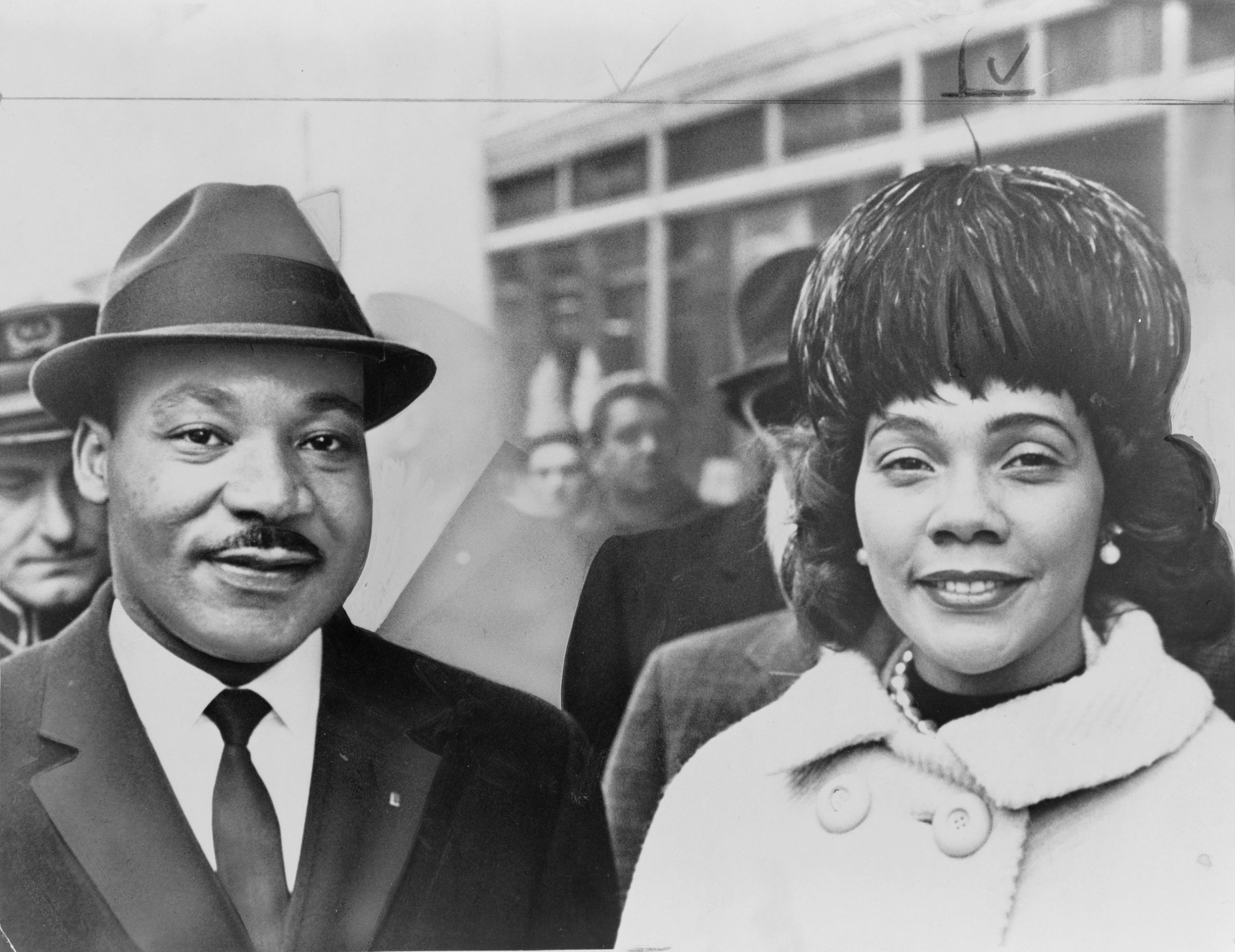
Public leadership imposed heavy costs on the family. Threats, arrests, travel, and the danger of violence repeatedly interrupted ordinary home life. Coretta’s work and endurance were essential to the family’s survival, as well as to the wider movement.
1955–1956: the Montgomery bus boycott
King’s emergence as a national figure began with a campaign he did not create alone. On December 1, 1955, Rosa Parks was arrested after refusing to surrender her bus seat to a white passenger. Local activists, including Jo Ann Robinson and E. D. Nixon, helped organize a boycott of Montgomery’s segregated buses.
The Montgomery Improvement Association was formed to sustain the protest, and King was chosen as its president. At twenty-six, he became the public spokesman for a movement sustained by Black residents walking, sharing rides, raising money, and refusing to return to the buses.
The boycott lasted 381 days. Participants faced intimidation and economic pressure, and King’s home was bombed in January 1956. His call for nonviolent discipline became central to the campaign’s public identity. The legal challenge in Browder v. Gayle ultimately brought a ruling against bus segregation, and the boycott ended in December 1956.
Montgomery demonstrated that sustained, organized protest could challenge an entrenched system. It also showed the relationship between direct action and litigation: public pressure and court challenges reinforced each other. Source: King Institute account of the boycott.
Building a movement through the SCLC
In 1957, King helped establish the Southern Christian Leadership Conference, or SCLC, and became its first president. The organization connected ministers and local movements, supporting campaigns against segregation and barriers to voting. It helped turn the attention generated by Montgomery into a continuing regional struggle.
King worked alongside people such as Ralph Abernathy, Ella Baker, Fred Shuttlesworth, and Bayard Rustin. Their approaches were not always identical, and local organizers often did the patient work on which national campaigns depended. Students, church members, lawyers, domestic workers, and volunteers supplied leadership that no single famous figure could replace. Learn about the SCLC.
He also survived a serious stabbing at a New York book signing in 1958. The following year, he visited India, deepening his engagement with Gandhian nonviolence. In 1960, he returned to Atlanta to work from the SCLC’s headquarters and serve with his father at Ebenezer Baptist Church. Source: King Institute biographical introduction.
1963: Birmingham and the argument for direct action
In Birmingham, Alabama, King and the SCLC joined an existing local movement led by Fred Shuttlesworth and the Alabama Christian Movement for Human Rights. The 1963 campaign used demonstrations and economic pressure to challenge segregation. It brought arrests, threats, and violent police responses.
King was jailed in April. During his imprisonment, he wrote the work known as Letter from Birmingham Jail, explaining why people denied basic rights could not be expected to postpone protest indefinitely. He defended nonviolent direct action as a way to expose injustice and create pressure for meaningful negotiation. Read about the letter and its history.
The participation of young demonstrators and images of police using dogs and powerful fire hoses drew national and international attention. Birmingham exposed the violence that upheld segregation and strengthened demands for federal intervention. It was a major turning point, achieved through local resistance and national support at considerable personal risk. Source: the Birmingham campaign.
The March on Washington and “I Have a Dream”
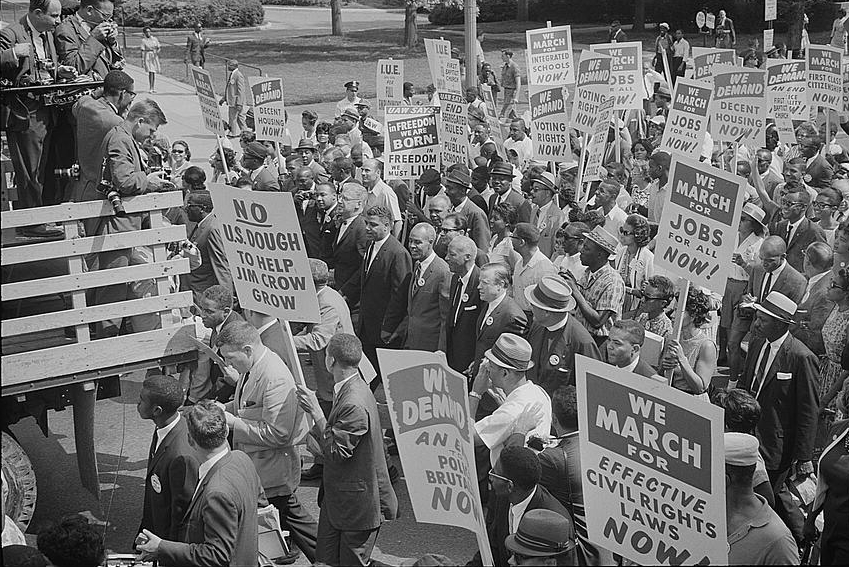
On August 28, 1963, King addressed the March on Washington for Jobs and Freedom at the Lincoln Memorial. More than 200,000 people gathered for an event demanding civil rights and economic opportunity. A. Philip Randolph and Bayard Rustin were central to its organization, with several major civil rights groups participating.
King’s I Have a Dream speech connected the movement’s demands to the nation’s promises of liberty and equality. Its power came from his ability to combine moral argument, religious language, historical memory, and a vision of a different future. The speech became famous, but the march’s full title matters: jobs and material security were part of its purpose, alongside the end of segregation. Source: National Park Service history of the march.
1964: civil rights legislation and the Nobel Peace Prize
President Lyndon B. Johnson signed the Civil Rights Act on July 2, 1964. The law prohibited segregation in covered public accommodations and outlawed major forms of employment discrimination, among other provisions. King’s campaigns helped create pressure for action, but the law resulted from a broad movement, legal work, political negotiation, and congressional votes. He did not pass it single-handedly. Source: National Archives.
King received the Nobel Peace Prize in Oslo on December 10, 1964. At thirty-five, he was then the youngest recipient of the Peace Prize. The award recognized his leadership in nonviolent resistance to racial oppression and gave the American struggle a larger international platform. He treated the honor as recognition of the movement rather than a purely personal achievement. Source: National Park Service account of the Nobel award.
1965: Selma and the fight for voting rights
Legal promises of citizenship meant little when officials could prevent Black citizens from registering to vote. In Selma, Alabama, local activists and the Student Nonviolent Coordinating Committee had already worked against those barriers before the SCLC intensified the campaign.
On March 7, 1965, state troopers and local lawmen attacked marchers crossing the Edmund Pettus Bridge. The event became known as Bloody Sunday. King was not present at that first march. He subsequently led further demonstrations, including the successful Selma-to-Montgomery march of March 21–25. Read the history of the Selma marches.
Johnson signed the Voting Rights Act on August 6, 1965. It attacked discriminatory voting barriers and created federal enforcement mechanisms in jurisdictions with a history of exclusion. The campaign helped turn the suppression of Black voting into an urgent national issue, although passing the law did not end every obstacle to political equality. Source: National Archives.
Beyond Southern segregation: housing, poverty, and war
King increasingly emphasized that access to a lunch counter or ballot did not guarantee a decent home, secure employment, or an adequate income. In 1966, he joined local organizers in the Chicago Freedom Movement, challenging housing discrimination and conditions in northern cities. Hostility there underlined that racial inequality was not confined to the South. Source: the Chicago campaign.
On April 4, 1967, at Riverside Church in New York, King publicly condemned the Vietnam War in his Beyond Vietnam address. He connected militarism abroad with unmet needs at home. The position brought sharp criticism, including from people who had supported his civil rights work, and strained his relationship with Johnson. Source: King’s relationship with President Johnson.
Late in 1967, King and the SCLC announced the Poor People’s Campaign. It aimed to bring people from different racial backgrounds to Washington to demand jobs, income, and stronger action against poverty. He was pursuing a broader understanding of justice, one that joined legal equality to economic security. Read about the Poor People’s Campaign.
Threats, surveillance, and opposition
King’s public reputation was not uniformly admiring during his lifetime. He faced violent white resistance, criticism from political leaders, and disagreements within the freedom movement over strategy, speed, and the effectiveness of nonviolence. His expanding economic and antiwar agenda made him more controversial.
The FBI monitored him and conducted covert efforts to undermine him. Those operations went beyond ordinary observation and included attempts to damage his reputation. The surveillance and harassment are an important part of the historical record, showing the pressure directed at a leader whose work is now officially commemorated. Source: King Institute account of the FBI.
Memphis: supporting sanitation workers
In 1968, King supported striking sanitation workers in Memphis, Tennessee. The workers sought better pay, safer conditions, union recognition, and dignity. For King, their struggle linked racial inequality to the treatment of working people, fitting the concerns of his final campaigns.
He returned to Memphis on April 3 and delivered the address remembered as I’ve Been to the Mountaintop at Mason Temple that evening. It would be his final speech. His presence in Memphis was part of a continuing labor struggle, rather than simply the setting for the tragedy that followed. Source: Memphis sanitation workers’ strike.
When and how did Martin Luther King Jr. die?
King was shot on April 4, 1968, while standing on the balcony outside room 306 at the Lorraine Motel in Memphis. He was taken to St. Joseph’s Hospital and pronounced dead at 7:05 p.m. He was thirty-nine years old.
His assassination brought mourning, anger, and unrest across the United States. James Earl Ray later pleaded guilty to the murder in 1969 and received a ninety-nine-year prison sentence. He subsequently tried to withdraw his plea. Source: King Institute account of the assassination.
On April 8, Coretta Scott King joined a march in Memphis supporting the sanitation workers. King’s funeral took place in Atlanta on April 9. The movement continued after his death, but the loss of such a visible organizer and moral voice changed its course.
What did Martin Luther King Jr. achieve?
King helped make nonviolent mass protest one of the most effective forces in American public life. His leadership in Montgomery, Birmingham, and Selma helped challenge segregation and disenfranchisement. His speeches and writings explained why civil rights were obligations of democracy, not favors to be granted at someone else’s convenience.
His work contributed to the political conditions that produced the Civil Rights Act of 1964 and the Voting Rights Act of 1965. His Nobel Peace Prize recognized the international significance of that struggle. He also insisted that freedom had an economic dimension, pressing questions about housing, wages, poverty, and the human cost of war.
These achievements belong to a movement as well as to a man. Remembering organizers such as Parks, Robinson, Baker, Shuttlesworth, Rustin, and the many unnamed participants gives a more accurate picture of how change happened. King’s distinctive contribution was to help connect local struggles, national attention, and a persuasive moral vision.
His legacy after 1968
Coretta Scott King founded the King Center and worked to preserve his writings, promote nonviolence, and secure recognition of his legacy. A federal holiday honoring King was signed into law in 1983 and first observed in 1986. Source: National Park Service.
The fullest account of his life reaches beyond the familiar dream of racial harmony. King challenged laws and customs, organized disruptive but disciplined protest, and demanded economic justice. His life ended early, but the questions he raised about dignity, power, and responsibility remain central to understanding the United States.
Read the march photograph as well as the speech
The photograph of the 1963 March on Washington is crowded with placards. Some demand jobs, others housing, voting rights, or effective civil rights legislation. Those visible demands make the event broader than a single speech about racial harmony. They show economic opportunity and legal protection being pursued together.
The Library of Congress image record, reproduced on Wikimedia Commons, credits Warren K. Leffler and dates the photograph to August 28, 1963. It is a view of marchers and leaders, not an image of King delivering his address. Keeping that distinction in the caption prevents a related scene from being mistaken for the speech itself.
The picture also gives a concrete reason to avoid a one-person account of the movement. King is within a gathering of organizers and demonstrators carrying overlapping demands. It supports the article’s emphasis on collective action, while it cannot tell us every participant’s motivation. Read the signs as evidence of public demands, not as a complete description of everyone in the crowd.
About the historical photographs
The photographs accompanying this article are public-domain images from collections at the Library of Congress, accessed through Wikimedia Commons. Captions identify their photographers, dates, and source pages. No AI-generated scenes are used as historical evidence.
Editorial and source note
Prepared for Bringing History To Life with AI-assisted research and drafting. Historical sources and image records are linked for readers to check. The image commentary is editorial interpretation of the reproductions shown, with limits and uncertainties identified.
If you want your photos bringing back to life, send me a message on any of my social media accounts. Follow me across social media for historical photo restorations, AI colorizations, and videos bringing the past to life!
Instagram: https://www.instagram.com/bringing_history_to_life/
Facebook: https://www.facebook.com/bringinghistory2life |
TikTok: https://www.tiktok.com/@bringing_history_to_life |
YouTube: https://www.youtube.com/@bringing_history_to_life