
Æthelstan: The First King of England and the Making of a Kingdom
Æthelstan is generally regarded as the first king of a united England. In 927, he brought Viking York under his control, joining the northern kingdom to the lands already ruled by his family. His achievement built on the work of his grandfather, Alfred the Great, and his father, Edward the Elder.
Calling him the first “true” king needs a little care. Earlier English kings were real rulers of established kingdoms. Æthelstan’s distinction was the reach of his authority: he ruled a united English kingdom, rather than one of its constituent parts. That did not make him king of a united Britain in the modern sense.
Who was Æthelstan, the first king of England?
Born around 894, Æthelstan was Edward the Elder’s son and Alfred the Great’s grandson. His name is also written Athelstan or Aethelstan. He belonged to the royal family of Wessex, whose power had grown through decades of conflict and negotiation with Viking rulers.
His accession followed Edward’s death in 924. The succession was unsettled, and Æthelstan’s coronation took place at Kingston-upon-Thames in 925. This explains why accounts give different starting dates: his accession belongs to 924, his coronation to 925, and the unification associated with his title as England’s first king to 927. World History Encyclopedia’s biography distinguishes these stages.
Why wasn’t Alfred the Great the first king of England?
Alfred defended Wessex against Viking conquest and helped create the conditions in which a larger English kingdom could emerge. His victory at Edington in 878 and his network of fortified settlements were central to that survival. Yet he did not rule all the territory that his grandson would later bring together.
The Royal Family’s account of Alfred emphasizes his defence and reconstruction of Wessex. His importance does not depend on giving him a title that fits Æthelstan more closely. England’s formation was a family achievement across generations, with Æthelstan completing a decisive territorial step.
How Æthelstan became the first king of England in 927
The turning point came after the death of Sihtric, the Viking ruler of York. Æthelstan moved north and took control of the city in 927. The northern acquisition transformed the scale of his kingdom.
At Eamont, near Penrith, other rulers acknowledged his superior position on 12 July 927. The Athelstan Museum identifies this meeting as an important moment in his ascendancy. But an oath of submission was different from absorbing a neighbouring kingdom. Scotland and the Welsh kingdoms retained their own rulers. Claims of supremacy over Britain should therefore be read as claims about political hierarchy, rather than a description of a single British state.
The Battle of Brunanburh: defending the kingdom
Unification did not end resistance. In 937, Æthelstan and his brother Edmund fought a coalition that included Scots and Norse forces from Ireland at Brunanburh. Their victory defended the kingdom against a major challenge.
The battle’s exact location remains disputed. Historic England’s record describes the competing site identifications and the evidence of the Old English poem celebrating the battle. A confident map pin would give readers more certainty than the surviving evidence allows.
More than a warrior king
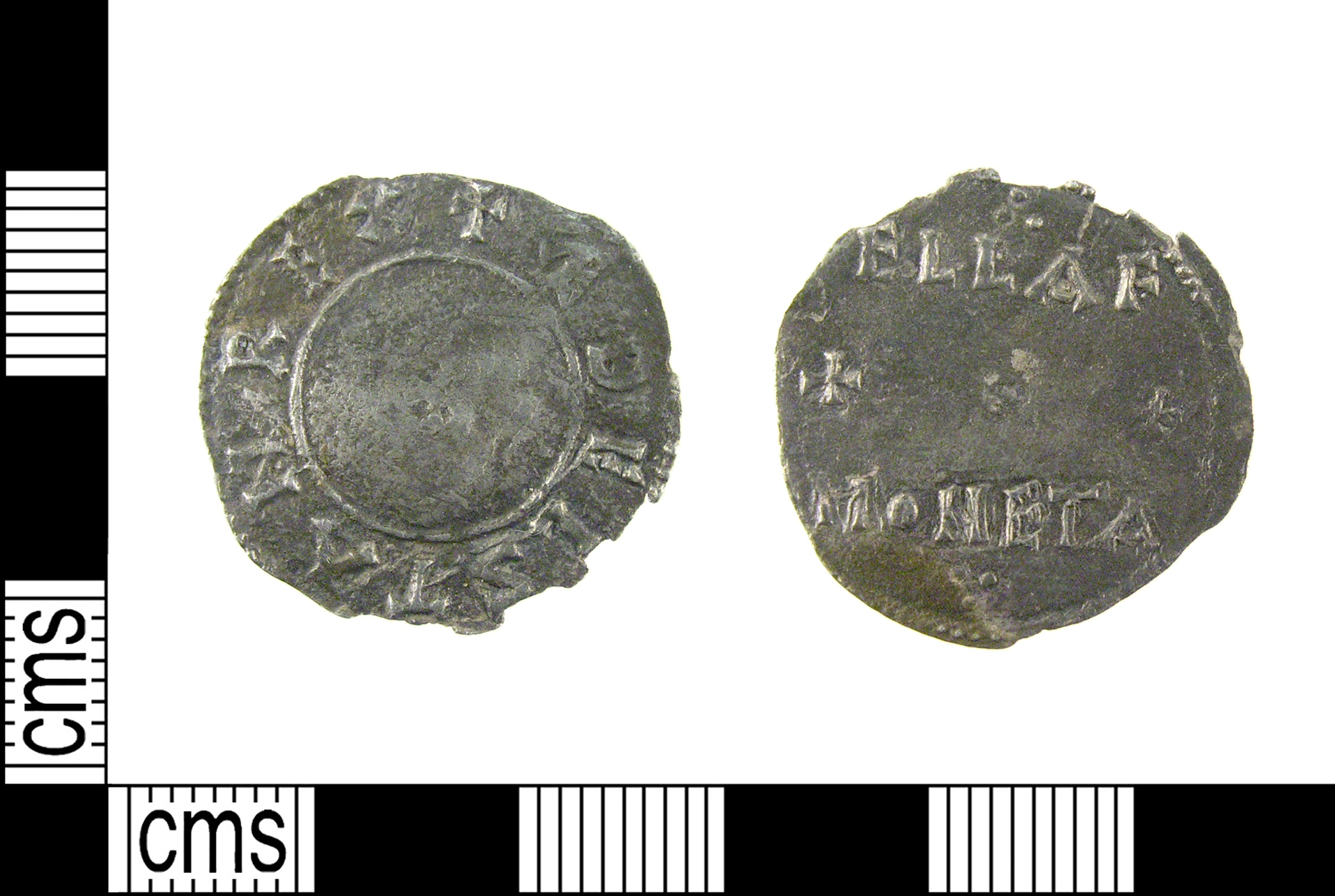
Æthelstan also worked to make royal authority effective in daily life. His laws addressed order and trade, while measures concerning coinage sought to regulate silver and punish fraud. Royal government had to reach beyond the battlefield into markets, transactions and local communities.
He strengthened overseas relationships through the marriages of his half-sisters to continental rulers. Gifts to churches and the cultivation of religious connections were another part of his kingship. The Royal Family’s biography places these legal, diplomatic and religious activities alongside his military achievements.
A surviving image from his lifetime
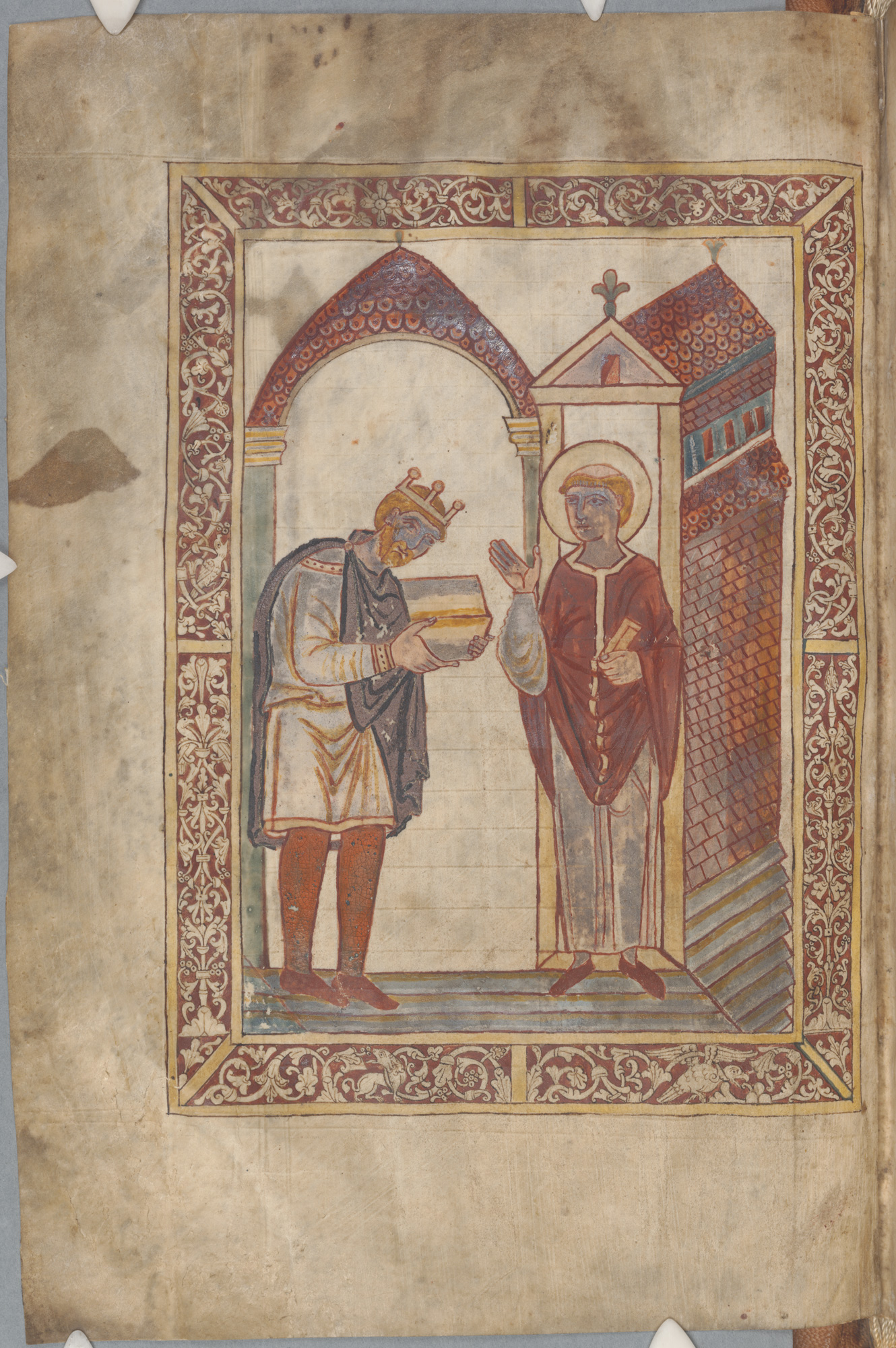
One of the most revealing survivals is a manuscript showing a crowned Æthelstan presenting a book to Saint Cuthbert. The book, now Corpus Christi College, Cambridge, MS 183, contains Bede’s lives of the saint and was made for the community of St Cuthbert in the mid-930s.
Corpus Christi College’s account identifies the frontispiece as the earliest surviving contemporary portrait of an Anglo-Saxon king in a manuscript. It is a ceremonial image, rather than a photographic record of his face. Its value lies in showing how kingship was represented during his own lifetime: crowned authority joined to Christian generosity.
Did Æthelstan have children, and where was he buried?
Æthelstan died childless on 27 October 939 and was buried at Malmesbury. His half-brother Edmund I succeeded him. The Athelstan Museum notes that the tomb visitors see in Malmesbury Abbey is a later, fifteenth-century monument and is empty; his precise burial location is unknown.
The first king of England and his legacy
Æthelstan’s place in history rests on bringing the English kingdom together and defending it. The dates tell the story clearly: accession in 924, coronation in 925, unification in 927 and victory at Brunanburh in 937.
As the first king of England, he inherited the results of earlier struggles, then extended them into something larger. Remembering that shared effort makes his achievement easier to understand: the first king of a united England emerged from generations of work, and still had to fight to hold the kingdom together.
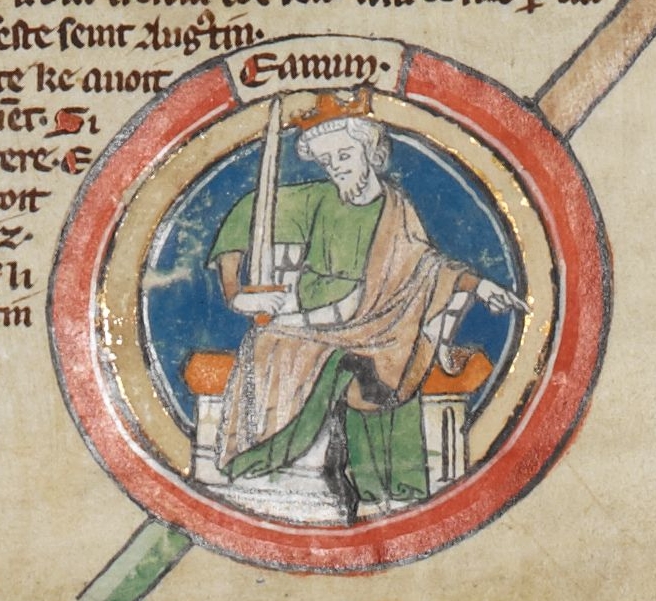
Continue the story with Edmund I, England’s second king, who inherited Æthelstan’s kingdom in 939.
If you want your photos bringing back to life, send me a message on any of my social media accounts.
Follow me across social media for historical photo restorations, AI colorizations, and videos bringing the past to life!
Instagram: https://www.instagram.com/bringing_history_to_life/
Facebook: https://www.facebook.com/bringinghistory2life
TikTok: https://www.tiktok.com/@bringing_history_to_life
YouTube: https://www.youtube.com/@bringing_history_to_life

.jpg)

One Comment