Laura Ingalls Wilder: Her Life, Marriage, and Children
Long before Laura Ingalls Wilder became a familiar name on bookshelves, she was a daughter, teacher, farmer, wife, and mother. Her life crossed a remarkable span of American history, from a Wisconsin log cabin in 1867 to the middle of the twentieth century. The photographs that survive bring us closer to the woman behind the Little House stories.
She married Almanzo Wilder and had two children: a daughter, Rose, who became an author, and a son who died in infancy. Her family story includes both lasting companionship and devastating loss.
A Childhood on the Move
Laura Elizabeth Ingalls was born on February 7, 1867, near Pepin, Wisconsin, to Charles and Caroline Ingalls. Readers would come to know her parents as Pa and Ma. Family life involved repeated moves, demanding work, and the uncertainty of trying to establish a home.
The Ingalls family lived in Wisconsin, Kansas, Minnesota, Iowa, and Dakota Territory. Laura’s experiences near Walnut Grove, Minnesota, later supplied material for On the Banks of Plum Creek. Grasshopper damage to crops helped drive the family away from their Minnesota farm. In Iowa, her parents helped manage a hotel, an episode absent from the original Little House novels. [Minnesota Historical Society]
By 1879, the family had moved to the De Smet area in Dakota Territory, now South Dakota. Laura’s teenage years there became the background for several books. The blizzards of the winter of 1880–1881, which isolated the community, were among the hardships she later remembered in The Long Winter. [National Park Service]
Who Did Laura Ingalls Wilder Marry?
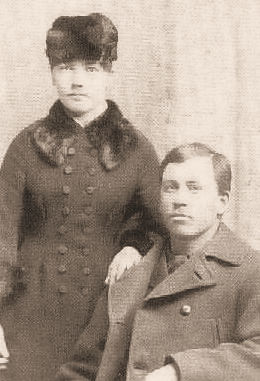
Laura married Almanzo James Wilder on August 25, 1885, in De Smet, Dakota Territory. She was 18 years old. Almanzo, a farmer originally from New York, would become both her lifelong partner and the subject of Farmer Boy, her book about his childhood. [Kansas Historical Society]
Before her marriage, Laura had qualified to teach at just 15. Teaching was one of the ways she contributed to family life before starting a household of her own. Her marriage did not bring an immediate escape from the difficulties she had known as a child. Farming remained vulnerable to weather, disease, and financial setbacks.
How Many Children Did Laura and Almanzo Have?
Laura and Almanzo Wilder had two children. Only one survived to adulthood.
Rose Wilder Lane, Their Daughter
Rose Wilder was born on December 5, 1886, in De Smet. She later became known as Rose Wilder Lane, a widely published journalist and author. Her life took her far beyond the places of her parents’ early marriage, but she remained closely connected to her mother’s writing. [National Archives]
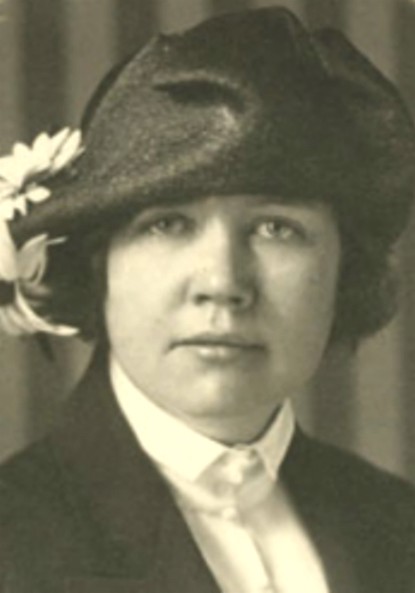
Rose played an important part in the creation of the Little House books. The National Archives describes her as Laura’s editor and collaborator: she typed manuscripts and revised them for publication. The books grew out of Laura’s experiences and memories, shaped through the work of both women.
Their Infant Son
In 1889, Laura gave birth to a boy. According to the U.S. Census Bureau’s historical account, he died at 12 days old and was unnamed. He is often referred to simply as Baby Boy Wilder. [U.S. Census Bureau]
His short life is an essential part of Laura’s family history. Saying that she had only one child overlooks the son she and Almanzo lost. Rose was their only surviving child, but she was not their only child.
Illness, Loss, and a Fresh Start
The early years of the Wilders’ marriage were exceptionally difficult. In 1888, Laura and Almanzo contracted diphtheria. They survived, but Almanzo’s recovery was difficult. Alongside illness came drought, crop failures, and a house fire. The death of their son added another loss.
They sought help and a new beginning, spending time with Almanzo’s family in Minnesota and later moving to Florida. In 1894, Laura, Almanzo, and Rose moved to the Mansfield area of Missouri. There they established Rocky Ridge Farm, which became the enduring home their earlier years had not provided. [U.S. Census Bureau]
Becoming an Author at 65
Laura’s literary career began before the children’s books. In 1911, she started writing regularly for the Missouri Ruralist, drawing on her knowledge of farming, household work, and community life. Her public voice developed over years of practical experience. [Minnesota Historical Society]
Little House in the Big Woods appeared in 1932, when she was 65. Seven more Little House books followed during her lifetime, ending with These Happy Golden Years in 1943. Farmer Boy told Almanzo’s story rather than Laura’s, making her husband’s early life part of the wider family narrative.
The First Four Years, about the beginning of their marriage, was published after her death in 1971. Its surviving manuscript is held at the Herbert Hoover Presidential Library. Unlike the earlier books, it did not receive the same revision by Laura and Rose, and its tone is noticeably different. [National Archives]
The Real Life Behind Little House
The Little House books are novels inspired by real experiences, not a complete documentary record. Laura selected, rearranged, and left out parts of her past. The television adaptation is another retelling and should not be used as a biography.
The history also extends beyond the Ingalls family’s perspective. In Kansas, they occupied Osage land that was not open to white settlement. Recognizing that context makes it possible to read the books with affection while also asking whose experiences their telling leaves outside the frame. [Kansas Historical Society]
Her Final Years and Lasting Legacy
Almanzo died on October 23, 1949, after more than six decades of marriage. Laura died in Mansfield on February 10, 1957, three days after her 90th birthday. [Kansas Historical Society]
Her lasting appeal lies partly in the ordinary details she preserved: food, weather, work, family routines, and the effort of building a home. The old photographs add something different. They show the faces of people whose lives were larger, harder, and more complicated than any single story could contain.
Reading the Ingalls family portrait
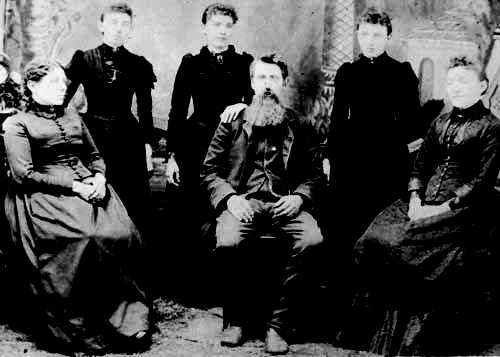
The family photograph above has a painted studio backdrop, carefully arranged standing and seated figures, and formal clothing. It records how the sitters presented themselves for a portrait. It does not show a frontier home, a schoolroom, or an ordinary working day. Reading it as a direct illustration of a scene from Little House would give it a meaning the photograph alone cannot support.
Its strong contrast also limits what can be recovered. Some facial highlights are washed out and the darkest clothing has little visible texture. An enhancement can make edges easier to see, but it cannot establish an eye color, restore an undocumented fabric pattern, or reveal a sitter’s personality. Any colorization would be an interpretation, not a recovered color record.
The books require a similar distinction between evidence and interpretation. The State Historical Society of Missouri describes Laura reworking autobiography as fiction. Family photographs, historical records, and the novels answer different questions. Use the novels for the story she crafted, and documentary sources to check dates, movements, and family relationships. For the other side of their shared life, see Almanzo’s biography.
Photograph Credits
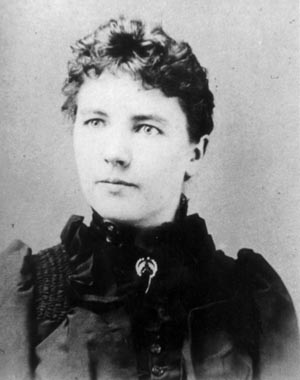
All four photographs are archival images listed as public domain by Wikimedia Commons, with individual source and rights links in their captions. The Laura and Rose portraits are identified as public domain in the United States. The photographs are presented as archival records rather than AI recreations.
Explore more historical photographs and the stories behind them, or see our photo restoration, colorization, and video pricing.
Editorial and source note
Prepared for Bringing History To Life with AI-assisted research and drafting. Historical sources and image records are linked for readers to check. The image commentary is editorial interpretation of the reproductions shown, with limits and uncertainties identified.
If you want your photos bringing back to life, send me a message on any of my social media accounts. Follow me across social media for historical photo restorations, AI colorizations, and videos bringing the past to life!
Instagram: https://www.instagram.com/bringing_history_to_life/
Facebook: https://www.facebook.com/bringinghistory2life |
TikTok: https://www.tiktok.com/@bringing_history_to_life |
YouTube: https://www.youtube.com/@bringing_history_to_life



One Comment