Jack Black: The Life of London’s Famous Victorian Rat-Catcher
Jack Black wanted a belt that London would remember. Painted rats were a start, but metal ones would make a better advertisement. A professional caster wanted a pound for each animal, so Black made a plaster mould, melted down pewter pots, and borrowed his wife’s saucepans for the job.
Years later, when the journalist Henry Mayhew visited his home, Mrs Black still remembered what the experiment had done to her cooking equipment. Her husband remembered the crowds.
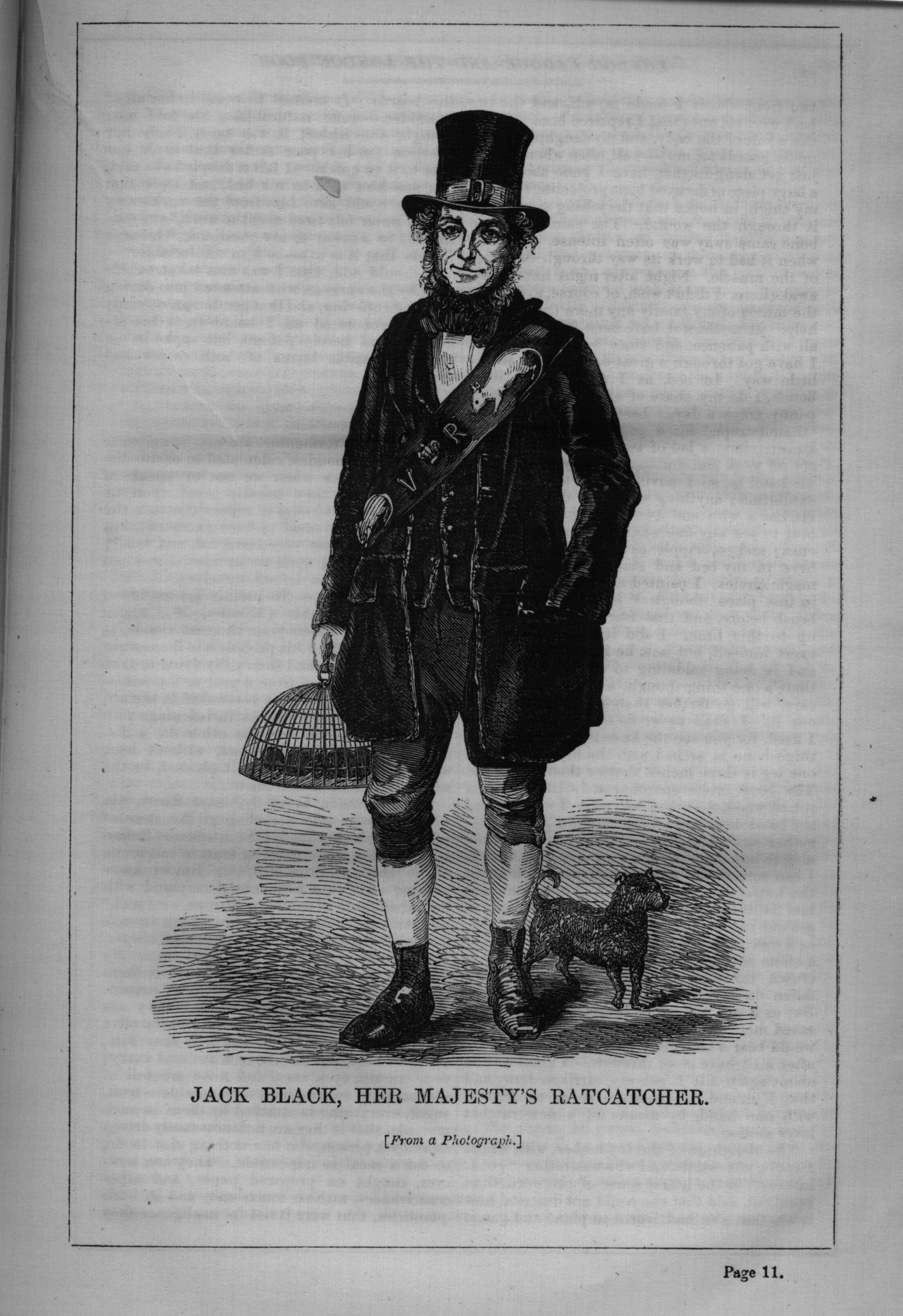
That small domestic argument captures much of Jack Black’s life. He was a working rat-catcher, an animal breeder, a street performer, and a man determined to turn an unpleasant occupation into something people would pay to watch. His green coat and scarlet waistcoat became part of his reputation. Yet the same account that preserves his celebrity also finds those clothes in pawn.
Who was Jack Black?
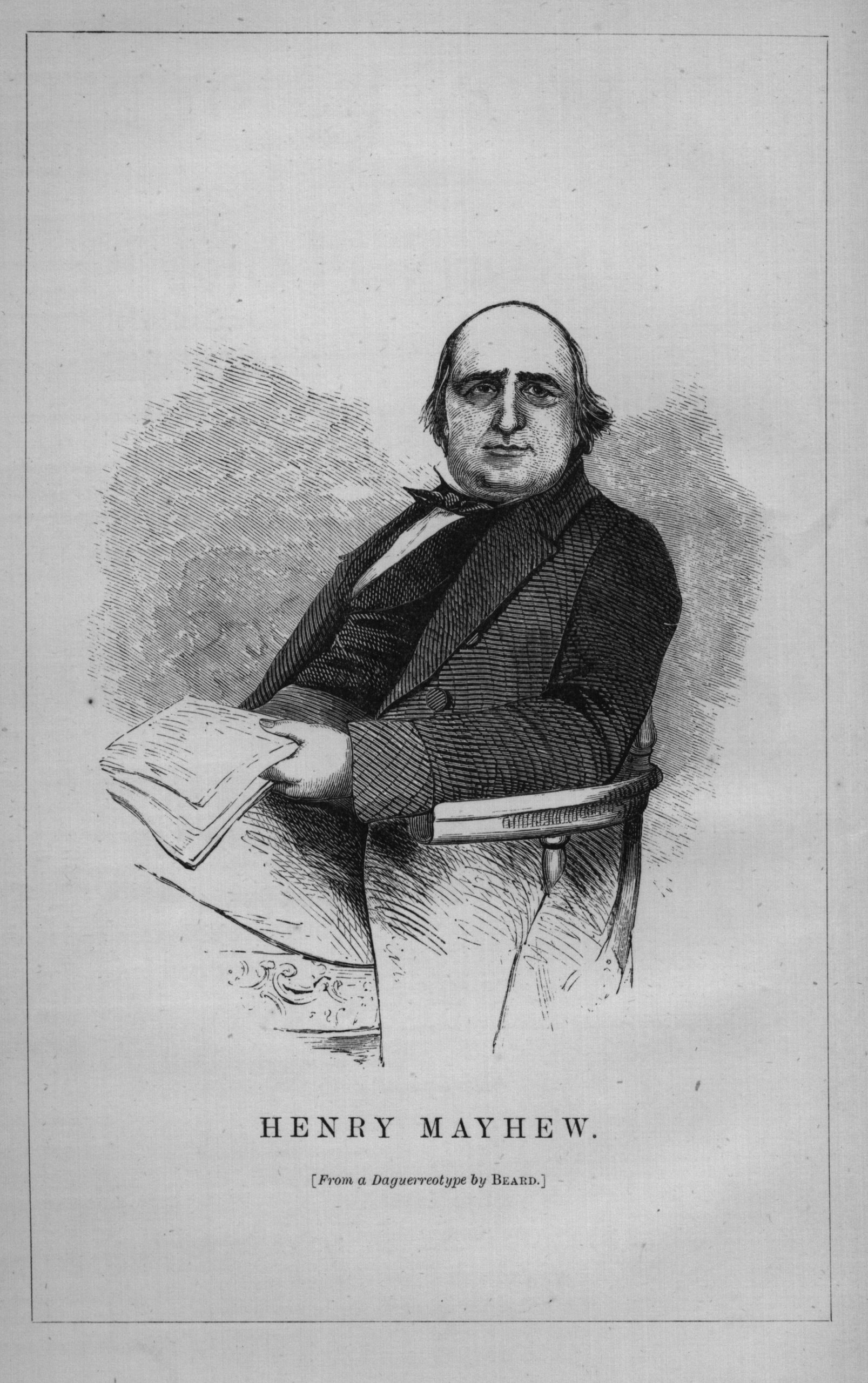
Jack Black was a rat-catcher and mole destroyer associated with Battersea and the streets of nineteenth-century London. We know him chiefly through Mayhew’s extended interview in volume three of London Labour and the London Poor.
The book preserves a remarkably talkative man. Black names customers, recalls dangerous jobs, explains breeding techniques, and repeatedly assures his listener that nobody can equal him. Mayhew also describes things he saw, including the animals at Black’s home and his skill at imitating birds.
Those two kinds of evidence need to be read separately. Mayhew witnessing a performance is different from Black recalling a spectacular catch years earlier. The interview gives us an unusually vivid life, but it is also the testimony of a salesman who knew how to hold an audience.
His exact birth and death dates are not securely established by the sources used here. A tidy chronology would give a false impression of what survives.
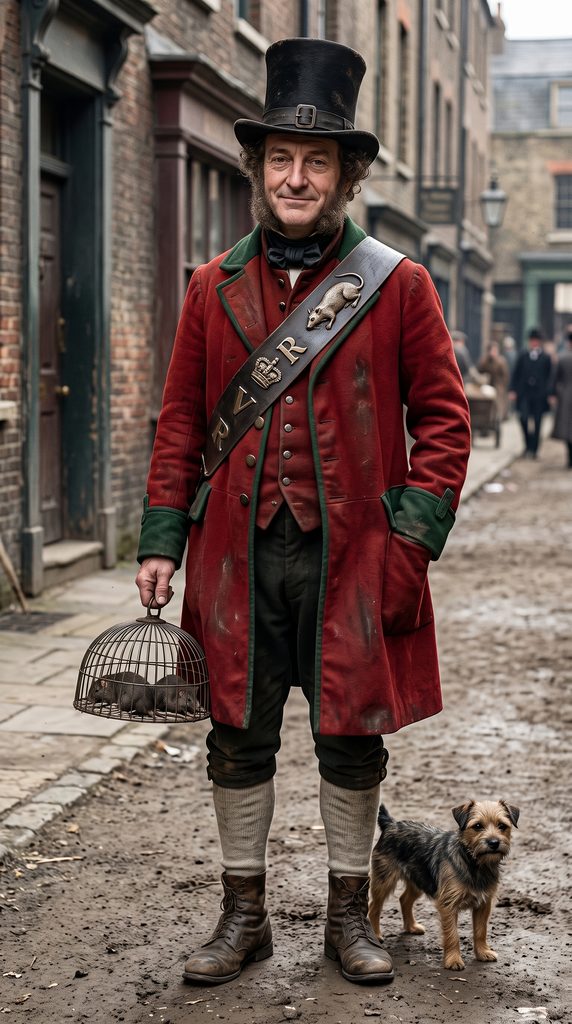
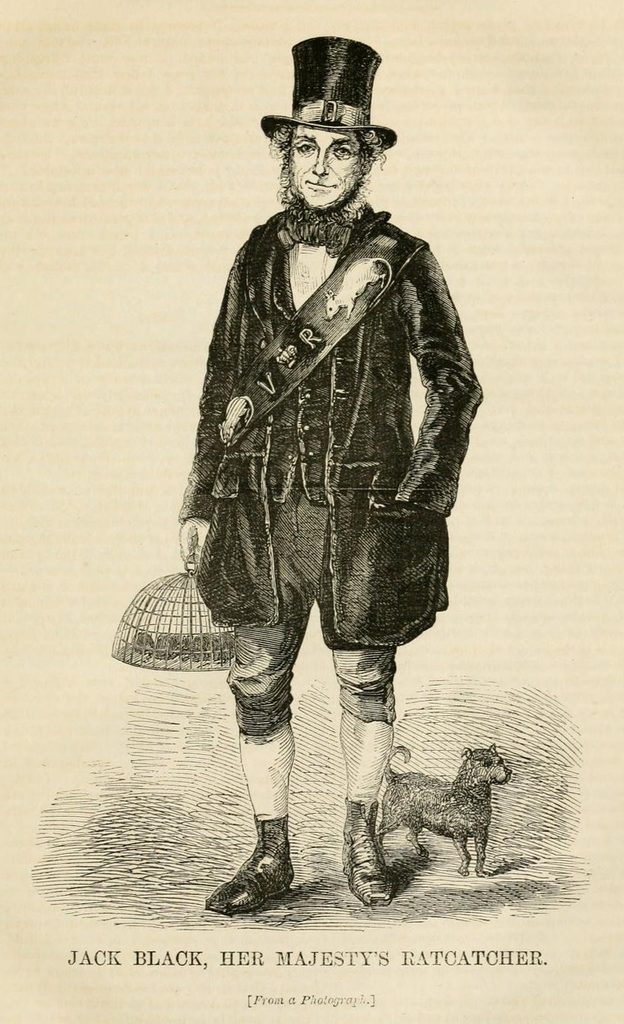
Meet Jack Black in restored portraits
Watch him come to life
Jack Black’s childhood near Regent’s Park
Black told Mayhew that he began catching rats at about nine years old, around a cow-keeper’s premises in Little Albany Street near Regent’s Park. He remembered fields, meadows, an orchard, and rats hiding beneath old bricks and timber.
He initially wanted the animals to test his small dog. Spectators watched him scramble after the rats and carry them away in his pockets and hands. Bites were already part of the experience.
By about ten, he said, he had acquired four ferrets. He hunted around ponds, ditches, and cow-sheds. People might offer a little money when a property was badly infested, but much of his income came from selling live rats to customers who wanted them for their dogs.
This was an early lesson in the economics of his trade. A rat could be a nuisance to one person and a saleable commodity to another. Black learned to earn from both ends of that transaction.
Birds, dogs, ferrets, and a working knowledge of animals
His career did not proceed in a straight line. At around fifteen, he turned to breeding and training songbirds, especially linnets. He discussed their calls with the precision of someone who had spent years listening.
During the interview, Black produced bird-whistles and demonstrated different songs. Mayhew described the movement of his cheeks and throat as he filled the room with imitations. Here the reader does not have to rely entirely on Black’s claims. The journalist heard the performance himself.
Black also bred terriers, trained monkeys, caught fish, and prepared stuffed specimens. His home contained the preserved remains of favourite working animals. Living creatures and the equipment used to catch them occupied much of the room.
The variety helped him find customers. A man who could clear a stable of rats might also supply a bird, breed a dog, or sell fish. At his Battersea home, Mayhew found a household in which earning a living and keeping animals were inseparable.
Jack Black’s green coat and scarlet waistcoat
Black understood that being good at catching rats would not, by itself, make strangers remember his name. He needed to be seen.
His outfit included white leather breeches, a green coat, a scarlet waistcoat, a gold band around his hat, and a shoulder belt decorated with rats. The original painted animals eventually gave way to the metal ones he cast at home.
Accounts sometimes describe those ornaments as cast iron. In Black’s own story, however, he used pewter pots. The distinction is small, but it shows why returning to the interview matters.
He travelled with a cart painted with rats and turned its top into a counter. Cages supplied the spectacle. Packets of his rat-killing composition supplied the product. Black handled the animals while his assistant helped sell to the crowd.
Mayhew first saw him demonstrating in the street near Hart Street. Rats ran along his arms and sat on his shoulders. Some spectators assumed the animals had been specially tamed. Black’s reputation depended on making dangerous handling look almost casual.
Was he really Queen Victoria’s rat-catcher?
Black’s handbills and the sign at his home used the royal initials V.R. and identified him as a rat and mole destroyer to Her Majesty. Mayhew adopted the title in the published profile.
There is more substance here than a costume alone. Black described paid work in Regent’s Park and appointments connected with London barracks. He said he retained the letter appointing him to government work.
Still, government pest-control work and a formal royal warrant are different things. The interview does not reproduce a warrant establishing him as a personal servant of Queen Victoria. “The Queen’s rat-catcher” is best understood as the title under which he advertised and became known, with his account of government work explained alongside it.
Stories that Victoria herself kept one of his pet rats require additional evidence. They should not be treated as established facts simply because the royal title appears beneath his portrait.
The dangers of Jack Black’s rat-catching trade
However, Black’s scars complicated the impression of effortless control. Mayhew noticed marks on his hands and face, while teeth and claws had damaged his leather breeches.
Black described a rat biting his upper arm at Hornsey and an illness that kept him in bed for two months. Other incidents, he said, left him unable to work for weeks. We cannot diagnose those episodes from the interview, but their place in his account is clear. His livelihood exposed him to injuries that could also stop his earnings.
His work involved tracing runs, stopping exits, lifting boards, and reaching into confined spaces. Ferrets drove rats through their hiding places. Dogs helped locate the ferrets when they disappeared beneath buildings.
His customers ranged from householders and shopkeepers to hotels and businesses. He described annual contracts as well as individual jobs. He also complained about a wealthy customer whose unpaid bill forced him to seek legal help, only to accept less than he had charged.
Rat-baiting and the market for live rats
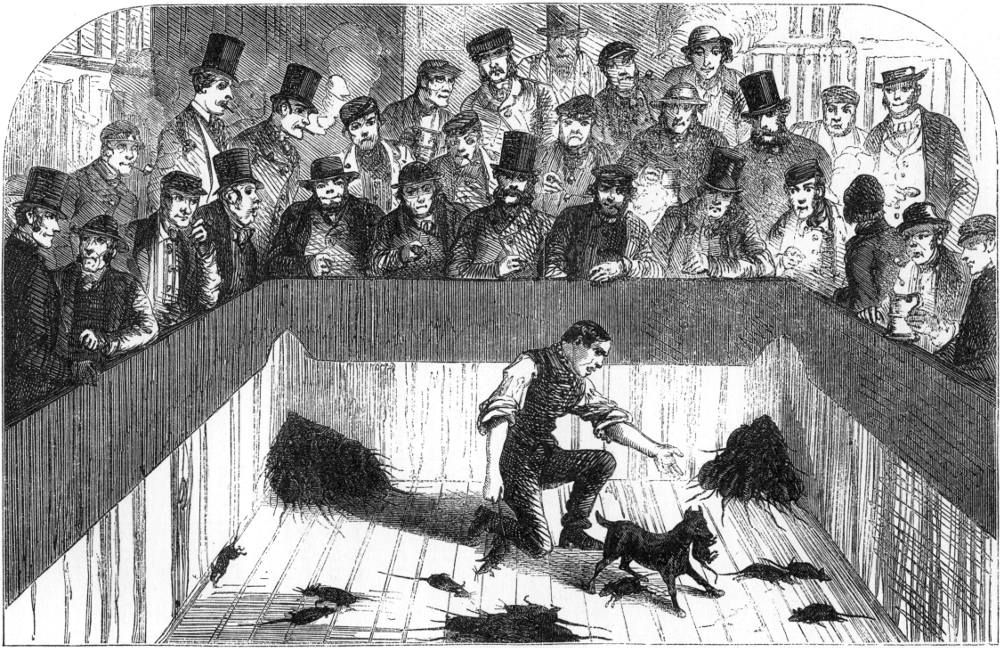
Some of Black’s customers wanted rats alive because they supplied the animals for rat-baiting. Dogs were put into an enclosed pit and judged on how quickly they killed them. Money changed hands around the contests.
Mayhew’s volume describes this entertainment and the businesses that supported it. Live rats had prices, suppliers, and buyers. Black’s catching skills served that market as well as ordinary pest control.
It is a cruel part of the story. Describing Black only as an eccentric animal lover would conceal how he made some of his money. He could be attentive to an individual animal while supplying others to be killed for entertainment.
How Jack Black helped popularise pet rats
The animals he caught also offered another business opportunity. Black bred rats with unusual colours and markings and sold some as pets.
He told Mayhew that his first white rat came from Hampstead. Black described breeding pied rats in several colour combinations and selling tame rats to women who kept them in squirrel cages. He also supplied animal dealers and travelling displays.
His claim to have bred more than a thousand unusually marked rats is his own, rather than a surviving stock count. What the account establishes is that breeding and selling these animals formed a substantial part of the career he described.
Black was not working alone. Mayhew also interviewed Jimmy Shaw, who kept and bred rats. A modern research study on nineteenth-century rodent breeding places both men within a wider trade in captive-bred rats and mice.
Black therefore deserves a place in the history of fancy rats without being called their sole inventor. His story shows how selective breeding and handling could give a feared street animal a different identity: something chosen for its appearance and kept for companionship.
A famous name did not guarantee financial security
The best-known image shows Black dressed for business. Mayhew’s visit reveals what the image leaves out.
Black had taken a public house in Regent Street. His daughter served behind the bar in a costume advertised around her father’s identity. The venture initially did reasonably well, according to his account, but ended badly. He blamed the brewer.
By the time he spoke with Mayhew, he had pawned his green coat and red waistcoat. As a result, he could no longer wear the very clothes that helped him attract customers.
That detail makes a simple rise-from-poverty-to-success story misleading. Black gained recognition and described profitable work, but his position remained precarious. Illness, unpaid bills, and a failed business could undermine the reputation he had spent years building.
Why Jack Black is still remembered
His outfit gives modern retellings an immediate image. Mayhew’s interview gives us something more valuable: a working person explaining how he earned, advertised, negotiated, and sometimes lost money.
Black was proud of his skill. He wanted his interviewer to understand the difference between knowing about rats and being able to reach into a cage full of them. He was equally proud of the birds he trained and the unusual animals he bred.
We do not have a secure account here of his final years or death. The record ends without the neat conclusion a biography might promise. What remains is a portrait of a London worker whose ingenuity made him conspicuous, even when it could not protect him from hardship.
Sources and image credits
The main source is Henry Mayhew’s “Jack Black” interview in London Labour and the London Poor, volume three, available through Tufts Digital Library and Project Gutenberg. Dates attached to early parts and later collected editions vary, so the interview is identified here by volume and section. Black’s recollections and claims are attributed to him rather than presented as independently verified facts. Modern context on rat breeding comes from The first rodent behavioral study (1822) and the diffusion of human-bred albino rats and mice in the 19th century. All four historical illustrations are public domain, with individual source links in their captions.
Explore more lives in our history articles.
If you want your photos bringing back to life, send me a message on any of my social media accounts.
Follow me across social media for historical photo restorations, AI colorizations, and videos bringing the past to life!