Albert Einstein: The Outsider Who Changed Space and Time
In 1905, a young employee of the Swiss patent office sent a series of papers to a physics journal. He did not run a famous laboratory or hold a university chair. Yet the questions he asked would help transform modern science: What is light? Do atoms really exist? And what happens to our understanding of time if the speed of light stays the same?
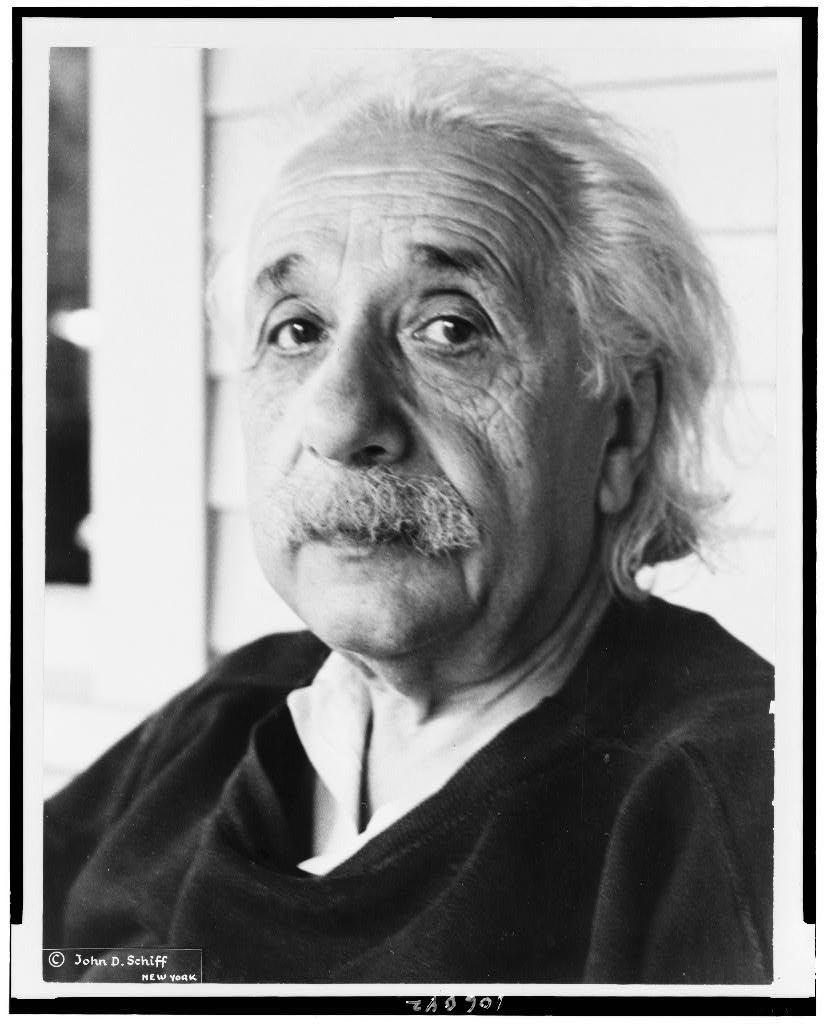
Albert Einstein became a worldwide symbol of intelligence, but that familiar image can obscure the person behind it. His life involved uncertain employment, difficult family relationships, political exile and scientific disagreements that never disappeared. His achievements were extraordinary precisely because they emerged from a human life rather than a legend.
Early Life: From Ulm to Switzerland
Einstein was born in Ulm, Germany, on March 14, 1879. His family moved to Munich while he was an infant, and he grew up in a household connected to electrical engineering. His education later took him to Switzerland, where he attended school in Aarau before entering the Swiss Federal Polytechnic in Zurich in 1896.
He trained in mathematics and physics with the intention of teaching. The familiar story of a genius who somehow needed no education is misleading: Einstein studied demanding subjects, read other scientists and worked within a scientific tradition, even while questioning its assumptions.
A stable academic position did not immediately follow. He became a Swiss citizen in 1901 and eventually found employment in the patent office in Bern. Examining technical applications paid the bills while he pursued the theoretical problems that interested him.
The Remarkable Papers of 1905
Einstein’s work in 1905 did not present just one breakthrough. It tackled several different puzzles.
One paper proposed that light could behave as discrete packets of energy. This helped explain the photoelectric effect, in which light causes electrons to leave a material. Another examined Brownian motion, the irregular movement of tiny particles suspended in a fluid. Einstein connected that visible motion to the unseen activity of molecules, giving researchers a way to test ideas about the atomic world.
His special theory of relativity addressed motion, light, space and time. Rather than preserve an absolute time shared by every observer, he reconsidered what measurements of time actually meant. Later that year, he described the relationship between mass and energy that became famous as E = mc².
These papers opened different doors into modern physics. They were not a single explanation of everything, and they did not arrive fully detached from earlier research. Einstein transformed problems that other scientists had already helped make urgent.
Relativity and the Arrival of Worldwide Fame
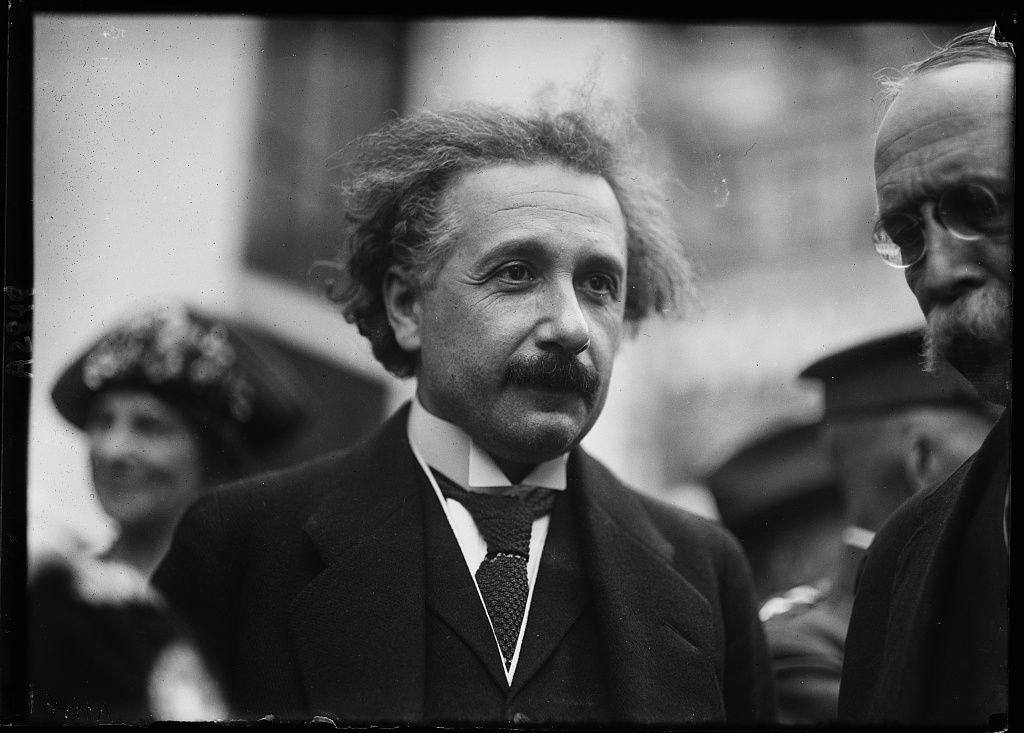
Special relativity did not settle the question of gravity. Einstein spent years developing a broader theory, completing general relativity in November 1915. Its central change was profound: gravity could be understood through the geometry of spacetime, rather than simply as an attraction acting between objects across space.
Matter and energy affect that geometry, and the resulting curvature shapes motion. This was a new framework for asking how planets move and how the universe behaves.
In 1919, expeditions observing a total solar eclipse measured the apparent positions of stars near the Sun. Their results supported Einstein’s prediction that gravity bends light. The announcement pushed him beyond the scientific community and into international headlines.
A technical theory had become a public sensation. Newspaper readers might not follow the equations, but they understood the drama of a scientist challenging long-established assumptions about the universe.
Why Einstein Won the Nobel Prize
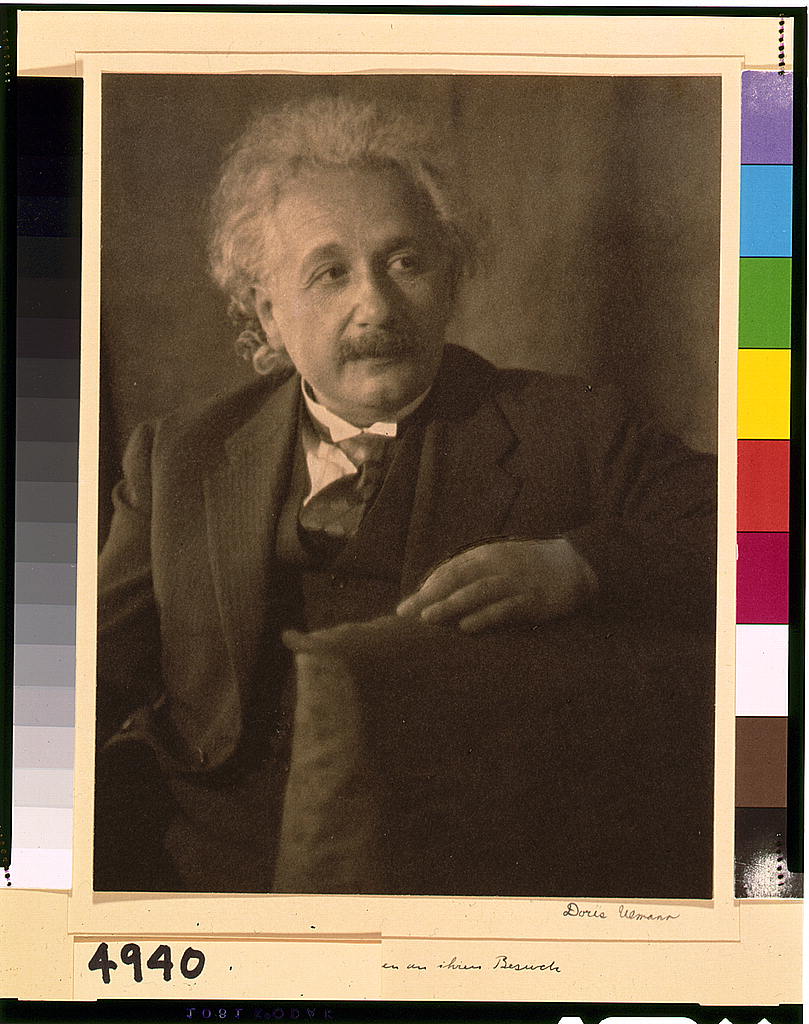
Einstein received the 1921 Nobel Prize in Physics in 1922. Contrary to a common assumption, the award specifically highlighted his discovery of the law of the photoelectric effect, not relativity.
That distinction matters. Popular memory often reduces his scientific career to one equation, whereas his work helped shape both relativity and quantum physics. His explanation of light challenged familiar expectations about how energy behaves.
The Nobel record also captures the contrast between his beginnings and his later position. The former patent examiner had become a leading theoretical physicist in Berlin, with an international reputation that extended well beyond the institutions employing him.
Family Behind the Famous Name
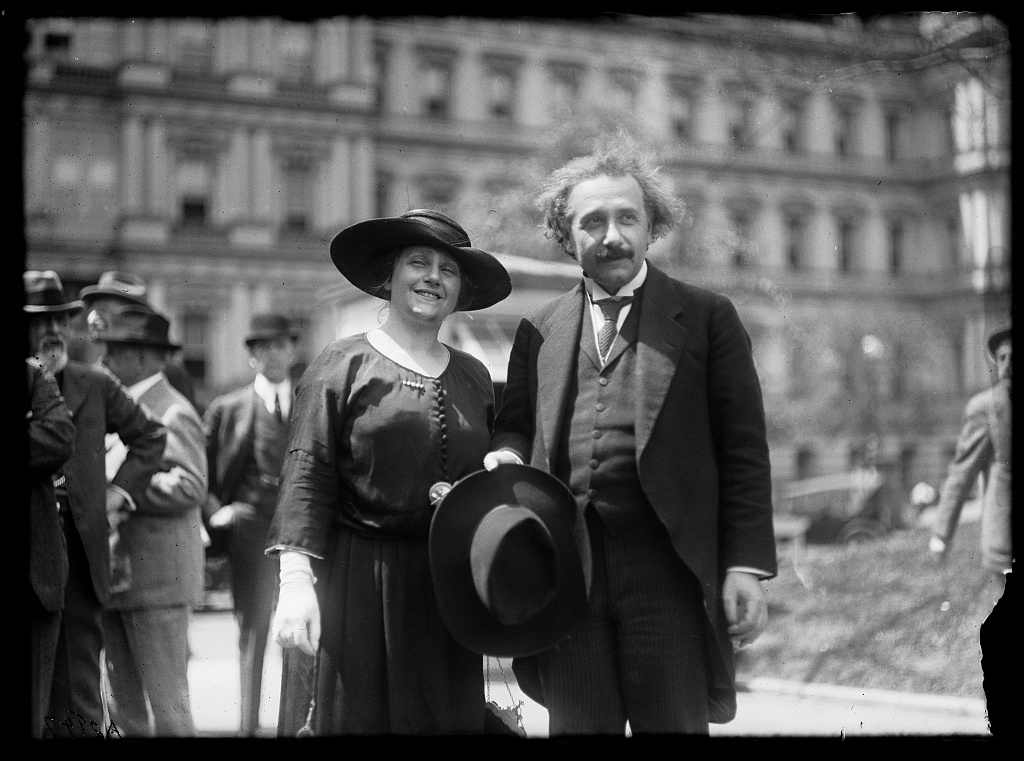
Einstein married Mileva Marić in 1903. They had a daughter and two sons, and the marriage ended in divorce in 1919. That same year he married his cousin Elsa, who died in 1936.
The surviving correspondence complicates any simple portrait of the detached genius. Letters involving his sons, Hans Albert and Eduard, and his relationships with Mileva and Elsa reveal concerns about illness, separation, money and family life during the Berlin years.
Scientific celebrity did not remove domestic obligations or repair emotional strains. Reading the family record alongside the research makes Einstein more understandable, not less impressive: intellectual brilliance and personal harmony are different things.
Exile and the Atomic Age
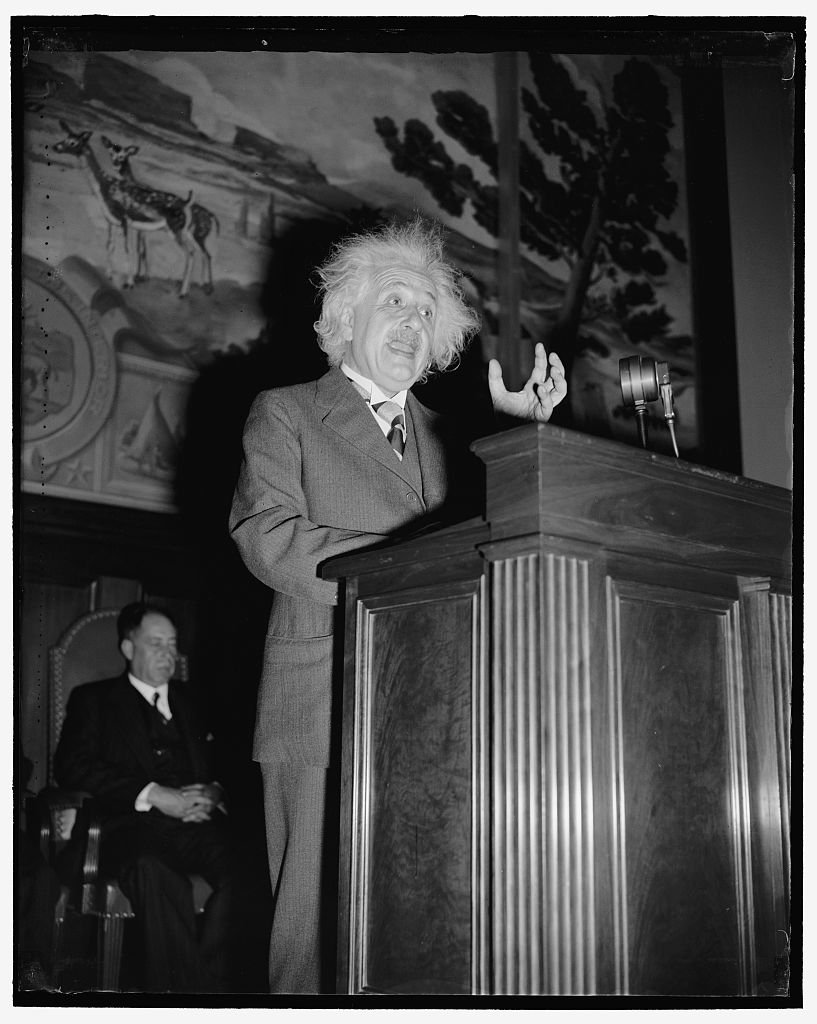
After the Nazis took power in Germany, Einstein settled in the United States. In 1933 he joined the Institute for Advanced Study in Princeton, New Jersey. He remained associated with the Institute until his death, pursuing the ambitious goal of a unified field theory. That work did not produce the final unification he sought.
His fame also drew him into world affairs. In August 1939 he signed a letter to President Franklin D. Roosevelt warning of the possibility of powerful uranium weapons. Physicists concerned about Nazi Germany had sought his influential signature; Alexander Sachs delivered the letter in October.
The warning helped set in motion government attention to nuclear research, but calling Einstein the inventor of the atomic bomb distorts the history. A warning letter, a relationship between mass and energy, and the enormous scientific and engineering undertaking that produced a weapon are not interchangeable achievements.
Death and an Enduring Legacy
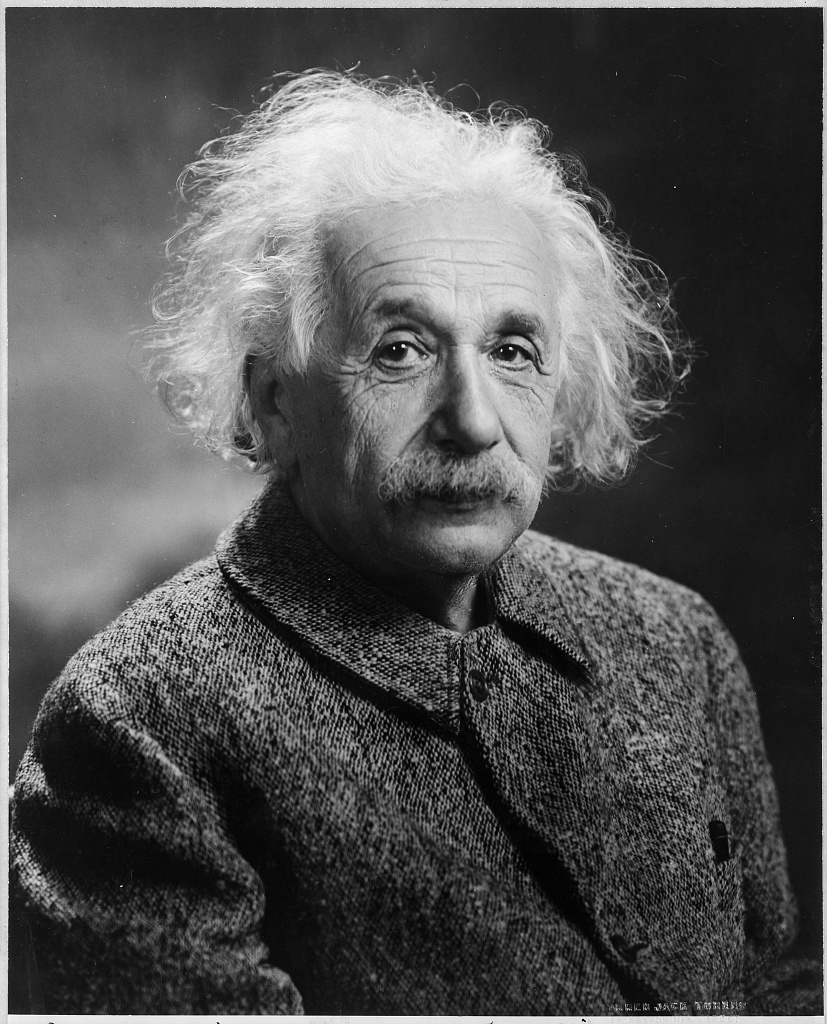
Einstein died in Princeton on April 18, 1955, aged 76. His unfinished research reminds us that even a scientist of his stature could spend years pursuing questions without reaching the answer he wanted.
His lasting achievement was not simply to become a synonym for genius. He helped change what physicists considered measurable, explainable and possible. Light, atoms, gravity and time became connected to new questions and new methods of investigation.
The most useful lesson of his biography is therefore not that great discoveries require an almost magical mind. It is that careful thought can overturn assumptions so familiar that people stop noticing them. Einstein made those assumptions visible, and modern science has lived with the consequences ever since.
Get Your Images Done Too
If you want your photos bringing back to life, send me a message on any of my social media accounts.
Follow me across social media for historical photo restorations, AI colorizations, and videos bringing the past to life!