Annie Londonderry: The Cyclist Who Turned Herself Into a World-Famous Story
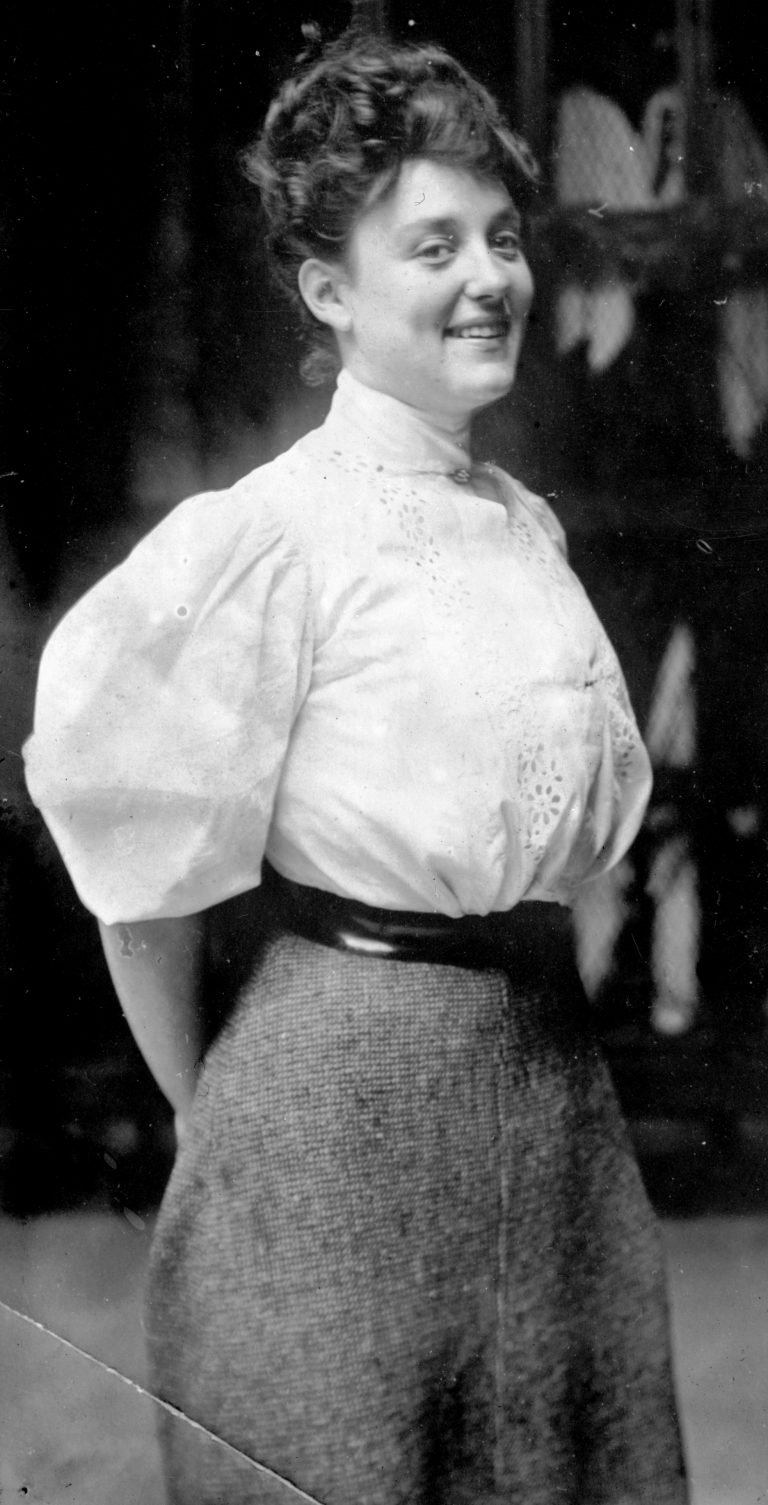
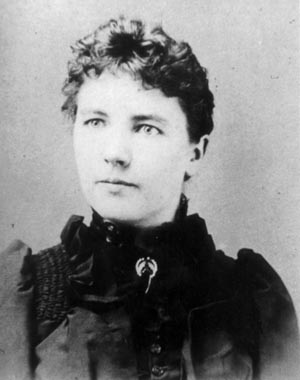
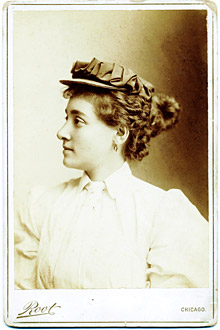
Featured photograph: Annie Londonderry, photographed by William J. Root in the 1890s. Public domain in the United States. Source and rights.
Annie Londonderry did not simply ride a bicycle. She turned herself into an advertisement, a traveling attraction, and the heroine of a story that became larger with every retelling. In 1894, the Boston mother left home on a journey that would carry her around the world. By the time she returned, even her name had become a commercial creation.
She is remembered as the first woman to circle the globe by bicycle. That description needs a qualification: ships and trains carried her for substantial parts of the route. The real achievement was still remarkable. An immigrant woman with three children built an international public identity at a time when the freedom of women to travel, dress, and earn independently remained fiercely contested.
The woman behind the name
She was born Annie Cohen in 1870 in what is now Latvia and came to Boston with her family as a child. She later married Max Kopchovsky. They lived in the West End, where she raised three children before launching her extraordinary trip. The West End Museum’s account places her firmly within that working-class immigrant neighborhood, rather than the wealthy world of leisure travel.
“Londonderry” came from a sponsor, not her family. The Londonderry Lithia Spring Water Company paid for publicity, and Annie carried its name into newspapers far beyond New England. This is one of the most revealing details of her story. Before the trip could become an adventure, it had to become something that other people would pay to see.
A world tour with a sales pitch
Annie set out from Boston in June 1894. Biographer Peter Zheutlin describes a departure at the Massachusetts State House, a heavy Columbia bicycle, and an audience eager to watch. His overview of her journey emphasizes both the physical undertaking and the business that made it possible.
She sold photographs of herself, gave appearances, and rented advertising space on her clothing and bicycle. A portrait could therefore be more than a souvenir. It was stock she could sell, proof of a meeting, and a small piece of publicity that might travel onward without her. In that sense, the surviving photographs belong to the journey itself.
The much-repeated explanation was a wager: she supposedly had to travel around the world within 15 months and earn money along the way. Yet the wager is not securely established. Contemporary doubts and later research make it safer to describe it as part of her publicity than as a verified contract. A colorful origin story helped audiences understand why she was doing something so unconventional.
Changing the bicycle, changing the rules
Her first bicycle and long skirt were poorly suited to an ambitious journey. At Chicago she switched to a lighter Sterling machine and adopted more practical riding clothes. The change mattered because women’s clothing was part of the public argument over cycling. A rider’s trousers could attract almost as much attention as the distance she traveled.
The Smithsonian’s account of the bicycle craze explains how the safety bicycle helped broaden participation and how cycling clothes challenged established expectations. The machine did not automatically erase social restrictions. It gave riders new possibilities, which they still had to defend in public.
Annie made those debates visible. She was a married woman traveling without her husband, meeting strangers, making business arrangements, and presenting herself as an independent adventurer. Her story should not be reduced to a costume change, but the costume was an unmistakable part of what made her newsworthy.
Around the world, but not all on two wheels
The route combined cycling with sea passages and rail travel. She crossed to France, continued toward the Mediterranean, traveled through ports farther east, and eventually reached San Francisco from Japan. She then traveled across the United States. She was not pedaling continuously around the planet, and modern accounts should not imply that she did.
Zheutlin’s reconstruction of her Victorian journey describes the celebrity surrounding her arrival in Marseille and the role of the steamship Sydney. Looking at ships as well as bicycles changes the story from an impossible uninterrupted ride into a resourceful, heavily promoted round-the-world tour.
That distinction does not make every mile trivial. Nineteenth-century roads could be rough, directions uncertain, and travel physically demanding. But admiration is more useful when it does not depend on concealing how a journey actually worked. Annie needed endurance and practical judgment, as well as a readiness to change her plans.
The adventures she told and the journey she made
Annie’s accounts included dramatic episodes that later writers have treated with considerable skepticism. She presented different versions of herself to different audiences. Stories about exotic dangers made entertaining copy, but they should not be repeated as established events simply because they appeared in a newspaper.
A detailed examination of her self-promotion contrasts sensational tales with the timetable of her steamship travels. The contrast is important. A newspaper report can verify that someone told a story without verifying that the story happened.
Her publicity also complicates a simple judgment of fraud or heroism. She completed an extraordinary international journey, while actively reshaping its meaning for paying audiences. Those facts can coexist. We do not need to accept every tale to recognize her enterprise, and we do not need to erase the exaggerations to respect her.
Why Annie Londonderry still matters
After returning in 1895, Annie used the journey in newspaper work, including a connection with the New York World. She died in New York in 1947. Her reputation later faded before researchers and descendants brought the story to a wider public again.
The photographs let us look past the shorthand of a record-breaking bicycle ride. They show a woman who understood that an image could earn money and change expectations. Her bicycle carried her down roads; her carefully managed public identity carried her into places a working-class immigrant woman was rarely expected to go.
That is the lasting interest of Annie Londonderry. She was neither a flawless symbol nor merely a teller of tall tales. She was a traveler, a salesperson, and an experimenter with the possibilities of being seen. The most compelling version of her story is the one that leaves room for all three.
Explore more lives and historical photographs in our history articles.
Get Your Images Done Too
If you want your photos bringing back to life, send me a message on any of my social media accounts.
Follow me across social media for historical photo restorations, AI colorizations, and videos bringing the past to life!