Charles Blondin: The Tightrope Walker Who Cooked Above Niagara
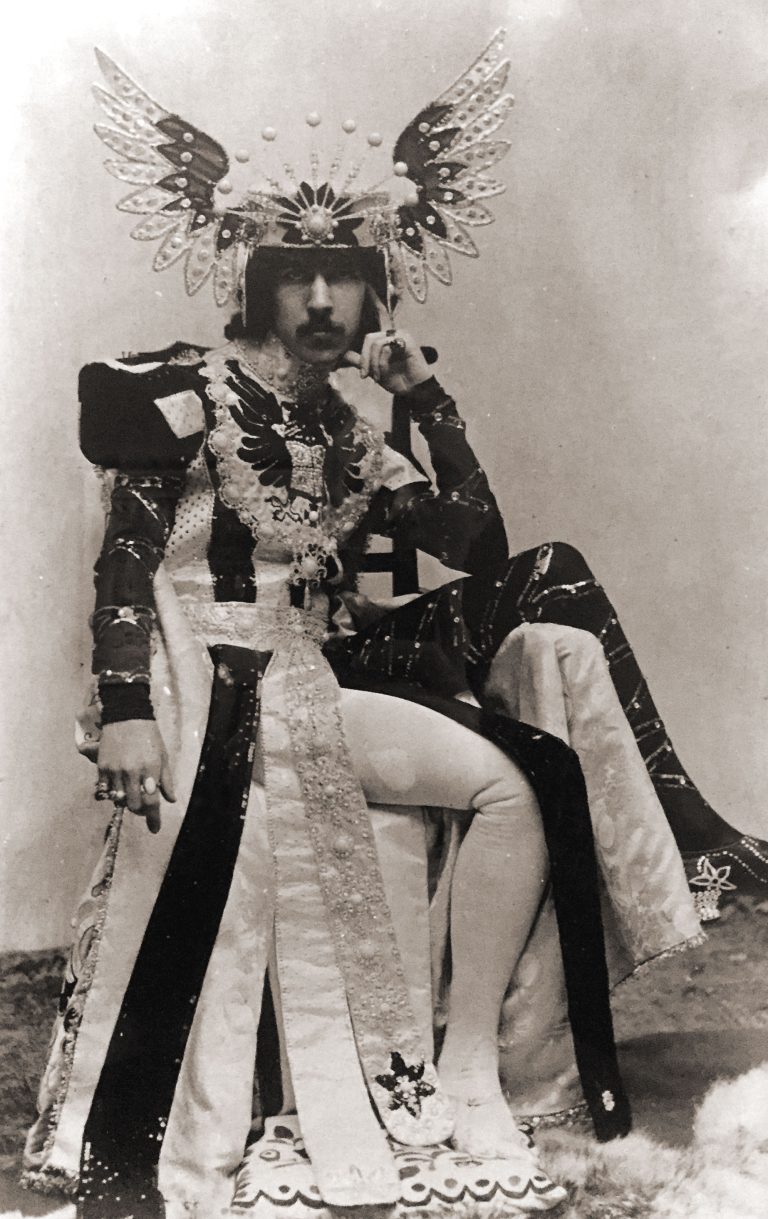
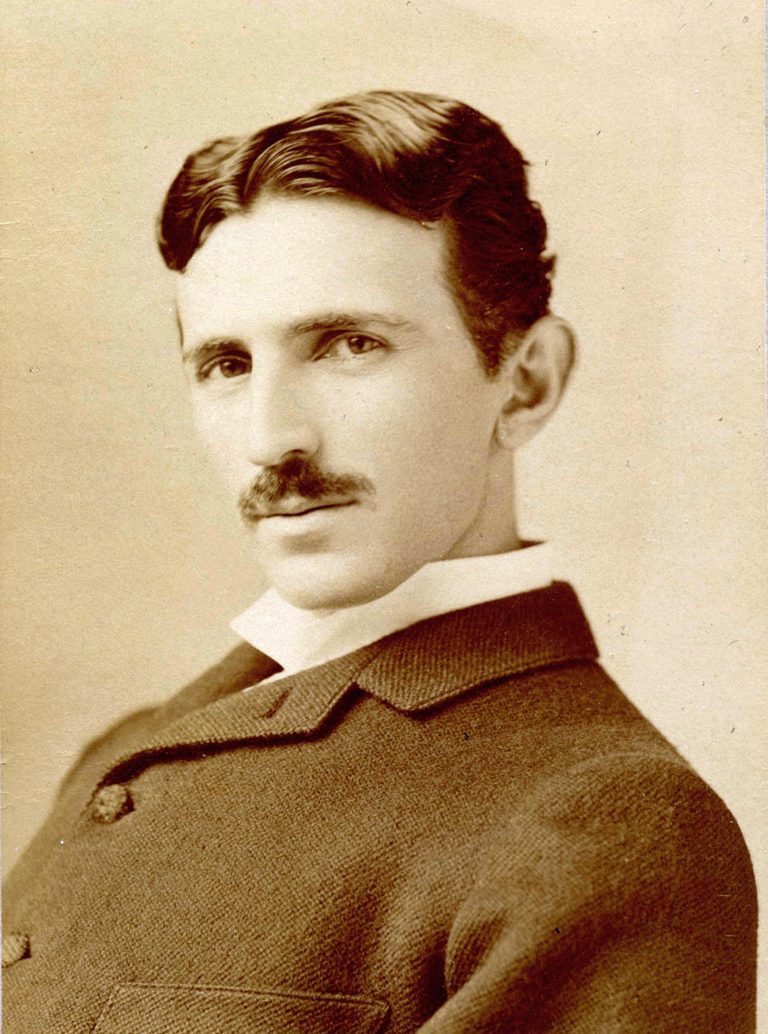
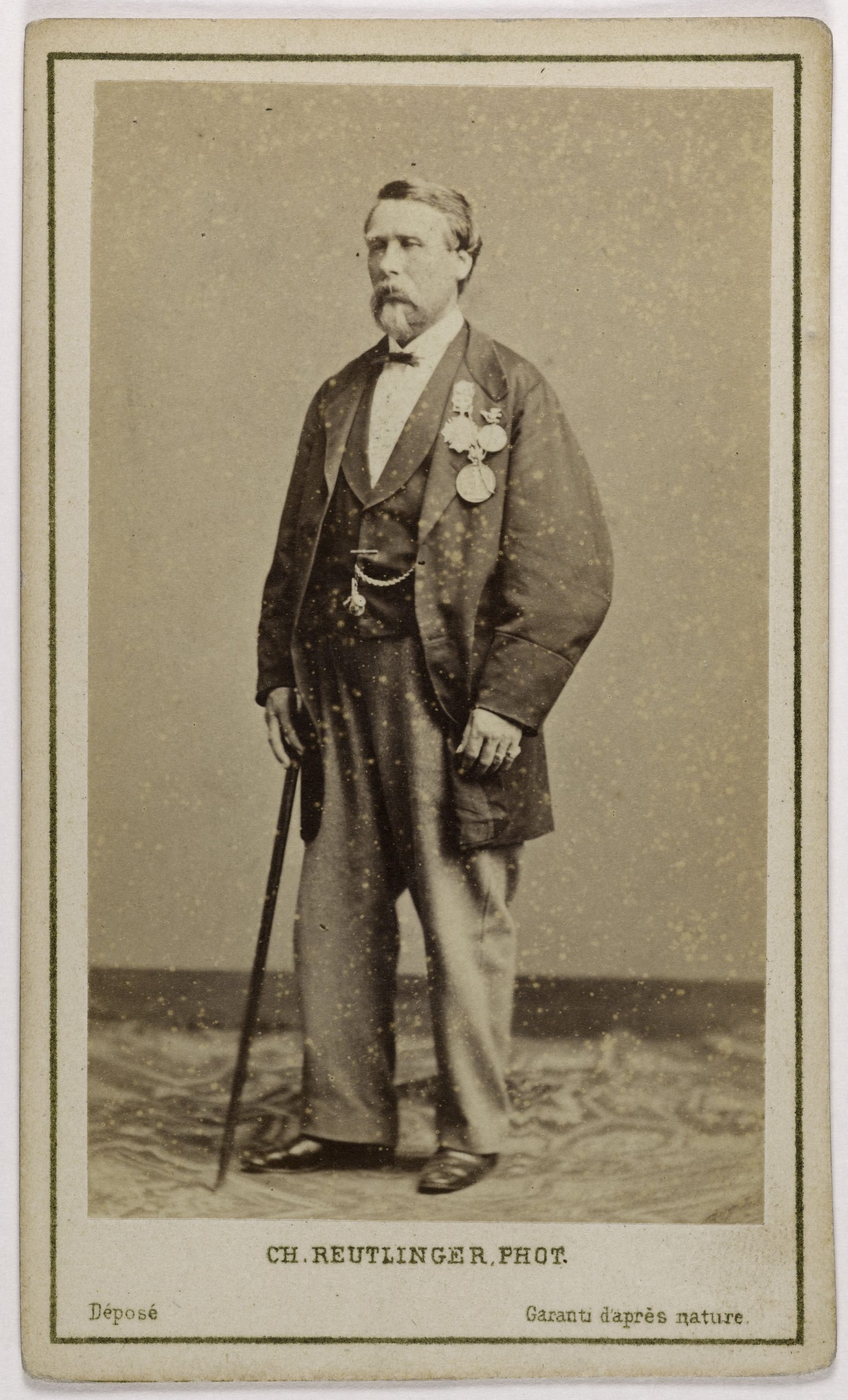
Featured photograph: Charles Blondin photographed by Charles Reutlinger, before 1897. Musée Carnavalet, Paris Musées, PH 47394. CC 0. Source and rights.
A man cooks an omelet on a rope high above the Niagara River. Another time, he carries his manager on his back. These sound like scenes invented for an extravagant Victorian adventure story. They belong to the career of Charles Blondin, a professional performer who made balance, danger and showmanship his livelihood.
Blondin’s greatest act was not simply to cross a frightening space. It was to make an audience return after it already knew he could do it. The walk became a changing performance, with new props and fresh reasons to hold one’s breath. His surviving portrait gives that almost unbelievable figure a human face.
The boy who became Blondin
Born Jean François Gravelet in France in 1824, he trained in gymnastics as a child. The University of Sheffield’s National Fairground and Circus Archive records that he began at five and soon performed publicly. By the time he traveled in America in 1855, he was an experienced entertainer, not an amateur suddenly tempted by a spectacular view.
That distinction matters. The famous crossing can look like a single extraordinary decision when reduced to a headline. Behind it stood years of learning how to place a foot, control a body and perform for spectators. The stage name Charles Blondin helped turn that accumulated skill into a recognizable attraction.
What he actually crossed at Niagara
On June 30, 1859, Blondin crossed the Niagara Gorge on a rope. He was not walking immediately above the crest of the waterfall, as loose descriptions sometimes suggest. Niagara Parks distinguishes the gorge crossing from later performances directly over the falls in its historical tour guide.
The distinction does not diminish the achievement. It puts the performer back into the correct landscape: high above the river, with the banks far apart and the audience watching from either side. A precise location is more useful than an exaggerated one.
Smithsonian’s account of the first crossing describes a huge crowd, commonly estimated at about 25,000, arriving to watch. It also records the supporting ropes used to help stabilize the main line. This was both a public spectacle and a carefully prepared physical setup, however alarming it looked from the bank.
Success did not end the attraction. Blondin crossed again with variations, including a wheelbarrow and, famously, his manager Harry Colcord on his back. Each change gave spectators a new question. Knowing that the performer had survived yesterday did not tell them exactly what would happen today.
An omelet with an audience
Niagara Parks includes the omelet episode in its historical account: during one crossing Blondin stopped partway across to cook. The same guide records performances with a blindfold, on a bicycle and while carrying his manager. These were not all parts of the first crossing and should not be compressed into one impossibly crowded afternoon.
The kitchen equipment made the scene especially strange. Cooking is an ordinary domestic activity; the rope transformed it into theater. The surprise came from seeing a familiar action performed in a place where even standing still seemed extraordinary.
That contrast explains why the omelet remains such a memorable detail. A list of distances and heights can become abstract. Breakfast is immediately imaginable. The audience could recognize the task while scarcely comprehending its setting. Blondin’s skill was physical, but his sense of what made a compelling picture was part of the act as well.
The celebrity reaches the stage twice
His reputation crossed the Atlantic. In Britain, Blondin appeared at venues including London’s Crystal Palace, Edinburgh’s Royal Botanic Gardens and Birmingham’s Edgbaston Reservoir. The Sheffield archive records the reservoir performance in 1873. His name could turn a local stretch of water into a temporary theater.
There is also a wonderful documentary trace of how quickly his fame became material for other entertainers. The British Library’s manuscript catalog preserves a record of a one-act farce titled Blondin, written by George Conquest. Its license was sent on June 18, 1861, for a performance at the Grecian on June 24.
The catalog connects the play to Blondin’s Crystal Palace appearance that June. This does not tell us every joke or stage effect in the script. It does show that his identity was recognizable enough to become the subject of another show almost immediately. He was both a performer and a character other performers could use.
Looking closely at the photographs
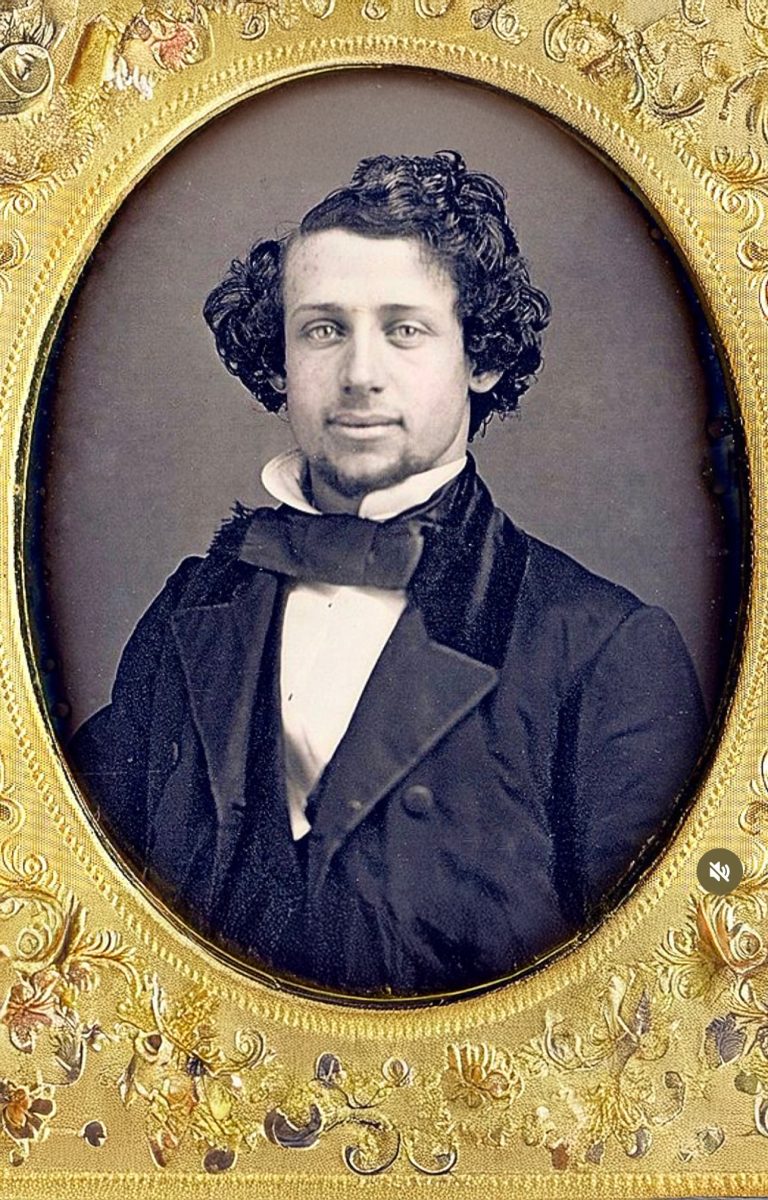
The portrait at the top is not a modern impersonation or an AI reconstruction. It is a photograph attributed to Charles Reutlinger, preserved by Paris’s Musée Carnavalet and identified in its collection as Charles Blondin. The museum’s open-access release allows the image to circulate without separating it from that documentary identity.
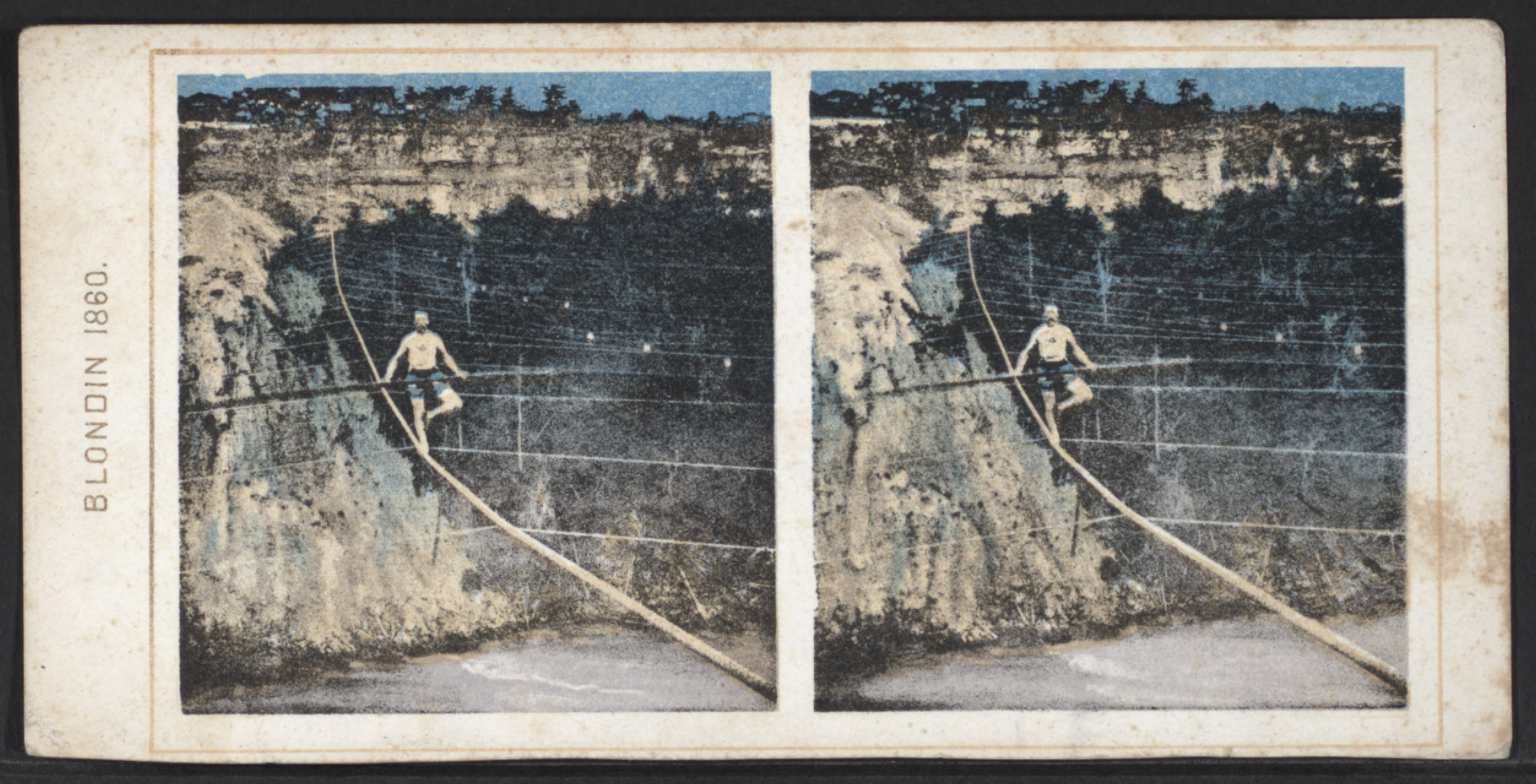
The river photograph provides a different kind of encounter. Cataloged by the New York Public Library as Blondin in 1860, it survives as a stereoscopic view: two neighboring images designed to be seen together through a viewer. The format offered nineteenth-century audiences an impression of depth rather than a single flat picture.
Neither image recreates the noise of the crowd or the experience of watching the rope move. What they preserve is more specific: an identified individual in one case, and a distant performer within a vast setting in the other. Keeping those limits in mind lets us appreciate the photographs without inventing details they cannot prove.
More than a man on a rope
Blondin died at his home in Ealing, London, on February 22, 1897, aged 72. His story remains compelling because it joins technical discipline to a startling imagination. Crossing the gorge was an achievement. Turning that crossing into a series of unforgettable scenes was showmanship.
The photographs allow us to step back from the legend without losing its wonder. There really was a person behind the publicity: someone who trained, traveled and made an audience look upward. His history is extraordinary enough without improving it through invented dialogue or adding every later anecdote to a single day.
Discover more people behind remarkable historic images in our history articles.
Get Your Images Done Too
If you want your photos bringing back to life, send me a message on any of my social media accounts.
Follow me across social media for historical photo restorations, AI colorizations, and videos bringing the past to life!