Joshua Slocum: The Sailor Who Went Around the World Alone
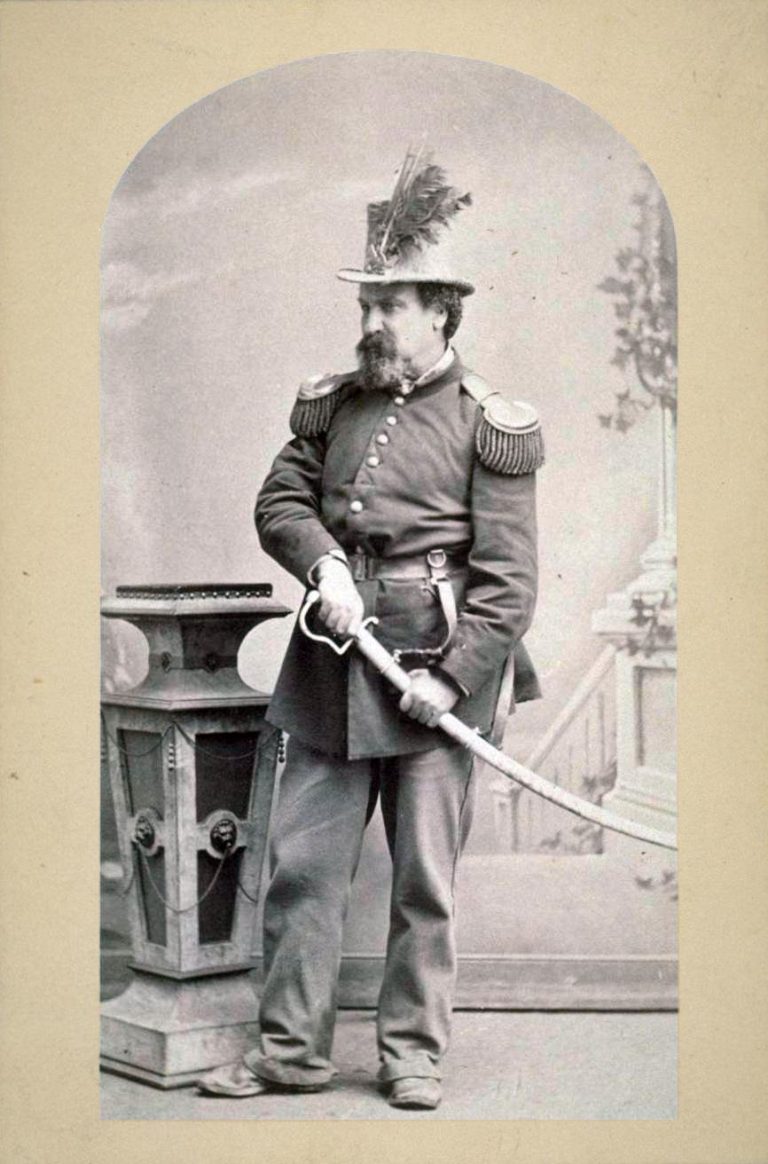
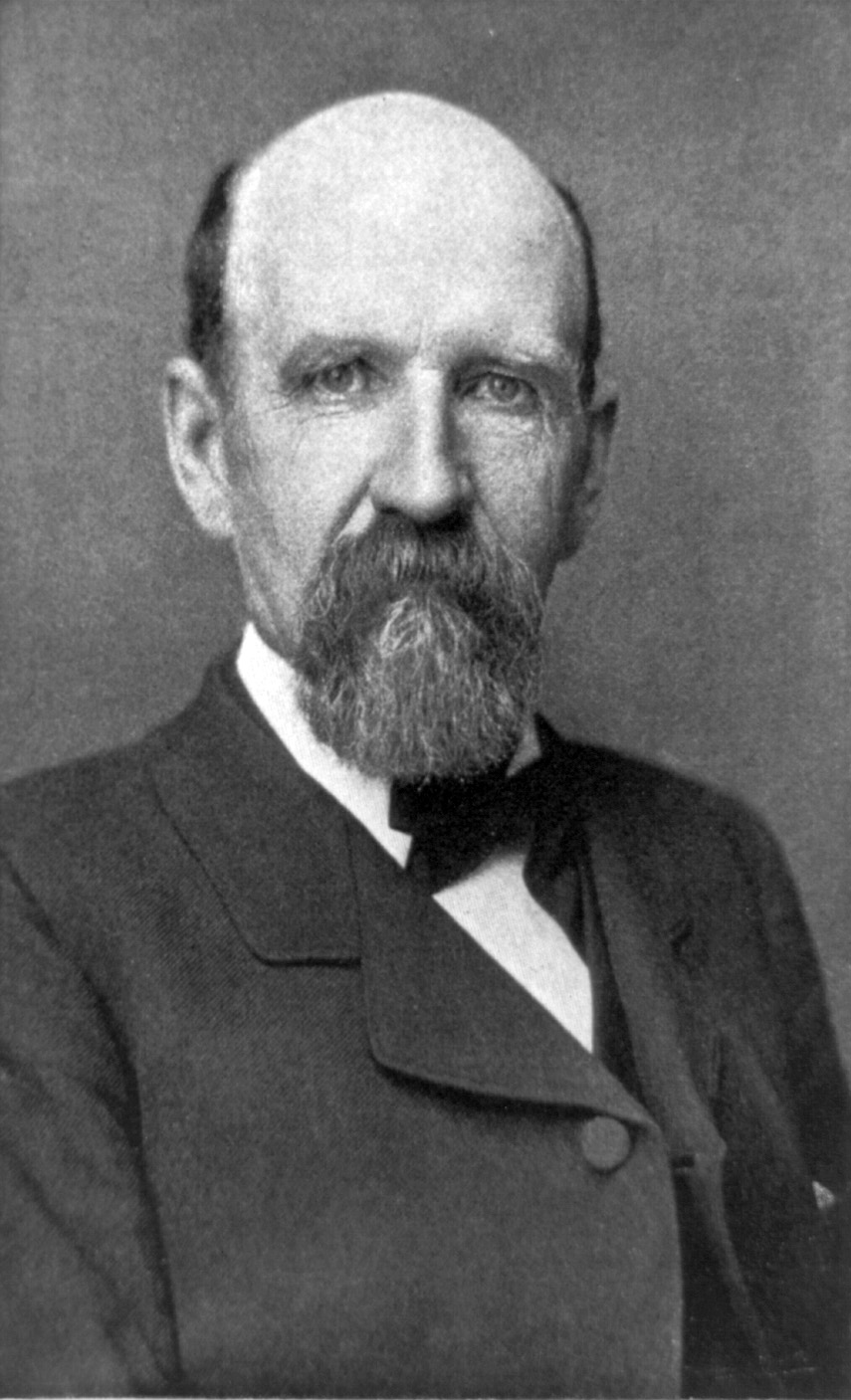
Featured photograph: Joshua Slocum, photographed by Hollinger & Co. and published in the September 1899 Century Magazine. Library of Congress. Public domain. Source and rights.
Joshua Slocum set off around the world in a boat that had once stood propped up in a field. He had rebuilt it, trusted it, and learned how to make it hold its course. When he returned in 1898, he had completed the first recorded solo circumnavigation under sail.
The voyage sounds like an act of pure isolation: one man, one small vessel, and the oceans. In practice it was also a story of patient repairs, port visits, gifts, conversation, and a sailor who knew how to turn experience into a book. Slocum’s unusual achievement grew from an ordinary working seaman’s skills, applied on an extraordinary scale.
A sailor long before the famous voyage
Slocum was born in Nova Scotia in 1844. His maritime career took him from work aboard smaller vessels to command of merchant ships. He became a naturalized American citizen and spent much of his life in the commercial sailing world. By the time he attempted the voyage that made him famous, he was no beginner trying his luck.
The National Sailing Hall of Fame biography describes a career of command, shipwreck, rebuilding, and writing. That background matters. The later solo voyage was not a substitute for experience. It was a demanding use of experience accumulated over decades.
Before the Spray, Slocum had already made a remarkable journey in the Liberdade, a small craft he built after losing a vessel in Brazil. He brought his family back to the United States in it. His life repeatedly joined two abilities that are often separated in adventure stories: knowing how to handle a boat and knowing how to make one serviceable.
Rebuilding the Spray
Slocum opens Sailing Alone Around the World with the story of an acquaintance offering him an old sloop. The apparent gift came with a problem: it needed extensive work. In his telling, neighbors watched with skepticism as he set about restoring it.
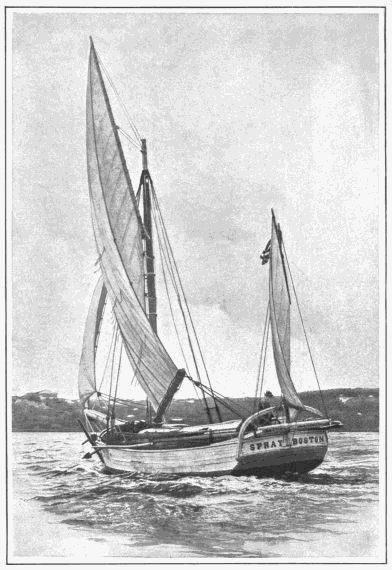
The old craft became the Spray, a broad, relatively small sailing vessel rather than a purpose-built modern racing yacht. Slocum’s rebuilding is central to the story because it made him intimately familiar with the object on which his survival would depend. A loose fitting, damaged sail, or troublesome steering arrangement was not an abstract technical problem. It was something he would have to face alone.
The photograph of the Spray helps restore the scale of the achievement. This was not a ship with spare hands hidden below deck. Its modest size put everything close together: navigation, cooking, sleeping, maintenance, and the constant business of responding to weather.
Three years around the world
Slocum left Boston in April 1895. His route initially took him across the Atlantic toward Gibraltar. He then crossed back toward South America, worked through the Strait of Magellan, and continued across the Pacific. Australia and the Indian Ocean lay farther ahead, followed by southern Africa and the Atlantic passage home.
His voyage included long stops. It was not a nonstop circumnavigation, and describing it that way would erase much of what makes his account interesting. He repaired the vessel, obtained provisions, met people, and sometimes gave lectures. Solo described the way he sailed the boat, not a refusal of every form of help on shore.
The Western Australian Museum’s history of solo circumnavigation places Slocum’s 1895–1898 journey at the beginning of that tradition. Later sailors would attempt different kinds of records, including nonstop passages. Slocum’s place in the story does not depend on claiming those later distinctions for him.
How could one man sleep?
The practical question is more interesting than the image of constant heroism. A lone sailor cannot remain at the helm every minute for years. Slocum devoted attention to the Spray’s ability to maintain a course when its sails and steering were arranged appropriately. This allowed him periods away from the wheel.
His book’s appendix discusses the vessel’s shape, rig, and steering. Read it as a description of his particular boat and methods, not as a promise that any small sailboat can safely be left to itself. Conditions mattered. He still had to navigate, keep watch, repair equipment, and respond when wind or sea changed.
This is where a portrait can mislead if we let it. A composed face in a studio suggests effortless confidence. The voyage required repetitive attention. Success depended on a great many unglamorous judgments, most of which would never become the centerpiece of an adventure illustration.
A mariner with a storyteller’s eye
Slocum’s account is full of humor, conversations, and strange episodes. In one memorable passage he describes an apparent visitor at the helm while he was ill. It belongs to his account of delirium, not to evidence that a supernatural pilot took charge of the Spray.
He also wrote from the assumptions of his time. Some descriptions of Indigenous people employ hostile language and judgments that modern readers should question rather than repeat uncritically. A valuable firsthand source is not a neutral one. It tells us about the observer as well as the people and places observed.
His literary skill helped make the voyage accessible to people who would never cross an ocean. Technical details sit beside small human encounters. The resulting book does more than list ports: it lets the reader see how a working sailor organized his world, explained danger, and found company even during a solo undertaking.
Homecoming, fame, and an unanswered ending
Slocum reached Newport, Rhode Island, on June 27, 1898. His return established the achievement for which he is remembered. His narrative appeared in serialized form before the book edition of 1900, so references to 1899 and 1900 often concern different stages of publication.
The Martha’s Vineyard Museum’s collection guide documents the letters, clippings, and later materials that preserve his reputation. These records help separate the enduring public figure from the romantic idea of a man who existed only at sea.
In 1909, Slocum left on another voyage in the Spray and disappeared. His precise fate is unknown. It is tempting to turn that absence into a final dramatic scene, but the evidence does not supply one. No invented storm, collision, or last words are needed.
His greatest accomplishment already has an ending we can document: a small boat returning after a voyage around the world. The most useful way to remember Joshua Slocum is not as someone untouched by fear or dependent on luck alone. He was a practiced sailor who combined craft, endurance, and judgment, then made the experience vivid enough for readers to follow.
Explore more lives and historical photographs in our history articles.
Get Your Images Done Too
If you want your photos bringing back to life, send me a message on any of my social media accounts.
Follow me across social media for historical photo restorations, AI colorizations, and videos bringing the past to life!