Sarah Bernhardt: The Actress Behind the Famous Coffin Photograph
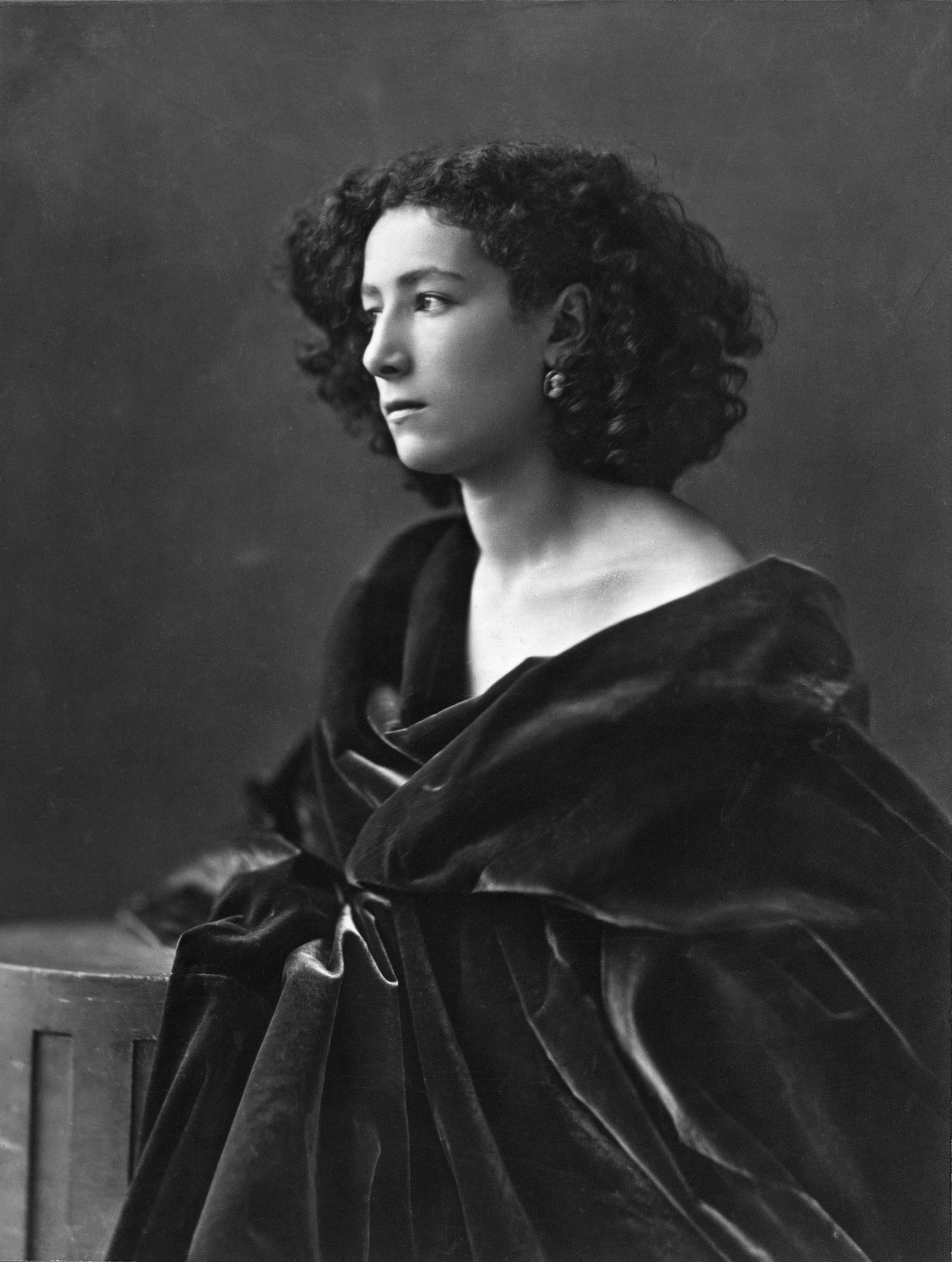
Featured photograph: Sarah Bernhardt photographed by Nadar around 1864. Getty Museum Open Content image, restored version. Public domain. Source and rights.
Sarah Bernhardt understood that an extraordinary photograph could outlive a performance. In one famous image, the French actress lies in a coffin. It was not a record of her death. She was alive, posing inside an object that already featured in the stories surrounding her.
The picture is startling, but it is also a poor place to stop. Bernhardt was an actor, theater manager, sculptor and international touring star. Her eccentric reputation sometimes obscures the work that made people want to look at her in the first place. Looking closely at her portraits, and reading what she wrote about herself, brings a more complicated woman into view.
A young actress before the legend
The Nadar portrait above dates from around 1864. Bernhardt’s face, hair and draped clothing create a very different impression from the coffin photograph. The image offers no grand theatrical set. Its effect depends on the sitter and the photographer’s arrangement of her pose.
She had made her debut at the Comédie-Française in 1862. Early appearances did not immediately establish her as a star. The 1911 Encyclopaedia Britannica account of her career records the successes that followed at the Odéon, including the young male character Zanetto in François Coppée’s Le Passant in 1869. Later performances in Phèdre and Victor Hugo’s Hernani helped build her reputation.
Those roles matter because the surviving photographs cannot tell us how her acting sounded or how an audience experienced an evening in the theater. A still portrait freezes the face. A theatrical reputation depended on timing, speech, movement and the ability to hold attention through a scene. The image is an entrance to that history, not a substitute for it.
Why was Sarah Bernhardt photographed in a coffin?
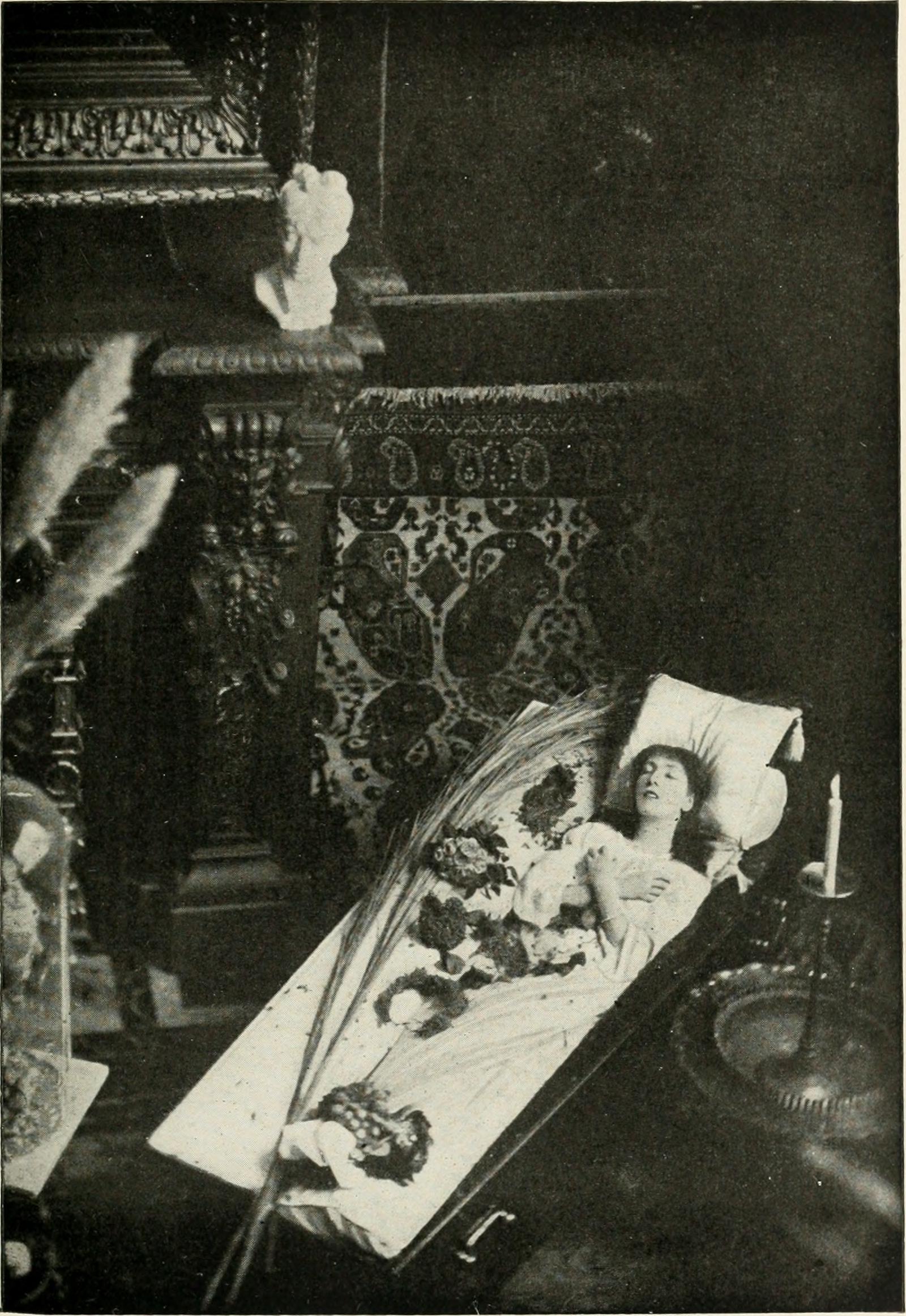
Bernhardt discussed the coffin in her 1907 memoir, My Double Life. She said she sometimes studied her parts while sitting in it. When her seriously ill sister Régina stayed with her, the small bedroom could not accommodate another ordinary bed. According to Bernhardt, she gave her sister the larger bed and slept in the satin-lined coffin herself.
Her account includes a visitor who discovered her asleep there and fled in alarm. Bernhardt blamed the resulting gossip for turning a private habit into a public sensation. After her sister died, she recalled a further confusion when undertakers encountered two coffins and nearly removed her own.
These are her recollections, published long after the events. They should be presented as her account rather than as independently witnessed explanations of every detail. What can be established directly is that the photograph was reproduced in her memoir while she was still alive. It is not a Victorian death portrait, whatever a dramatic caption on social media might suggest.
The distinction changes the picture. Instead of an unsuspecting dead woman, we are looking at a living performer participating in the production of her own image. Whether she meant to shock, amuse or reclaim an embarrassing story, the photograph became part of the public Bernhardt.
The sculptor behind the actress
In the same part of her memoir, Bernhardt described modeling portraits in clay and working on busts. She wrote about failed attempts as well as successful projects, including a portrait of her sister. That willingness to describe the difficulty is worth noticing. Sculpture was labor, not simply an exotic accessory to a famous life.
A surviving example is her Funerary Portrait of Jacques Damala in the Metropolitan Museum of Art. The museum attributes the marble sculpture to Bernhardt herself. An object like this provides a different kind of evidence from publicity anecdotes: it lets us encounter something she made, rather than something someone said she did.
The connection between performance and sculpture is particularly interesting. On stage, she shaped a character through a moving body. In a bust or funerary portrait, she worked toward a lasting form. Both practices required attention to expression, but they offered very different answers to the problem of preserving a person.
When the theater became a hospital
Bernhardt’s memoir also describes helping establish a military medical station at the Odéon during the Franco-Prussian War. The word “ambulance” in her account refers to the treatment facility, not simply the vehicle that modern readers might imagine. She recalled seeking official permission, arranging supplies and finding room for wounded men inside the theater.
Her narrative becomes very practical: food, beds, heating and the problem of where to put another patient. She describes soldiers occupying spaces ordinarily used by performers and audiences. A building associated with illusion became a place where suffering could not be acted away.
A memoir inevitably presents its author’s perspective, and Bernhardt could dramatize a page as effectively as a stage. Even so, these chapters make it impossible to describe her interests solely in terms of costumes and spectacle. They record an effort to use her contacts, energy and workplace for a purpose beyond performing.
A star who crossed borders
Bernhardt’s American tours carried her fame far beyond France. The Los Angeles Public Library’s study of her 1891 visit describes the intense demand surrounding a single performance in the city. Her first American tour had begun in 1880, and repeated visits made her a familiar name even to people who could not attend.
Publicity magnified her unusual habits, but the demand for tickets rested on the promise of seeing Bernhardt perform. The two forces reinforced each other. A striking photograph attracted curiosity; a celebrated performance gave the photograph a subject people recognized. Her career shows how international celebrity could develop well before modern mass media.
Reading the photographs without losing the person
The young woman in Nadar’s studio and the woman in the coffin are the same subject, presented in radically different ways. Neither photograph contains the whole biography. One can suggest elegance and composure, the other a deliberately unsettling familiarity with death. Both are constructed images, made through decisions about clothing, position and framing.
Bernhardt died in 1923, but these earlier portraits continue to circulate independently of her theater work. Restoring their context is as important as restoring a scratched print. Identify the sitter, establish when the image appeared and explain what it actually shows. The result is more interesting than a mystery photograph: a creative woman taking part in the making of her own extraordinary reputation.
Find more lives behind remarkable photographs in our history articles.
Get Your Images Done Too
If you want your photos bringing back to life, send me a message on any of my social media accounts.
Follow me across social media for historical photo restorations, AI colorizations, and videos bringing the past to life!