Loie Fuller: The Dancer Who Turned Fabric and Light Into Art
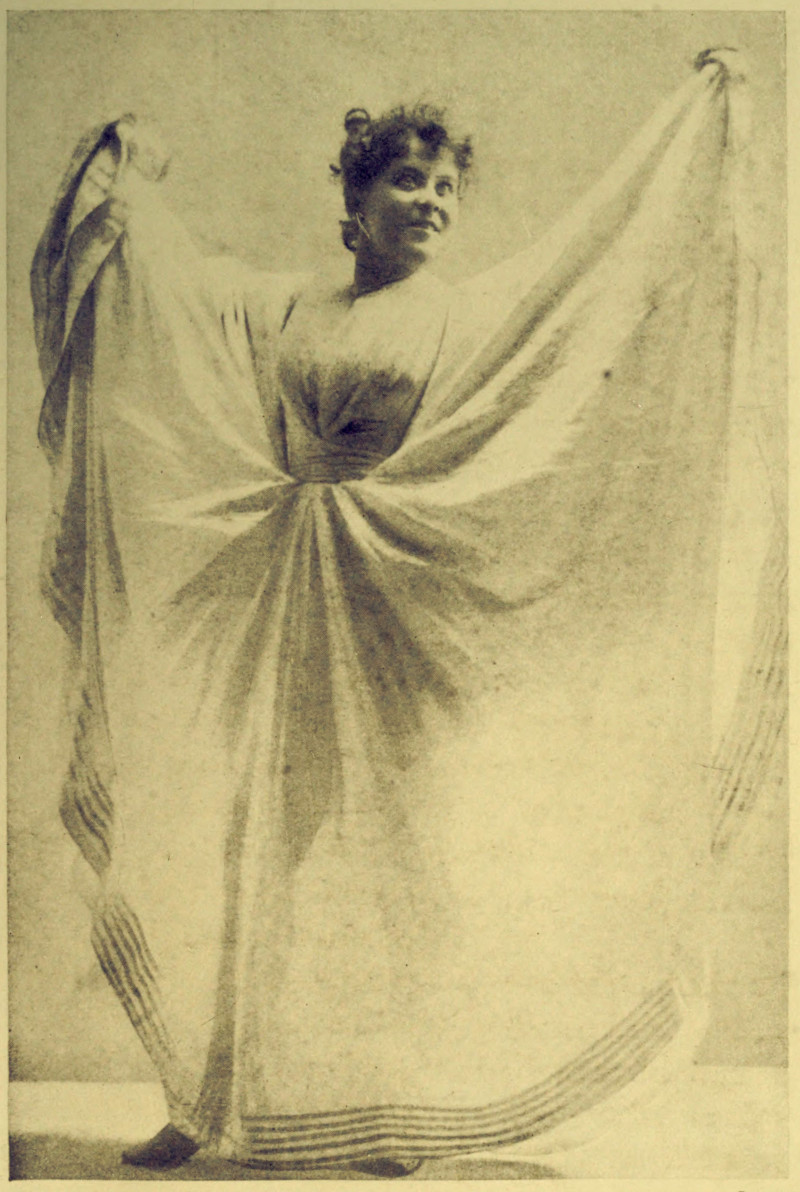
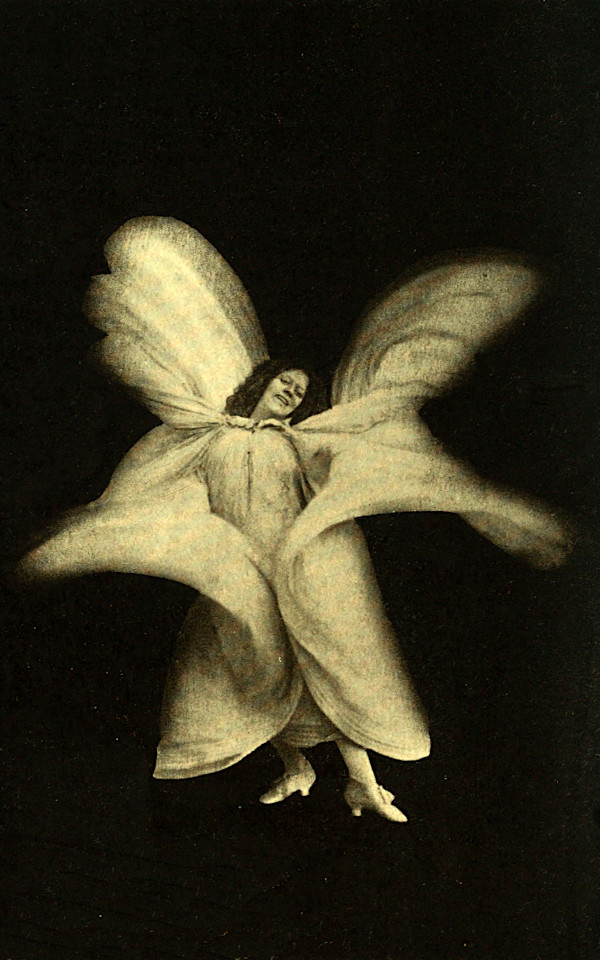
Featured photograph: Loie Fuller in her original serpentine dress, reproduced in her 1913 memoir. The book identifies the sitter by name. Public domain. Source and rights.
Loie Fuller could make a human figure seem to dissolve into a flower, a flame or a pair of enormous wings. The effect was not produced by a screen. It came from fabric, movement and carefully directed light. In photographs, her costumes can look almost impossible. Behind them stood a performer who also thought like an inventor.
The American dancer became a celebrated presence in Paris in the 1890s. Her appeal was not limited to a sequence of graceful steps. She offered a changing visual image, with the body sometimes revealed and sometimes lost inside the moving cloth. To understand the pictures, it helps to understand the practical work that made the illusion possible.
Who was Loie Fuller?
Born in Illinois in 1862, Fuller had a theatrical career before her Paris success. The Metropolitan Museum of Art’s account of her work dates her debut at the Folies-Bergère to November 5, 1892. There, her combination of flowing silk and colored illumination helped establish a distinctive kind of stage spectacle.
Her memoir, Fifteen Years of a Dancer’s Life, published in English in 1913, describes a life of performing, travel and experiments. Like any memoir, it gives us the author’s remembered version of events. It is especially useful when Fuller moves beyond celebrity encounters and explains how she worked.
A dress became an experiment
Fuller traced the beginnings of her serpentine dance to a theatrical scene in which she played a woman being hypnotized. In her recollection, the scene required soft music and unusual lighting. Short of money for a new costume, she searched her belongings and found a light silk skirt.
The important part of the story is what happened next. She did not describe a finished dance arriving in a single flash of inspiration. She recalled trying movements, watching what happened to the folds and repeating gestures that produced interesting shapes. Friends watched and encouraged her to retain particular effects.
The material became an active part of the performance. A movement of the arms might send a wave through the cloth, while a change of direction created another outline. The audience did not need to identify the technique to recognize an unfolding flower or fluttering wings. The illusion depended on coordination, not simply on owning an unusually large dress.
Her account also describes the professional uncertainty of changing how she presented herself. Known as an actress, she worried that becoming identified as a dancer could harm her prospects. The later fame should not make those early decisions seem inevitable. She was testing an approach before she knew whether managers or audiences would reward it.
The patent behind the performance
A particularly revealing document is Fuller’s U.S. patent for a garment for dancers, issued April 17, 1894. The patent names Marie Louise Fuller and describes equipment intended especially for serpentine dancing. It turns an apparently weightless stage image into a set of parts that can be drawn and explained.
The garment described in the patent is wide at the bottom and narrow above, with light material attached to a band or crown at the head. Wands connected to the fabric allow the wearer to manipulate its folds. Fuller proposed lightweight materials such as aluminum or bamboo for those supports.
The specification explains that the wands help create waves and wing-like shapes. Suspending the cloth from the head rather than only at the waist gives it a different range of movement. It also discusses combining the garment with projected white or colored light. The practical purpose was to enlarge what the dancer could make the fabric do.
A patent is not proof that every performance used precisely that configuration. It is evidence that Fuller worked deliberately on the mechanics of her art and sought protection for a particular design. That distinction is useful. We can recognize her inventiveness without imagining that one drawing explains every costume and lighting effect in her career.
Light was part of the choreography
Fuller devoted a chapter of her memoir to light and dance. She treated illumination as more than a means of making a performer visible. Color and changing brightness could alter the apparent form of the body and cloth. The dance existed in the interaction between all those elements.
She recalled planning a finale in which light shone upward through glass beneath her. The description makes the stage itself part of the apparatus. The surface under the performer, the direction of the lamps and the timing of a movement all contributed to what the audience saw.
This helps explain why a black-and-white photograph is both valuable and incomplete. It can preserve the outline of a costume, the position of an arm or the expression of the performer. It cannot reproduce the sequence of color changes or the way one shape became another. A frozen image is a trace of the performance, not the performance itself.
Is that really Loie Fuller in the film?
Fuller’s success also complicates the identification of images. A dancer performing a serpentine routine is not automatically Fuller. The New York Public Library’s Loie Fuller collection guide notes that an 1896 Lumière film often associated with her shows an unidentified dancer. The style traveled beyond its best-known practitioner.
That is why the photographs here come from a publication that explicitly identifies Fuller. The main image names her in her original serpentine dress. The second appears as the frontispiece of her memoir and credits the photographer Langfier. Their captions provide evidence for the sitter’s identity rather than relying on resemblance or a modern repost.
An artist worth seeing clearly
Fuller’s costumes make extraordinary historical photographs, but their strangeness should not erase the person operating them. She rehearsed, evaluated materials, worked with lighting and argued for her ideas in both prose and patent language. Her spectacle depended on decisions that could be revised and improved.
The most rewarding way to look at her is therefore twice: first at the remarkable shape filling the frame, then at the person holding it together. Behind the wings and waves was an artist making a difficult physical and technical process look effortless.
Explore more people behind unusual historical portraits in our history articles.
Get Your Images Done Too
If you want your photos bringing back to life, send me a message on any of my social media accounts.
Follow me across social media for historical photo restorations, AI colorizations, and videos bringing the past to life!