From Richard Nixon to George H. W. Bush: Power, Trust and the Cold War
American Presidents, Part 8
Between 1969 and 1993, the United States moved from the turmoil of Vietnam to the end of the Cold War. Along the way came a presidential resignation, oil shortages, a conservative political revival and fierce arguments about the proper limits of government. The photographs of the men in the White House capture familiar faces, but behind them lies a period of profound uncertainty and change.
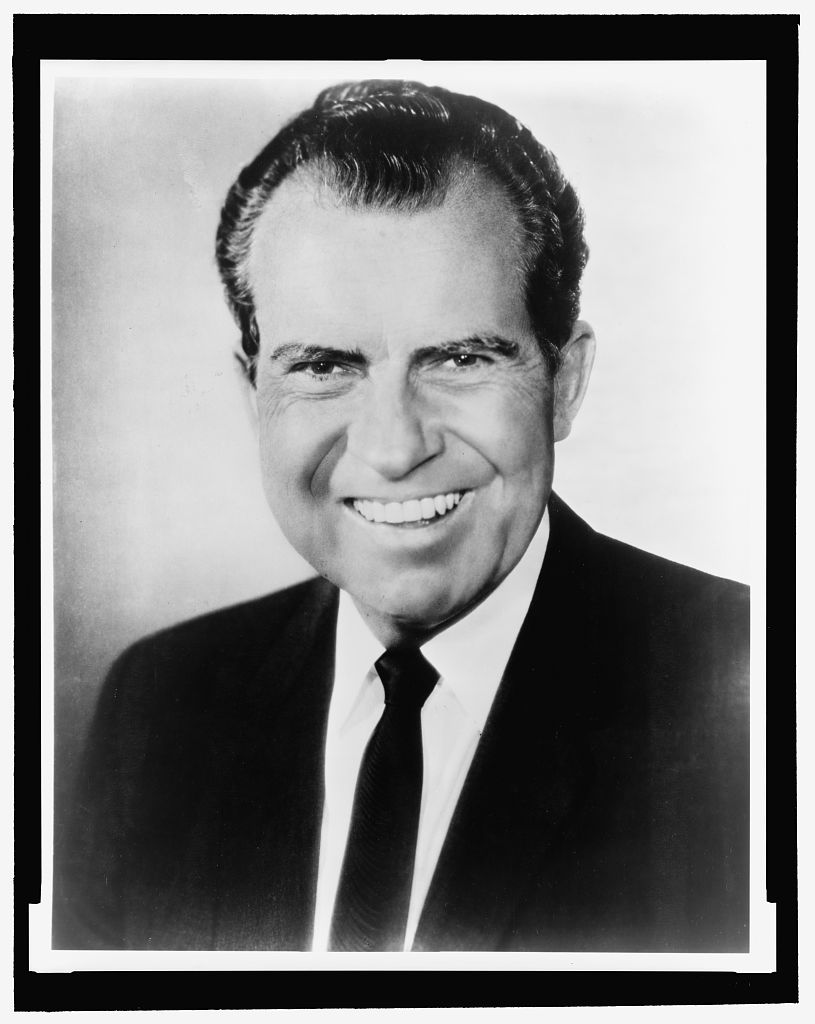
Richard Nixon, Gerald Ford, Jimmy Carter, Ronald Reagan and George H. W. Bush were the 37th through 41st American presidents. Four were Republicans; Carter was the only Democrat. Each left achievements that deserve attention, and each faced failures or controversies that cannot be separated from his record.
This eighth instalment follows their presidencies through diplomacy, economic upheaval and the struggle to maintain public trust. Presidential leadership mattered, but so did Congress, courts, campaigners and events no administration could fully control.
US presidents 37–41 at a glance
- 37. Richard Nixon, 1969–1974: Republican Party.
- 38. Gerald Ford, 1974–1977: Republican Party.
- 39. Jimmy Carter, 1977–1981: Democratic Party.
- 40. Ronald Reagan, 1981–1989: Republican Party.
- 41. George H. W. Bush, 1989–1993: Republican Party.
37. Richard Nixon and the limits of presidential power
In office: 20 January 1969–9 August 1974
Party: Republican
Achievements: Opening to China, nuclear arms agreements and environmental protection
Main difficulties: Vietnam, Watergate and resignation
Nixon entered office after years of political division and growing opposition to the Vietnam War. A former vice-president under Dwight D. Eisenhower, he brought extensive experience and a reputation as a determined anti-communist. That reputation made his most striking diplomatic initiative especially unexpected.
Diplomatic openings and domestic reform
His 1972 visit to the People’s Republic of China helped break decades of hostility and opened a new relationship between Washington and Beijing. It did not immediately establish full diplomatic relations, which came under Carter. Nixon also pursued détente with the Soviet Union, including the 1972 SALT I agreements, which placed limits on aspects of the nuclear competition. These were important moves towards managing rivalry rather than simply intensifying it. Miller Center: Nixon’s foreign affairs.
At home, Nixon’s record included measures that complicate a simple conservative label. The Environmental Protection Agency began operating in December 1970, bringing together federal pollution-control responsibilities. His administration also supported major clean-air protections and workplace-safety legislation. These changes reflected pressure from Congress and the public as well as presidential choices. EPA: origins of the agency; Miller Center: domestic affairs.
Vietnam and Watergate
Nixon reduced American troop numbers in Vietnam, but also expanded the war into Cambodia and continued heavy bombing. The 1973 Paris agreement brought the withdrawal of remaining US combat forces, not a lasting peace between North and South Vietnam. The costs to civilians across the region were immense. Miller Center: Vietnam policy.
Watergate ultimately destroyed his presidency. Investigations into the 1972 break-in at Democratic headquarters exposed a cover-up and abuses of executive power. White House recordings became crucial evidence. The House Judiciary Committee approved articles of impeachment, but Nixon resigned on 9 August 1974 before the full House voted. His departure demonstrated that electoral victory did not place a president above scrutiny, and it left lasting damage to public confidence. National Archives: Watergate chronology.
38. Gerald Ford and the effort to restore trust
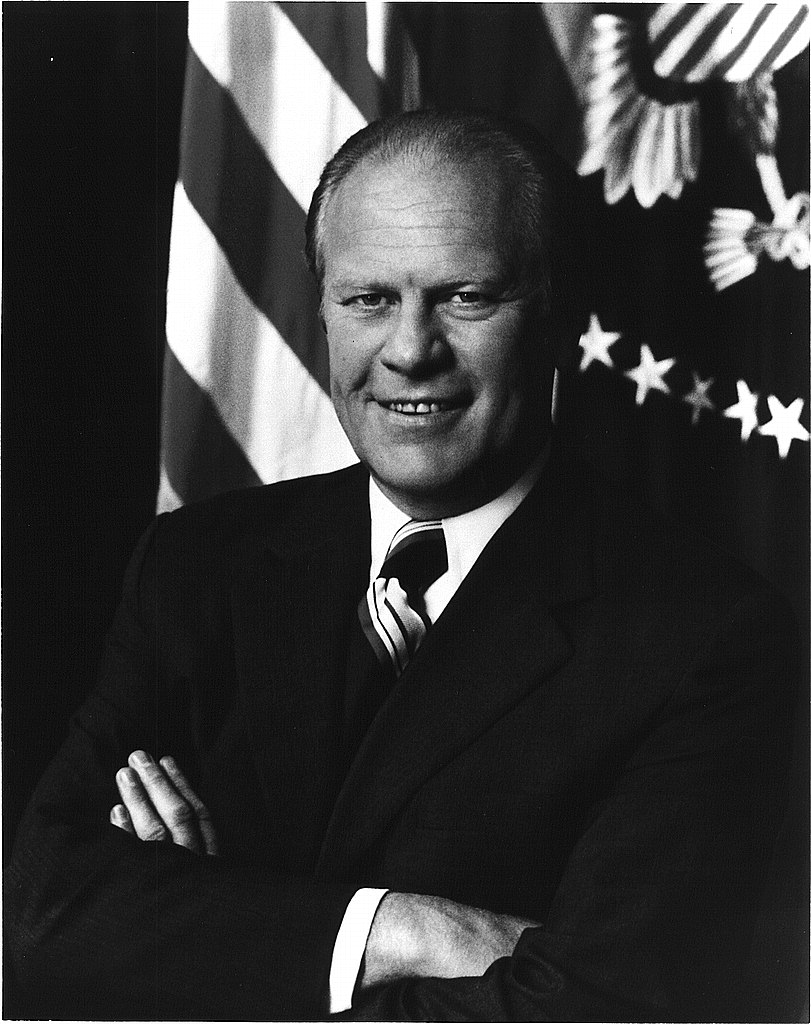
In office: 9 August 1974–20 January 1977
Party: Republican
Achievements: Constitutional continuity after Watergate and the Helsinki Final Act
Main difficulties: The Nixon pardon, stagflation and the collapse of South Vietnam
Ford reached the White House by an extraordinary constitutional route. After Vice-President Spiro Agnew resigned, Nixon nominated Ford to replace him under the Twenty-Fifth Amendment, and Congress confirmed the appointment. Nixon’s resignation then made Ford president. He had been elected to Congress repeatedly, but never elected vice-president or president. National Archives: Ford biography.
A pardon that divided the country
Ford’s reputation for personal decency helped distinguish him from the administration he inherited. Yet his decision to pardon Nixon in September 1974 immediately damaged that effort. Ford argued that a prolonged prosecution would obstruct national recovery; critics believed it denied accountability and suggested that powerful people received different treatment. Suspicions of a prior bargain circulated, although the congressional inquiry did not establish one. Miller Center: Ford and the pardon.
His economic problems were formidable. Inflation and unemployment combined in the condition known as stagflation. The voluntary “Whip Inflation Now” campaign offered an accessible slogan, but little effective relief. As recession deepened, Ford shifted towards measures intended to stimulate recovery, including a tax reduction. The episode showed how quickly economic conditions could overwhelm a president’s initial approach. Miller Center: economic policy.
Diplomacy after Vietnam
Ford continued détente and signed the 1975 Helsinki Final Act. Its human-rights commitments later gave dissidents a framework for challenging governments that had endorsed those principles. Critics initially feared that the agreement conceded too much to Soviet power in Europe. US Helsinki Commission: history; Miller Center: Ford’s foreign affairs.
He also presided over the final collapse of South Vietnam in 1975 and the evacuation from Saigon. His short presidency could not erase the consequences of a war fought across several administrations. Defeated by Carter in 1976, Ford left a record centred on constitutional continuity and attempted reconciliation, with the Nixon pardon remaining its most disputed decision.
39. Jimmy Carter and the challenges of principled leadership
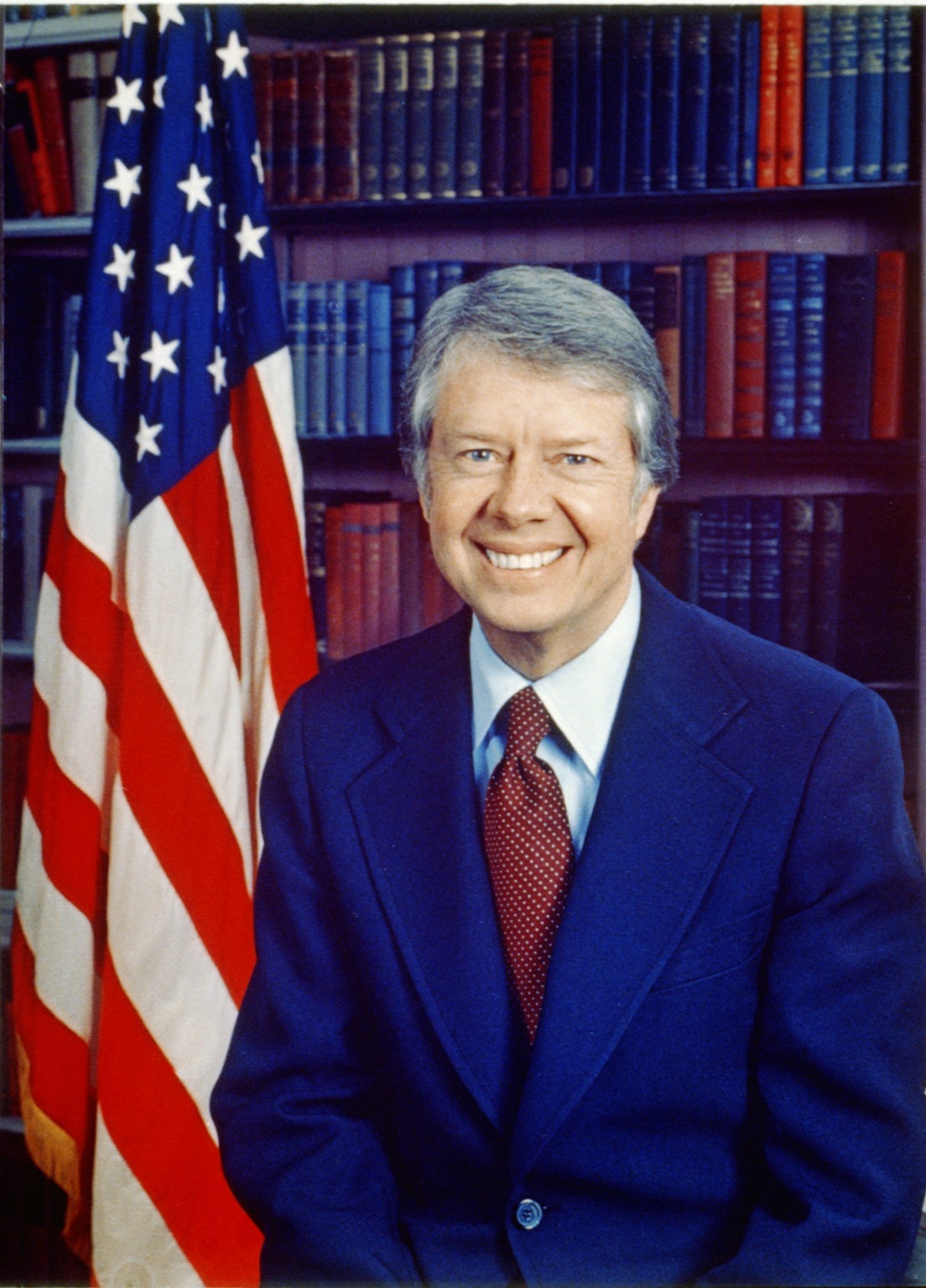
In office: 20 January 1977–20 January 1981
Party: Democratic
Achievements: Camp David Accords, Panama Canal treaties and energy policy
Main difficulties: Inflation, energy shocks and the Iran hostage crisis
Carter, a former Georgia governor, offered voters an outsider’s promise of honesty after Watergate. His informal manner and emphasis on personal responsibility were intended to bring the presidency closer to ordinary Americans. Governing proved harder than campaigning against Washington’s habits.
Camp David and human rights
His most enduring diplomatic achievement was helping Egypt’s Anwar Sadat and Israel’s Menachem Begin reach the 1978 Camp David Accords. Sustained personal mediation helped create the framework for the Egyptian-Israeli peace treaty signed in 1979. The agreement transformed relations between those two states, although it did not resolve the wider Israeli-Palestinian conflict. Office of the Historian: Camp David.
Carter also secured treaties providing for the eventual transfer of the Panama Canal to Panama and made human rights a more prominent foreign-policy concern. Application was inconsistent: strategic relationships, including support for Iran’s shah, competed with his declared principles. His record therefore includes both a significant change in diplomatic emphasis and uncomfortable compromises with repressive allies. Miller Center: Carter’s foreign affairs.
Energy pressures and the hostage crisis
At home, Carter promoted energy conservation, established the Department of Energy and supported deregulation in industries including airlines. Yet inflation and renewed oil-price shocks eroded living standards and confidence. His appointment of Paul Volcker as Federal Reserve chairman in 1979 helped set the stage for a tougher anti-inflation policy, whose high interest rates also imposed painful economic costs. Miller Center: Carter’s domestic affairs.
The seizure of the American embassy in Tehran in November 1979 became the defining crisis of his final year. A rescue attempt failed in April 1980, killing eight American servicemen. Fifty-two hostages remained captive for 444 days and were released on 20 January 1981, after Reagan’s inauguration, following negotiations conducted by Carter’s administration. Carter’s diplomatic successes could not overcome the political damage of the crisis and economic distress. Miller Center: Iran and the hostages.
40. Ronald Reagan and the conservative resurgence
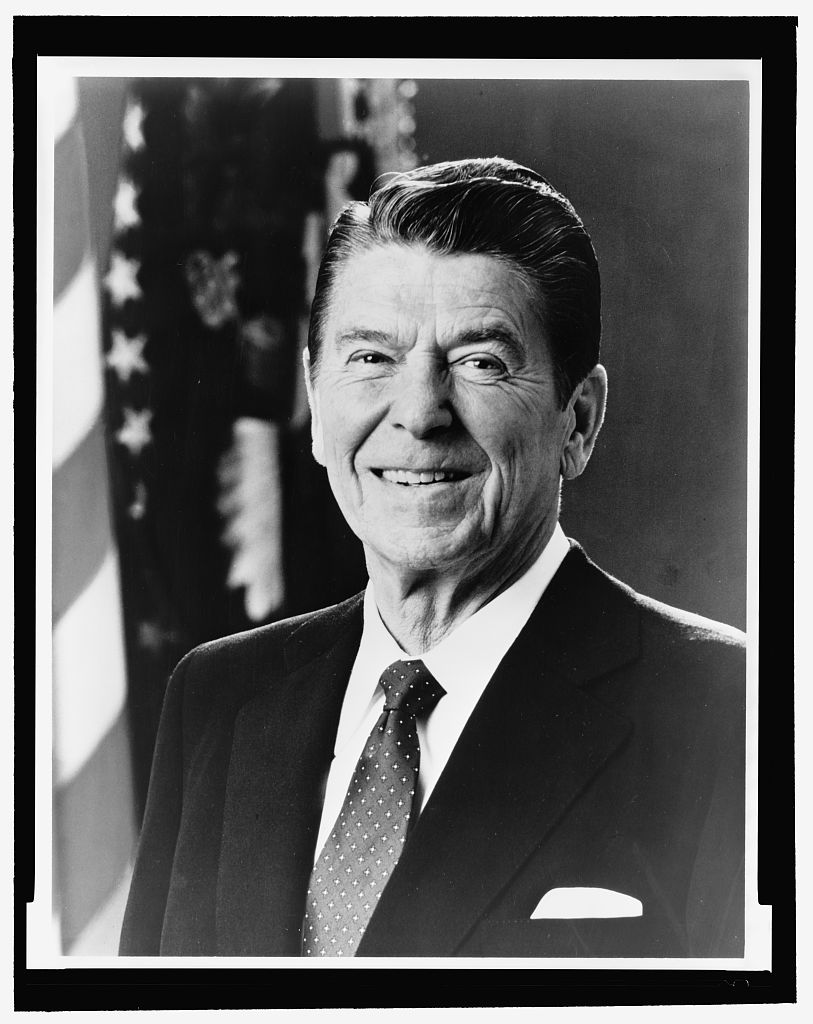
In office: 20 January 1981–20 January 1989
Party: Republican
Achievements: Tax reform, economic expansion and the INF Treaty
Main difficulties: Iran-Contra, rising federal debt and delayed AIDS leadership
A former actor and California governor, Reagan communicated optimism with unusual effectiveness. He argued for lower taxes, reduced regulation and a stronger military, reshaping Republican politics and the terms of national debate.
Economic recovery and Cold War negotiation
Reagan secured major tax cuts in 1981 and a bipartisan tax overhaul in 1986. Following a severe early recession, the economy experienced sustained expansion and inflation fell substantially. The Federal Reserve’s monetary policy was central to that decline; it should not be credited to presidential tax policy alone. Growth coexisted with rising federal debt, uneven gains and weakened organised labour, symbolised by his dismissal of striking air-traffic controllers in 1981. Miller Center: Reagan’s domestic affairs.
Abroad, Reagan combined an arms build-up and forceful anti-Soviet rhetoric with later negotiation. His relationship with Mikhail Gorbachev helped produce the 1987 Intermediate-Range Nuclear Forces Treaty, eliminating an entire category of ground-launched nuclear missiles. Reagan contributed to the Cold War’s changing direction, but Soviet reforms, economic pressures and movements within Eastern Europe also mattered. The Soviet Union dissolved after he left office. Miller Center: Reagan’s foreign affairs.
Iran-Contra and the AIDS epidemic
The Iran-Contra affair exposed secret arms sales to Iran and the diversion of proceeds to Nicaraguan Contra rebels amid congressional restrictions on assistance. Reagan approved the Iran initiative, while denying knowledge of the diversion. Investigations revealed serious failures of oversight and accountability. The scandal raised fundamental questions about officials pursuing foreign policy outside the controls imposed by Congress. Reagan Presidential Library: the Reagan presidency.
His response to AIDS remains another serious criticism. The epidemic emerged in 1981, yet his first major public speech devoted to it came in 1987. Federal researchers and health agencies were active, but delayed presidential leadership left affected communities fighting for recognition, resources and an end to stigma. The national story of these years includes that suffering alongside economic recovery and diplomatic progress. HIV.gov: HIV and AIDS timeline.
41. George H. W. Bush and the end of the Cold War
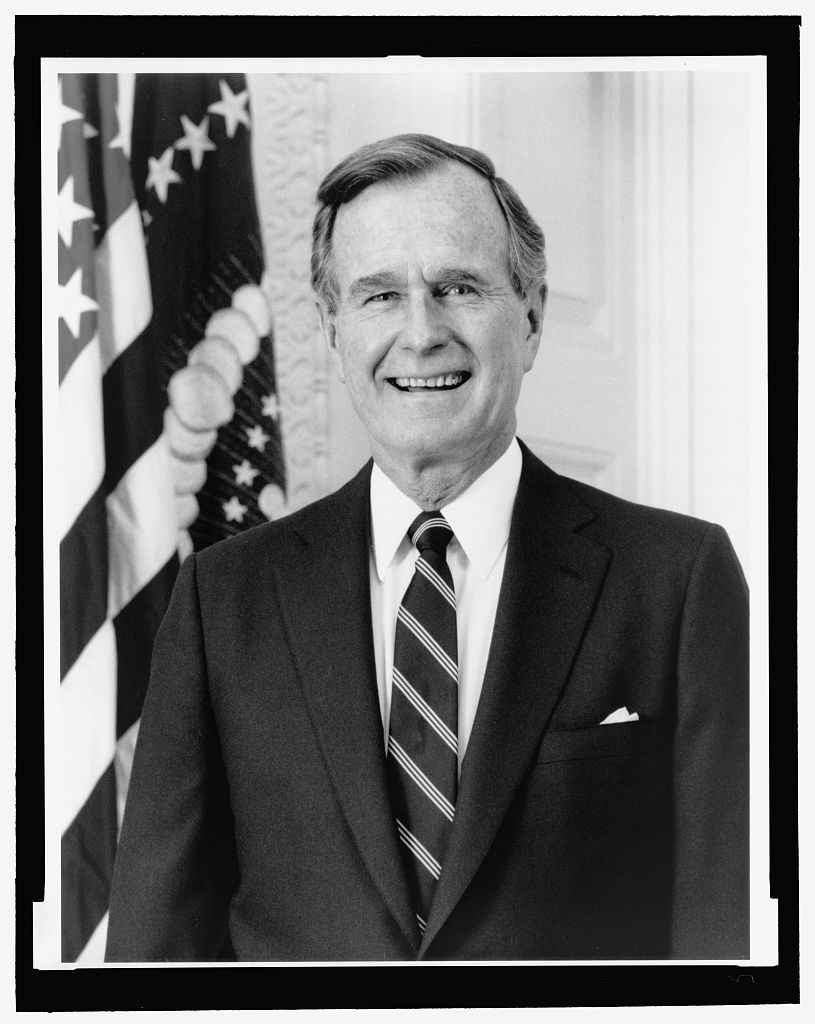
In office: 20 January 1989–20 January 1993
Party: Republican
Achievements: Cold War diplomacy, the Americans with Disabilities Act and clean-air reform
Main difficulties: The Panama invasion, recession and the reversal of his tax pledge
Bush brought experience as a diplomat, CIA director and Reagan’s vice-president. His cautious approach helped guide American policy through the fall of the Berlin Wall, German reunification and the dissolution of the Soviet Union.
Coalitions abroad and civil rights at home
After Iraq invaded Kuwait in 1990, Bush assembled an international coalition that expelled Iraqi forces in 1991. The Gulf War achieved its central objective without occupying Baghdad, although Saddam Hussein remained in power and the region’s conflicts continued. Bush’s wider diplomatic achievement was managing rapid international change without turning the Cold War’s conclusion into a direct confrontation between the superpowers. Miller Center: Bush’s foreign affairs.
His domestic legacy includes the Americans with Disabilities Act of 1990, a landmark prohibition of disability discrimination in major areas of public life. It reflected years of campaigning and bipartisan legislative work. He also signed the 1990 Clean Air Act amendments, strengthening action on pollution, including acid rain. These measures show how lasting reforms could emerge through compromise rather than sweeping ideological programmes. Miller Center: Bush’s domestic affairs.
Intervention and broken promises
The 1989 invasion of Panama removed Manuel Noriega but caused civilian deaths and drew international condemnation. Bush’s restrained response to China’s Tiananmen Square crackdown also attracted criticism from those who believed strategic relationships were taking priority over human rights. Miller Center: Panama and China.
At home, Bush agreed to tax increases in a 1990 deficit-reduction compromise, breaking his campaign pledge against new taxes. Supporters saw fiscal responsibility; opponents saw a betrayal. Recession and an uneven recovery weakened his standing, and he lost to Bill Clinton in 1992. Foreign-policy success had not insulated him from voters’ economic concerns. Miller Center: budget negotiations.
Looking back at five consequential presidencies
These presidencies changed America’s relationships abroad and expectations at home. Their record includes environmental protection, peace agreements and wider civil rights, alongside abuses of power, damaging interventions and failures to respond adequately to suffering. Looking beyond the official portraits means holding those different parts of the story together.
Explore more stories in our history articles.
If you want your photos bringing back to life, send me a message on any of my social media accounts. Follow me across social media for historical photo restorations, AI colorizations, and videos bringing the past to life!
Instagram: https://www.instagram.com/bringing_history_to_life/
Facebook: https://www.facebook.com/bringinghistory2life | TikTok: https://www.tiktok.com/@bringing_history_to_life | YouTube: https://www.youtube.com/@bringing_history_to_life