Vincent van Gogh: The Artist Beyond the Tragic Legend
Vincent van Gogh’s paintings can feel immediately familiar: yellow sunflowers, restless skies, a face framed by a red beard. His biography often arrives in similarly recognizable fragments, dominated by illness, poverty and an injured ear. But those fragments can hide what he actually spent his life doing.
Van Gogh learned, practiced, experimented and worked. He studied other artists, argued about color and searched for ways to make ordinary subjects carry extraordinary feeling. His career lasted only about a decade, yet it was a period of deliberate artistic development, not simply a prolonged outburst of emotion.
Early Life: Before the Paintings
Vincent was born in Zundert, in the Netherlands, on March 30, 1853. His father, Theodorus, was a pastor, and his mother was Anna van Gogh-Carbentus. The world of work initially carried him far from the career that would make him famous.
From 1869 he worked in the art trade, spending time in branches of Goupil & Co. in The Hague, London and Paris. Later he turned toward religion and worked among miners in Belgium’s Borinage region.
In 1880, aged 27, he decided to become an artist. That late start matters. The painter we now associate with a seemingly unmistakable personal style began by building basic skills, particularly through drawing. His future was not obvious to his family, and there was no guarantee that determination would become a livelihood.
Learning to See Ordinary Lives
In the early 1880s Van Gogh practiced intensely. He returned to his parents’ home in Etten and later worked in The Hague, where Anton Mauve introduced him to techniques in watercolor and oil painting. Drawing outdoors and working from figures helped him learn to construct pictures rather than simply imagine them.
His younger brother Theo provided crucial financial support. That assistance gave Vincent time to develop, even when their parents doubted whether an artist’s life offered a respectable future.
The artist’s growth depended on both solitary effort and help from others. The familiar image of a completely isolated genius misses these practical relationships: someone offered instruction, someone bought materials, and someone paid the bills.
The Potato Eaters and the Value of Work
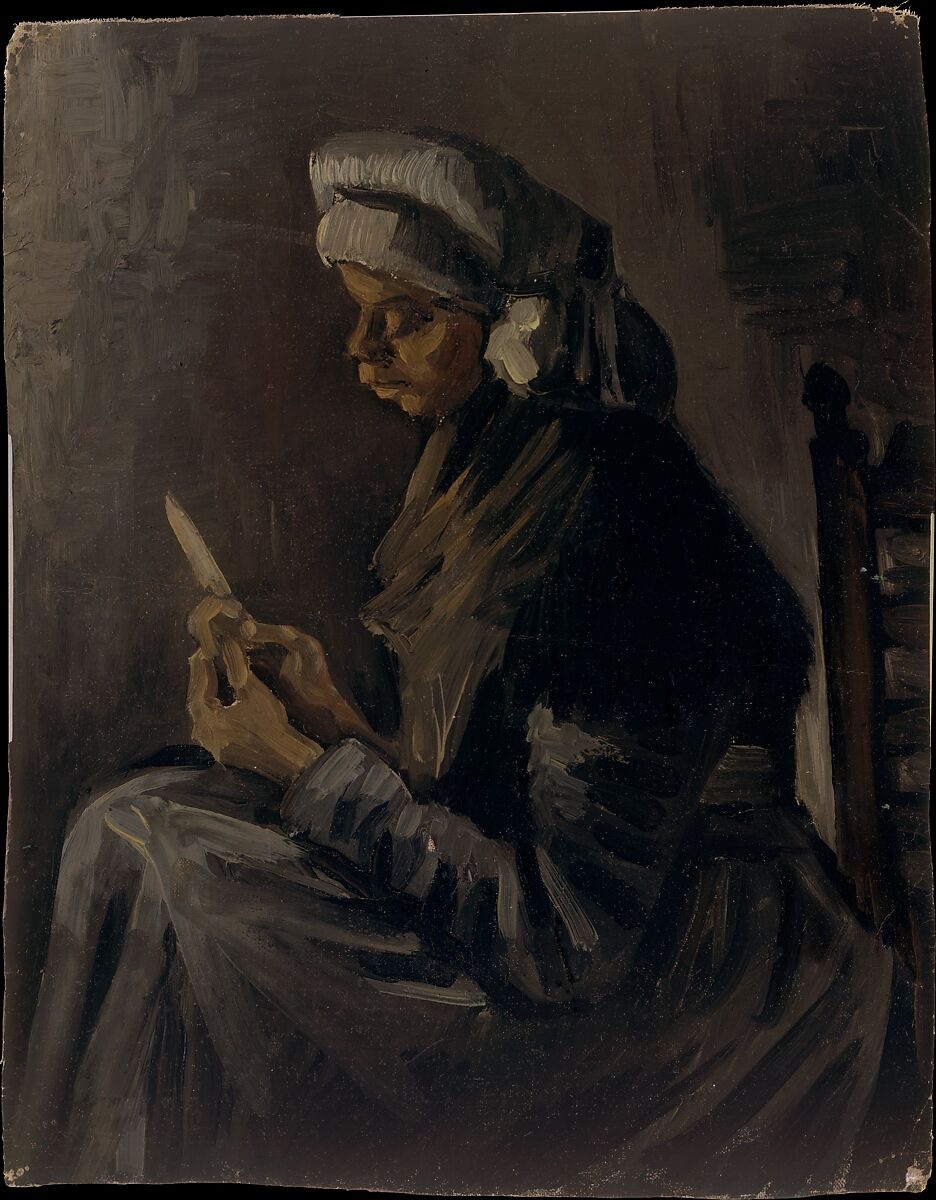
Rural labor became one of Van Gogh’s central subjects. He admired Jean-François Millet, whose images of working people offered a model of seriousness and dignity. Van Gogh studied reproductions and returned to Millet’s example throughout his career.
The Potato Eaters, painted in 1885, belongs to this early world of dark tones and peasant subjects. Its gathering around a humble meal is far removed from the brilliant yellow flowers of popular memory. The difference reminds us that Van Gogh’s art changed substantially over time.
His attention to labor also gives the painting a purpose beyond picturesque poverty. These were people whose hands worked the land. He wanted ordinary life to deserve sustained attention, without smoothing it into something conventionally elegant.
Paris and a New Language of Color
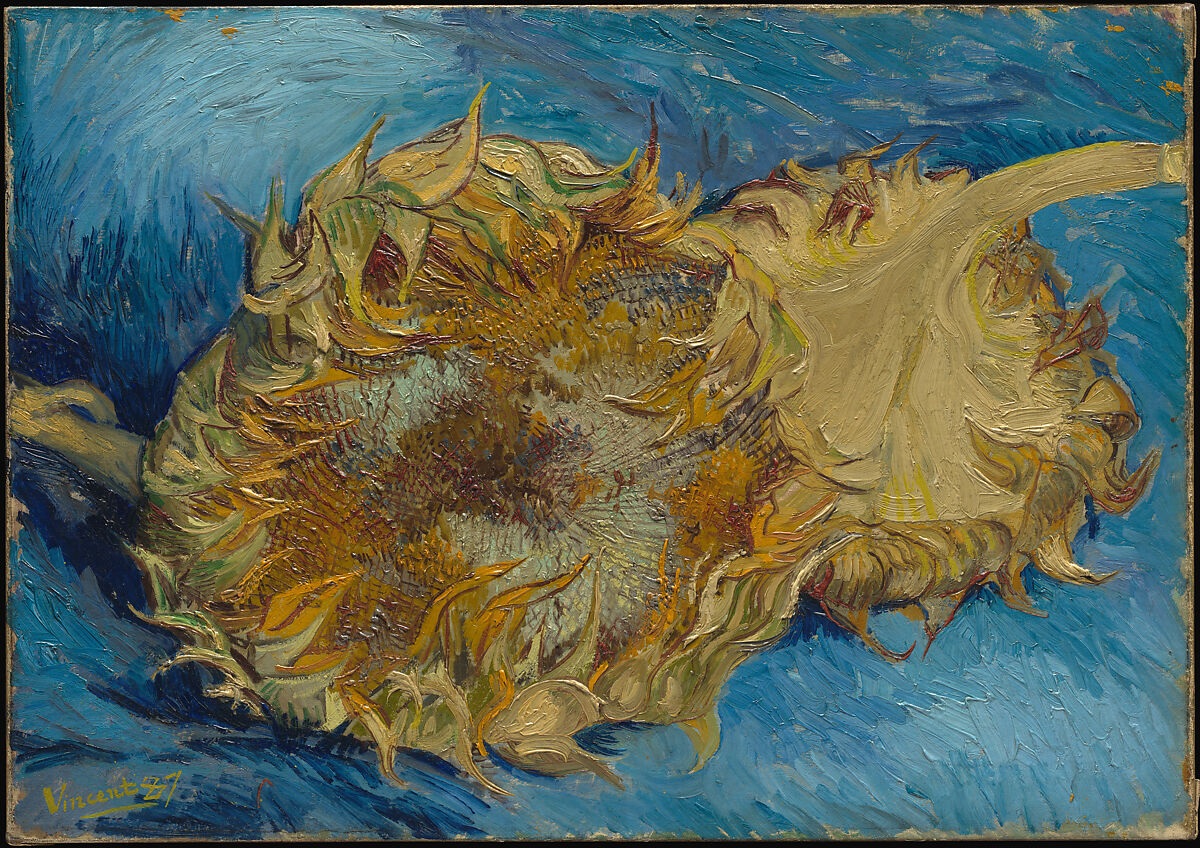
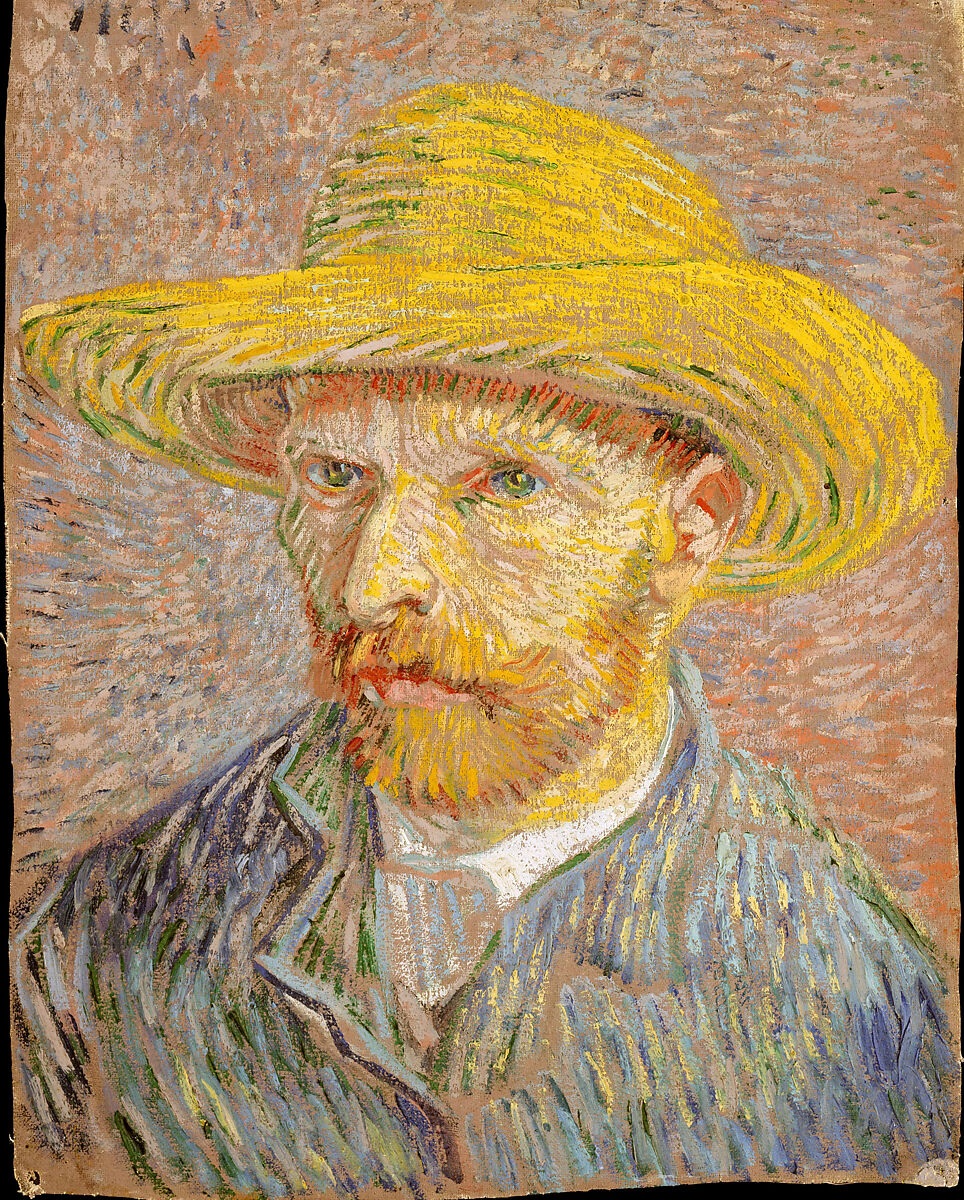
Van Gogh moved to Paris in 1886 and lived with Theo. There he encountered Impressionism and newer experiments in color and brushwork. His palette brightened, and he explored different ways of building a painted surface.
Self-portraits became one testing ground. The face remained his own, but the handling of color and marks could change. These pictures were not merely records of appearance; they were opportunities to practice an evolving visual language.
The transformation was substantial, but it did not erase everything that came before. His commitment to direct observation and expressive subjects survived as his methods changed. The artist who had studied rural workers was learning how modern painting could make familiar things look newly alive.
Arles, Sunflowers and a Broken Dream
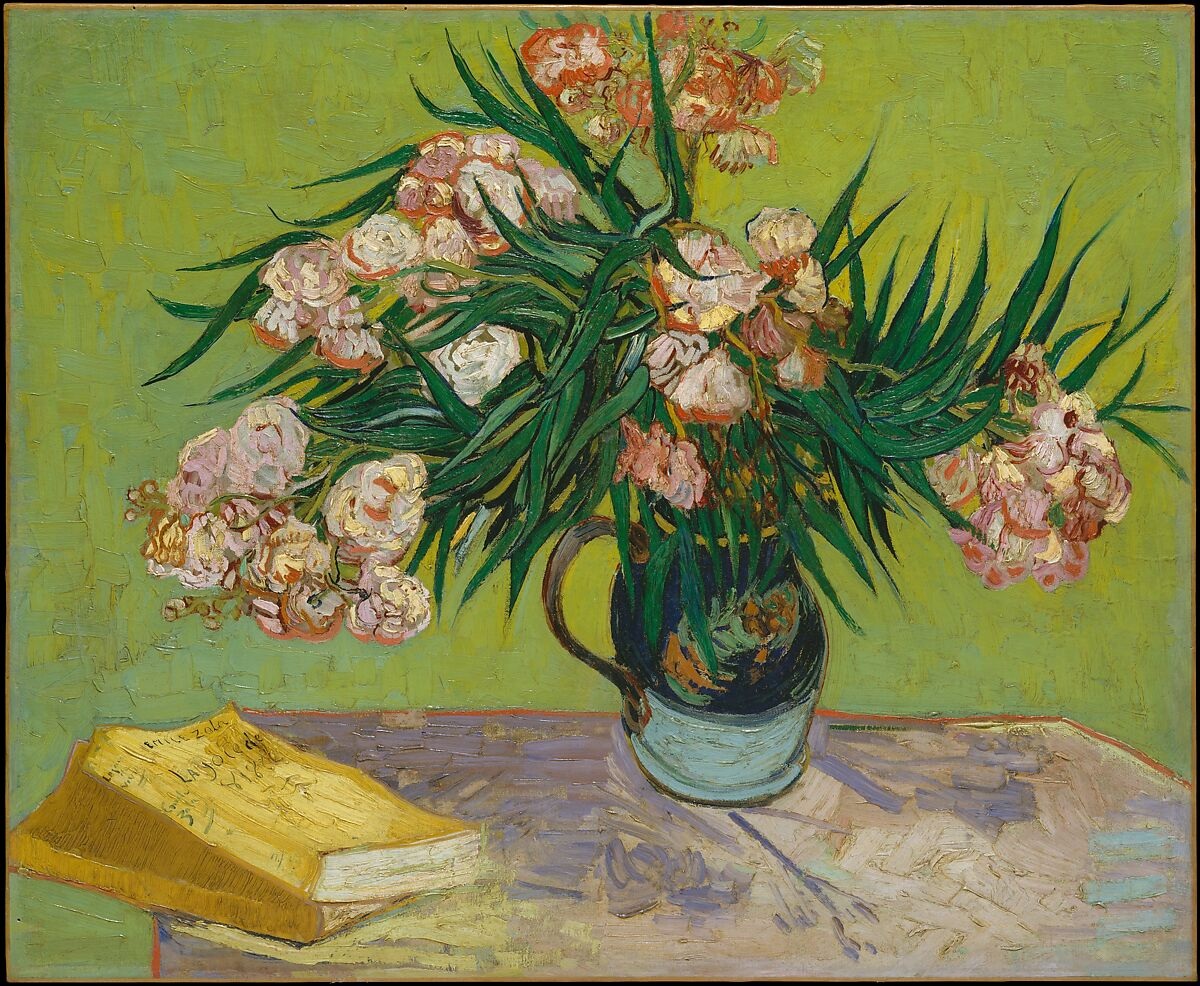
In 1888 Van Gogh moved south to Arles. The light and landscape energized his work. Orchards, harvest scenes and other local subjects offered a wealth of possibilities, while his brushwork became freer and more forceful.
He hoped to create a community of artists in the Yellow House. Paul Gauguin joined him in October, supported financially by Theo. For a short time the dream seemed possible: two painters sharing rooms, working hard and discussing art.
Their partnership was also tense. In December, Van Gogh experienced a severe crisis and injured his ear. Gauguin left, and the shared studio did not survive. This episode should not eclipse the paintings or become a simplistic explanation for them. The creative work and the suffering belong to the same life, but one cannot be reduced to the other.
The Starry Night and Work at Saint-Rémy
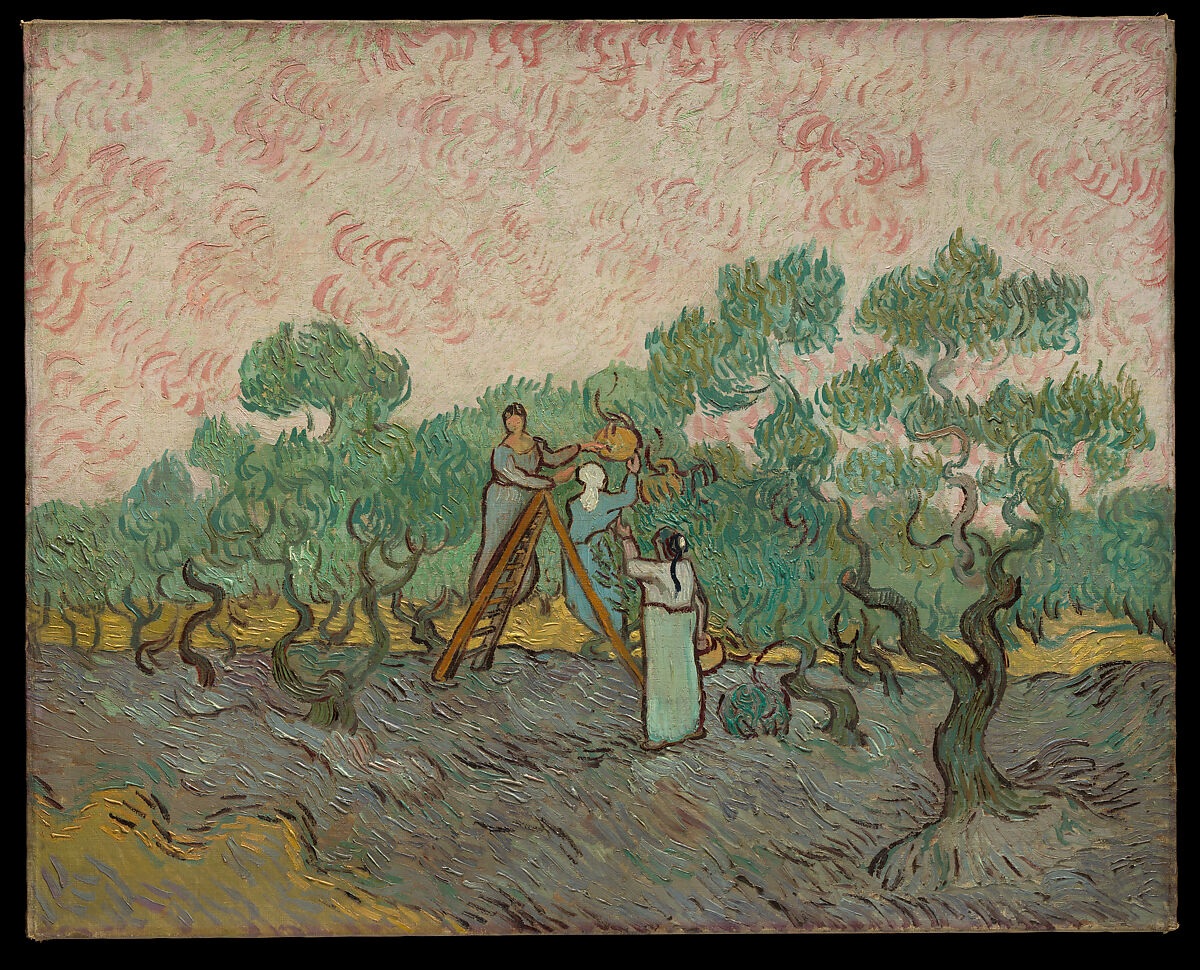
In May 1889 Van Gogh voluntarily entered the hospital at Saint-Rémy. His health fluctuated, and periods of illness interrupted his work. The historical record does not justify confidently assigning him a single modern diagnosis.
He painted The Starry Night in June 1889. Inspired partly by the view from the hospital, the picture combines observation with invention. Its sky is not simply a photographic transcription of a scene or a medical record on canvas. The arrangement gives powerful visual form to atmosphere, movement and feeling.
That distinction respects Van Gogh as an artist making choices. Color, rhythm and composition were tools he studied and used, not accidental by-products of distress.
Family, Final Months and Death
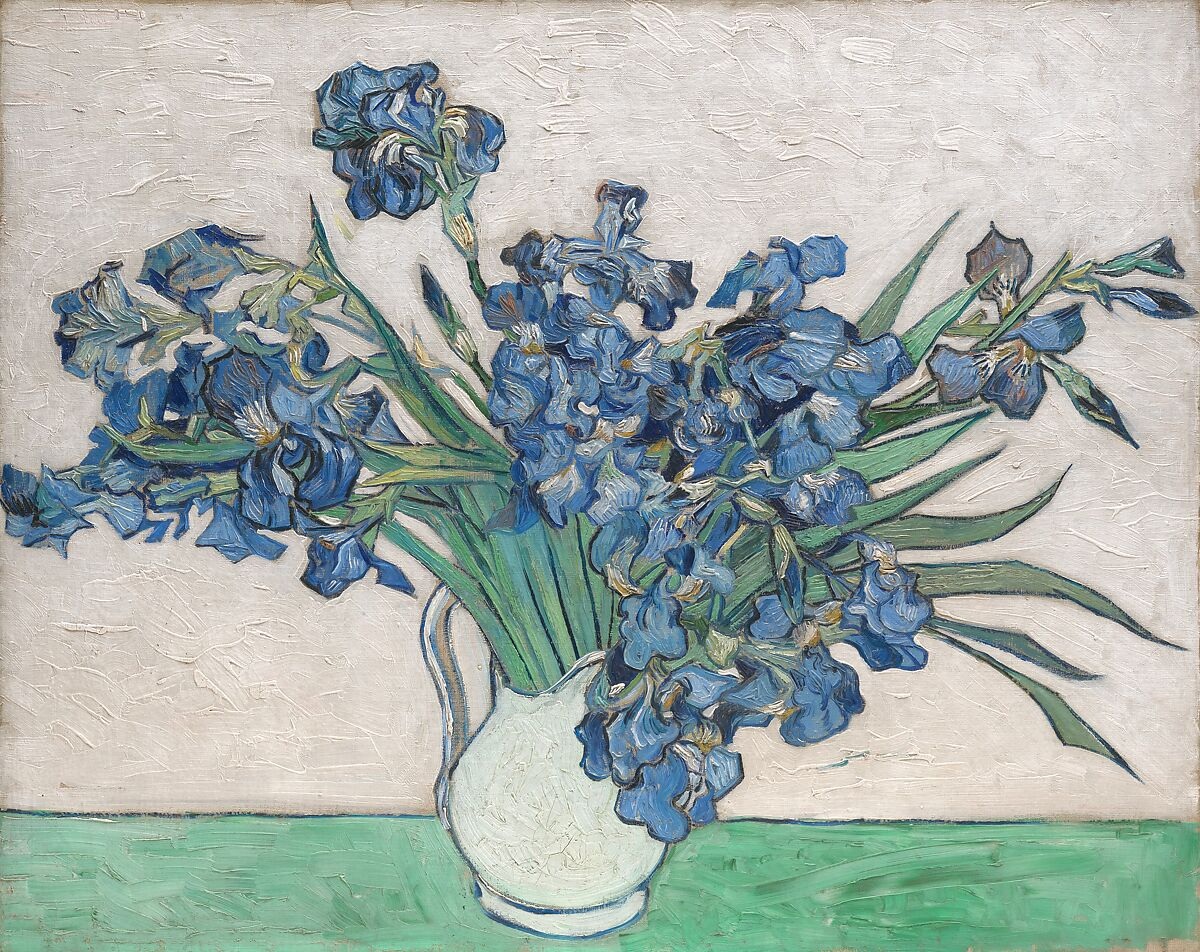
Theo remained central to Vincent’s working life. Their correspondence preserves discussions of paintings, materials, money and hopes that would otherwise be lost. It reveals an artist trying to explain what he wanted to accomplish, not simply asking posterity to pity him.
In May 1890 Vincent moved to Auvers-sur-Oise, nearer Paris and Theo. He continued painting during his final weeks. He died on July 29, 1890, aged 37, after a self-inflicted gunshot wound.
His death cut short a developing career. It should not be treated as the inevitable ending of artistic sensitivity, or as the event that made his paintings meaningful. The work already existed, shaped by years of study and effort.
The Legacy Theo and Jo Helped Preserve
Van Gogh was not entirely unknown during his lifetime, and the repeated claim that he sold only one painting is misleading. The Van Gogh Museum records several sales and commissions, as well as exchanges of work. Commercial success remained limited, but limited success is different from none.
After Theo died in 1891, his widow Jo van Gogh-Bonger played a decisive role in preserving and promoting Vincent’s work. Exhibitions, carefully considered sales and publication of his letters helped establish the reputation later generations inherited. His fame did not simply happen: people worked to make the paintings visible.
Van Gogh’s enduring achievement lies in the pictures themselves. He showed how a room, a field, a face or a vase of flowers could become intensely expressive. To look beyond the tragic legend is not to ignore his suffering. It is to give his art the attention he worked so hard to earn.
Get Your Images Done Too
If you want your photos bringing back to life, send me a message on any of my social media accounts.
Follow me across social media for historical photo restorations, AI colorizations, and videos bringing the past to life!