1920s Women’s Swimwear: The Decade That Changed the Beach
A century ago, a day at the beach could involve a woollen swimsuit, a carefully chosen bathing cap, and an argument about how much leg was acceptable. 1920s women’s swimwear captures a moment when the seaside was becoming a place for sport, fashion and public spectacle, while older ideas about modesty still had considerable power.
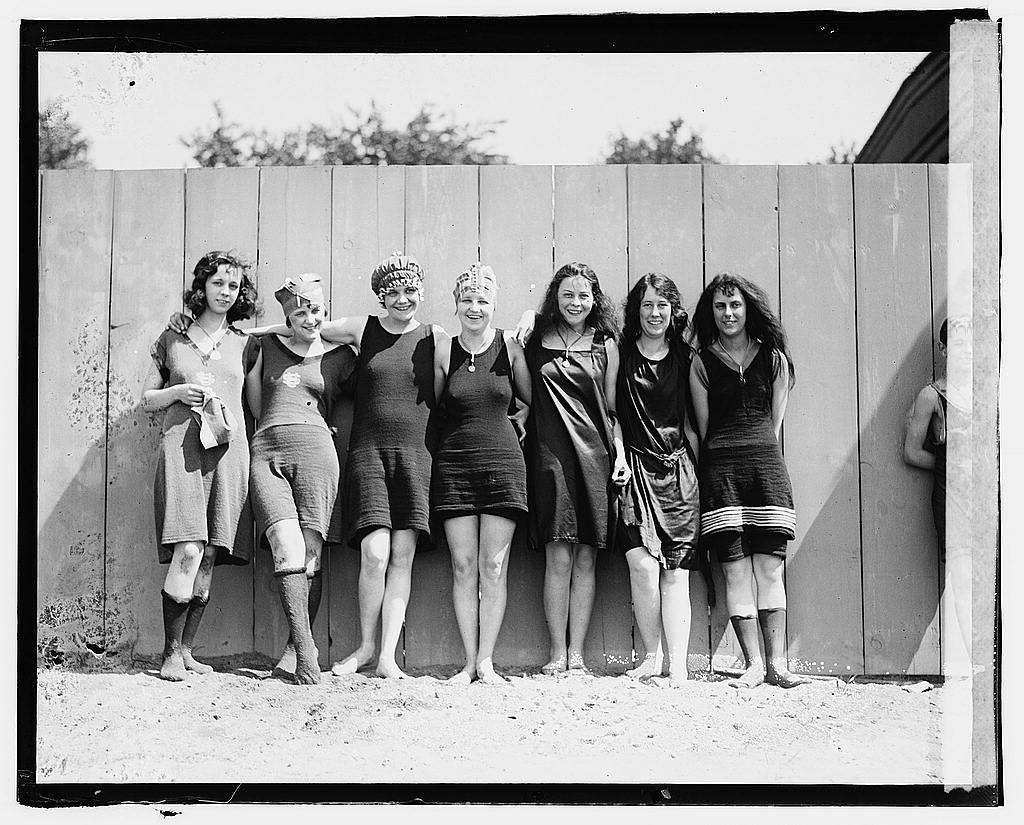
Look closely at the photographs and the changes become visible: simpler shapes, bare arms, shorter hems and outfits that followed the body rather than hiding it. Yet this was not a sudden change that happened everywhere at once. The decade brought a mixture of practical improvements, fashionable experiments and rules that varied from one beach to another.
From Bathing Dresses to Clothes for Swimming
Before the streamlined swimsuit became familiar, women’s bathing outfits could include a dress, drawers and stockings. They offered coverage, but all that fabric made energetic swimming awkward. The Smithsonian’s account of this transition notes that the bulky bathing dress remained a familiar sight well into the early twentieth century, with women increasingly abandoning it during the 1920s. Read the Smithsonian’s history of bathing dress.
The changing vocabulary around 1920s women’s swimwear mattered, too. A costume intended for standing in the shallows had different demands from one intended for swimming. As more attention went to movement in the water, the close-fitting one-piece became an increasingly convincing answer.

What Did 1920s Women’s Swimwear Look Like?
The recognisable 1920s silhouette was a sleeveless one-piece, often with a scooped neckline and short legs. Some designs kept a little overskirt or skirt-like panel, a reminder that greater freedom of movement did not immediately end concern about exposed bodies. A British costume discussed by the V&A shows precisely that compromise: a shorter, more practical garment with an attached skirt. See the V&A’s swimming-costume collection discussion.
There was no single outfit that every woman wore. Choices depended on the year, the place and the purpose of the outing. A fashionable resort appearance, an organised competition and a family swim could call for rather different clothes.
Why 1920s Women’s Swimwear Was Often Wool
Wool sounds like an unlikely choice for a swim today, but it was an important material in the decade’s bathing costumes. The Metropolitan Museum of Art holds a Jantzen suit dated 1921–25 made from wool. Surviving garments make clear that these were knitted clothes, far removed from today’s lightweight stretch fabrics. View the Met’s Jantzen swimsuit record.
Knitting helped manufacturers produce a closer fit, but water remained a problem. Fabric could stretch, sag and lose its shape after a swim. Screen Archive South East describes this behaviour in its swimwear history, alongside a yellow wool costume dated about 1920 with attached shorts. Improvements in fit were real, but they did not make every suit comfortable or dependable when wet. Explore the archive’s seaside clothing history.
Jantzen and the Promise of a Better Swim
Manufacturers made a selling point of the new practicality. Chertsey Museum records a 1925 Jantzen advertisement describing its product as “The suit that changed bathing to swimming.” The museum explains how tightly ribbed knitting helped the garment cling to the body and reduced unwanted stretching in the water. See Chertsey Museum’s Roaring Twenties catalogue.
That slogan neatly captures the ambition behind the changing costume. Women were being offered clothing that suggested activity and confidence, rather than a dress adapted for getting wet. The swimsuit was becoming a product with its own design language and identity.
The Beach Could Still Have a Dress Code
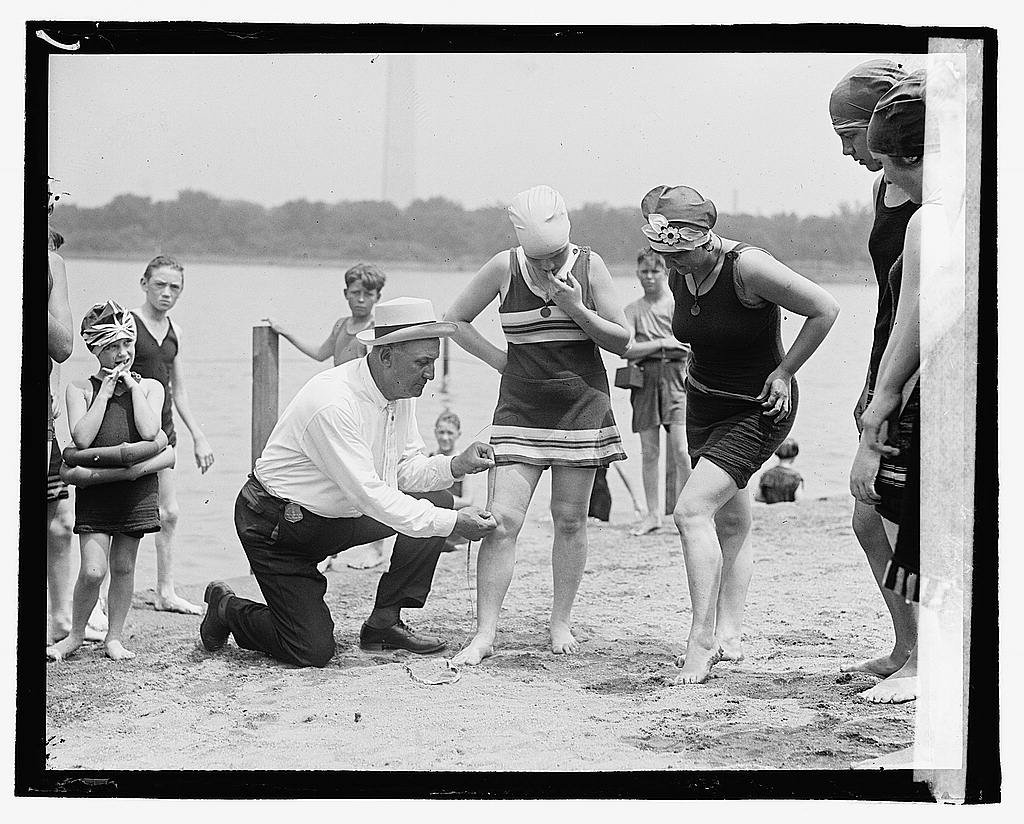
One of the most revealing images from the period shows a bathing suit being measured. A Library of Congress record for a Washington, D.C., photograph from June 1922 describes a rule that suits at the Washington bathing beach must not extend more than six inches above the knee. The photograph shows the distance being checked with a tape measure. Read the Library of Congress description.
It is a striking example of official concern over beach clothing, but it should not be mistaken for a single law covering every American beach. Local rules differed. Nor does a photograph of an inspection, by itself, prove that the woman pictured was arrested. The original caption is more useful than the dramatic stories often attached to these images online.
Caps, Patterns and a Complete Beach Outfit
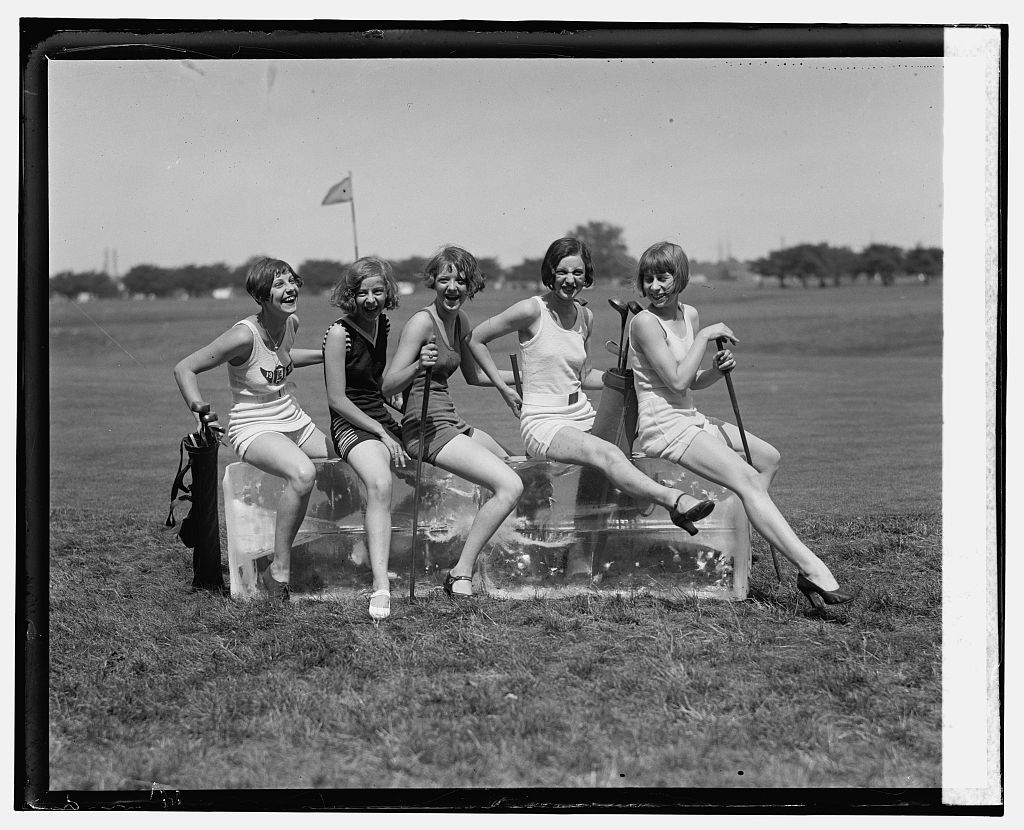
A swimsuit was only part of the look. Hats, suitable footwear and beach bags helped turn a seaside visit into a fashion occasion. ASU FIDM Museum describes the slim, geometric swimsuits of the 1920s alongside their accessories, noting how closely their straight silhouette followed wider women’s fashions. Beach pyjamas also served as cover-ups and resort clothing. Read ASU FIDM Museum’s swimwear history.
Period film preserves details that still photographs can easily hide. In footage dated 1929, Screen Archive South East identifies diagonal stripes on one costume, a low-slung belt on another, and decorative swimming hats. Such touches remind us that the beach was not simply becoming more practical. It was becoming a place to put together a recognisable personal style.
Athletes Changed the Conversation
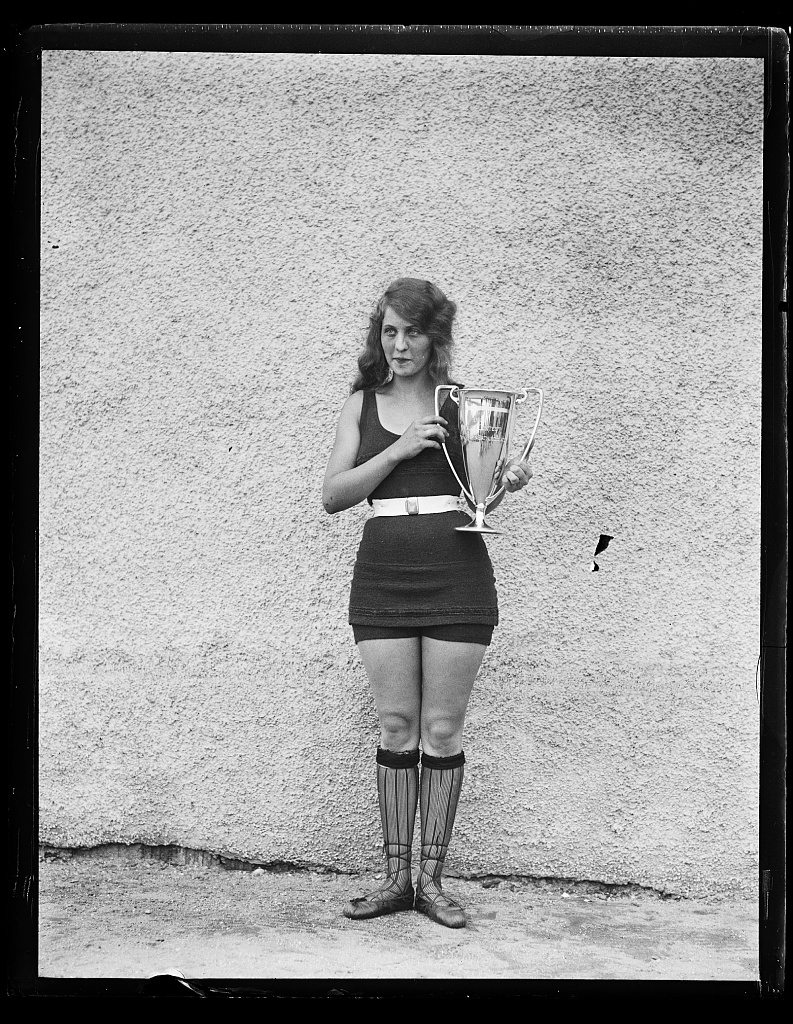
Annette Kellerman helped make the streamlined swimming costume familiar before and during the decade. The National Gallery of Victoria holds an Asbury Mills wool swimsuit dated about 1920 and associated with her name. Its label identifies it as an Annette Kellermann “Two-in-One” bathing suit, showing how a celebrated swimmer’s identity could become part of a commercial garment. See the National Gallery of Victoria’s swimsuit record.
Then, on 6 August 1926, Gertrude Ederle became the first woman to swim the English Channel. Her achievement gave the public an unmistakable demonstration of women’s strength and endurance in the water. Alongside fashion photographs and bathing-beauty contests, there was another powerful image of the modern swimmer: an athlete accomplishing something extraordinary. Read the Smithsonian’s Ederle trophy record.
Photographs Show Fashion, but Not Everyone’s Experience
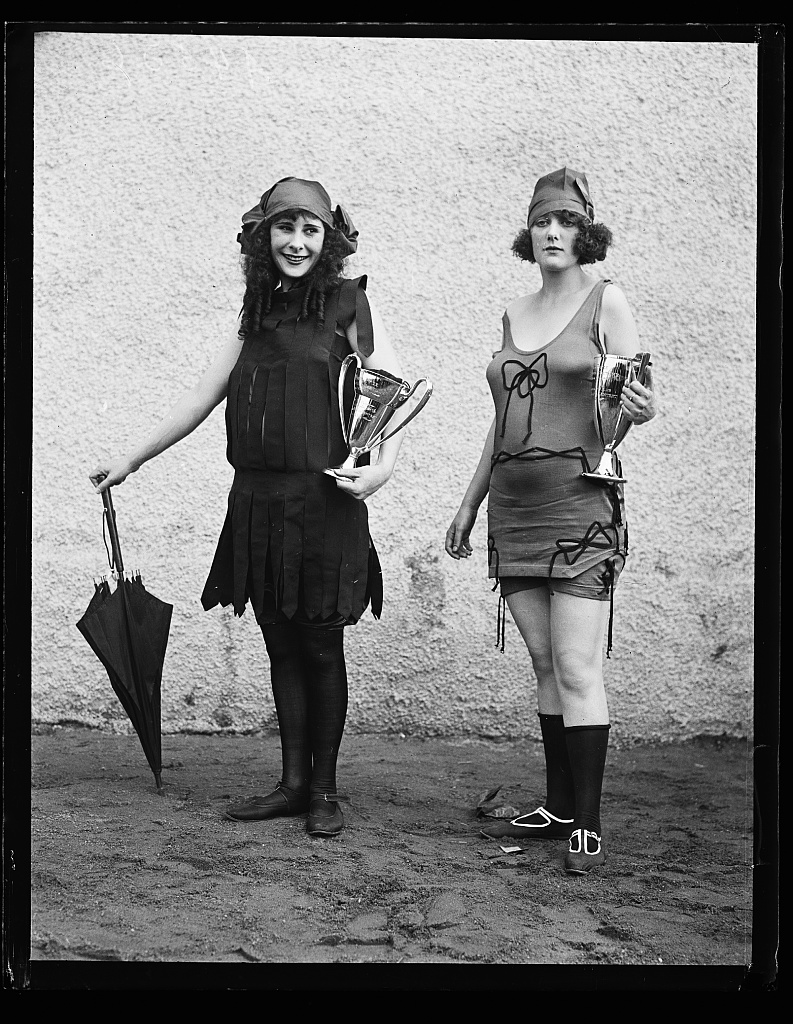
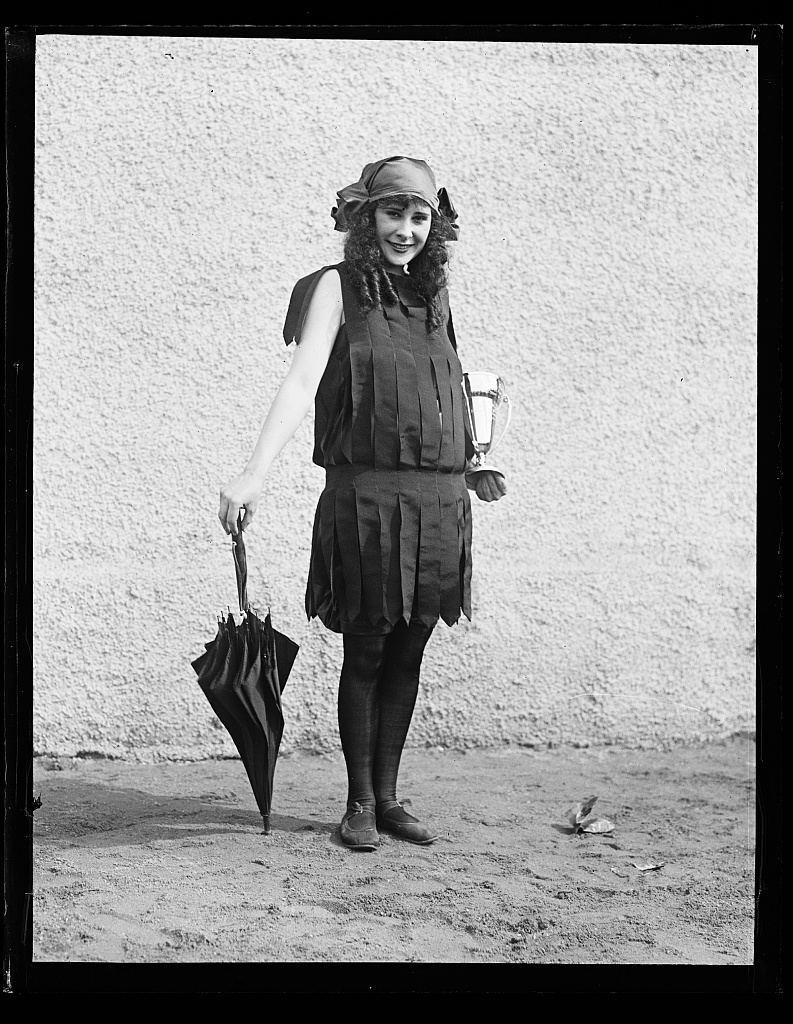
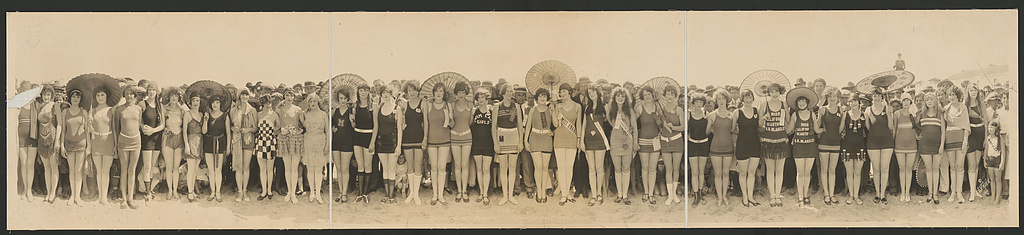
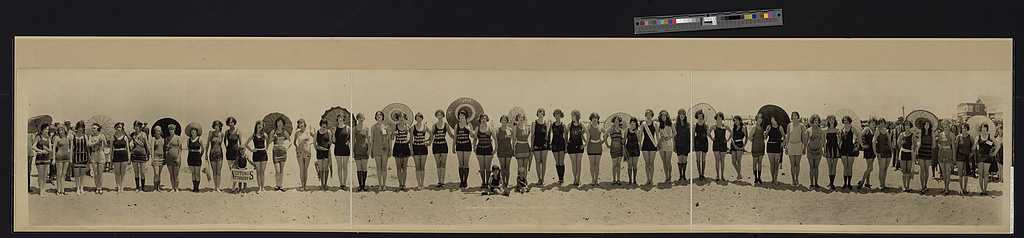
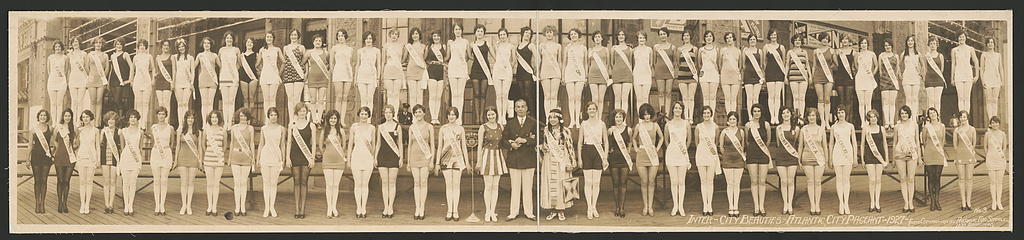
Pageants and posed press photographs are valuable records of clothing, but they are selective. A line of contestants presents people chosen for a particular event. It cannot tell us what every woman wore, how often she visited the beach, or whether she was welcome there.
Access to recreation also had a less glamorous history. In Washington, the Tidal Basin beaches closed in 1925 amid concerns about water quality and conflict over segregation. George Mason University’s Histories of the National Mall describes residents subsequently cooling off in the Reflecting Pool and other public waters when swimming options were limited. Greater freedom in clothing did not mean equal access to leisure. Read the National Mall history.
Why 1920s Women’s Swimwear Still Fascinates Us
The decade’s swimsuits sit between two worlds. They retain traces of older bathing dress, yet their simple one-piece shapes are immediately recognisable. Their knitted fabric belongs to an earlier era of clothing technology, while their emphasis on movement feels distinctly modern.
These photographs preserve more than a changing hemline. They show women taking part in leisure, competition and public life, sometimes within strict limits and sometimes helping to shift them. The most interesting details are often the smallest: a patterned cap, a skirt panel, a trophy, or the tape measure that reveals how closely somebody else was watching.
Photograph Sources and Reuse
All ten photographs come from the Library of Congress. The catalogue or collection rights information records no known restrictions on publication; the three pageant panoramas also note that no copyright renewal was found. Each caption links to the original catalogue record. The images are historical originals, not colourisations or AI-generated reconstructions.
Get Your Images Done Too
If you want your images brought to life message me on Instagram.
Follow my other socials: