From Franklin D. Roosevelt to Lyndon B. Johnson: Crisis, Power and Civil Rights
American Presidents, Part 7
From the banking crisis of 1933 to the divisions of the Vietnam era, the American presidency grew in reach and responsibility. Government assumed new roles in economic security, the United States became a global superpower, and campaigners forced the nation to confront the distance between constitutional promises and everyday discrimination.
Franklin D. Roosevelt, Harry S. Truman, Dwight D. Eisenhower, John F. Kennedy and Lyndon B. Johnson governed during this transformation. Their decisions shaped pensions, highways, alliances, voting protections and health care. Their records also include forced incarceration, nuclear devastation, covert intervention and a costly escalation of war.
These five presidencies show both the possibilities of national leadership and the dangers of concentrating power. To understand them, the achievements must be examined alongside the people excluded, harmed or left waiting for change.
US presidents 32–36 at a glance
- 32. Franklin D. Roosevelt, 1933–1945: Democratic Party.
- 33. Harry S. Truman, 1945–1953: Democratic Party.
- 34. Dwight D. Eisenhower, 1953–1961: Republican Party.
- 35. John F. Kennedy, 1961–1963: Democratic Party.
- 36. Lyndon B. Johnson, 1963–1969: Democratic Party.
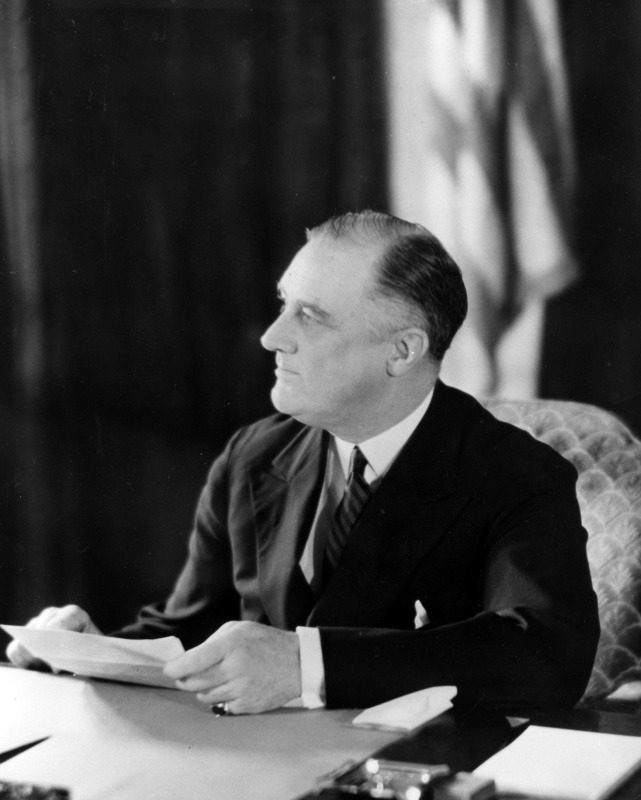
32. Franklin D. Roosevelt: The New Deal and a Nation at War
In office: 1933–1945
Party: Democratic
Achievements: New Deal relief and reform, Social Security and Allied wartime leadership
Main difficulties: Persistent Depression hardship, the court-expansion controversy and Japanese American incarceration
Roosevelt took office in March 1933 amid the Great Depression. Banks were failing, unemployment was widespread and confidence in established economic leadership had collapsed. His administration responded with experimentation: emergency banking measures, relief programmes, public employment and new regulation intended to prevent a repetition of the financial disaster.
A lasting change in expectations
The New Deal made federal responsibility for economic security more visible in everyday life. Roosevelt’s radio broadcasts helped explain policy directly to listeners, while public works and relief programmes gave government a practical presence in communities across the country. The recovery remained uneven, and full escape from Depression conditions came with wartime mobilisation rather than the New Deal alone. FDR Presidential Library: biography.
The Social Security Act of 1935 established a federal old-age benefits system and a framework for unemployment compensation and other assistance. It did not create a universal guarantee against poverty, but it laid foundations for a durable social-insurance system. The legislation changed what Americans could expect from their national government. National Archives: Social Security Act.
Roosevelt’s efforts to protect his programme also generated controversy. In 1937 he proposed expanding the Supreme Court after decisions invalidating New Deal measures. The plan failed amid concern that he was threatening judicial independence to secure favourable rulings. Its defeat demonstrated that even an exceptionally popular president faced institutional and political limits. Federal Judicial Center: court-packing proposal.
Wartime leadership and injustice
After Japan attacked Pearl Harbor in December 1941, Roosevelt led the United States into the Second World War and helped sustain the Allied coalition. He won election four times, serving longer than any other American president, but died in April 1945 before the war ended. FDR Presidential Library: wartime presidency.
His wartime record includes Executive Order 9066, signed in February 1942. It enabled military exclusion policies that led to the forced removal and incarceration of Japanese Americans, including U.S. citizens. Families lost liberty, homes and livelihoods without individual findings that they posed a threat. This was a profound violation of the freedoms the nation claimed to defend. National Archives: Executive Order 9066.
33. Harry S. Truman: Decisions at the Dawn of the Nuclear Age
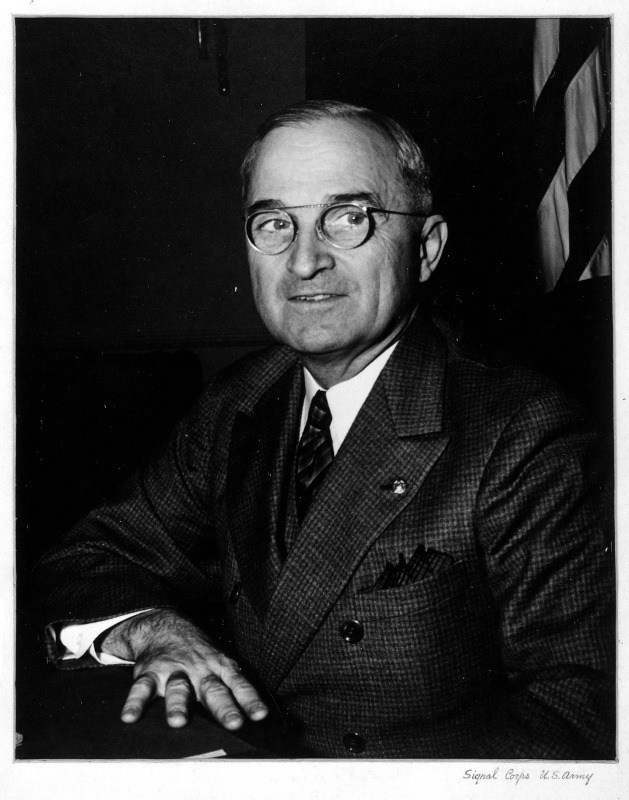
In office: 1945–1953
Party: Democratic
Achievements: The Marshall Plan and initiating armed-forces desegregation
Main difficulties: The atomic bombings, the Korean War and civil-liberties concerns over loyalty investigations
Truman became president on Roosevelt’s death, inheriting the final months of a global war and decisions with consequences far beyond the United States. His presidency then helped establish the institutions and commitments of the early Cold War.
The atomic bomb decision
Under Truman’s authority, the United States used atomic bombs against Hiroshima and Nagasaki in August 1945. The attacks caused immense civilian suffering and destruction. Truman defended their use as a means of ending the war and avoiding the casualties of an invasion of Japan.
Historians continue to debate the available alternatives, the expected invasion losses, Soviet entry into the war against Japan and the relative influence of these events on surrender. A responsible account should not present either the necessity or the avoidability of the bombings as a simple, uncontested fact. Truman Library: decision to use the bomb.
Reconstruction and containment
Truman signed the Marshall Plan legislation in 1948, supporting European economic recovery after wartime destruction. The programme combined humanitarian and economic purposes with the strategic aim of strengthening countries against communist influence. It was a major commitment to postwar international engagement. National Archives: Marshall Plan.
That engagement also brought war. After North Korea invaded South Korea in June 1950, Truman committed American forces to the United Nations effort. The conflict expanded, devastated the peninsula and settled into a prolonged stalemate. The armistice came only after he left office. Office of the Historian: Korean War.
Rights and security at home
In July 1948, Truman issued Executive Order 9981, establishing equal treatment and opportunity in the armed services regardless of race, colour, religion or national origin. It set military desegregation in motion, although implementation required further struggle and did not happen overnight. Truman Library: military desegregation.
His administration also created a federal employee loyalty programme in 1947. Intended to address security fears, it exposed workers to investigations and raised serious civil-liberties concerns. Truman’s record therefore includes both an important challenge to racial discrimination and policies that narrowed freedom under the pressure of the Cold War. Truman Library: loyalty programme.
34. Dwight D. Eisenhower: Stability, Infrastructure and Hidden Intervention
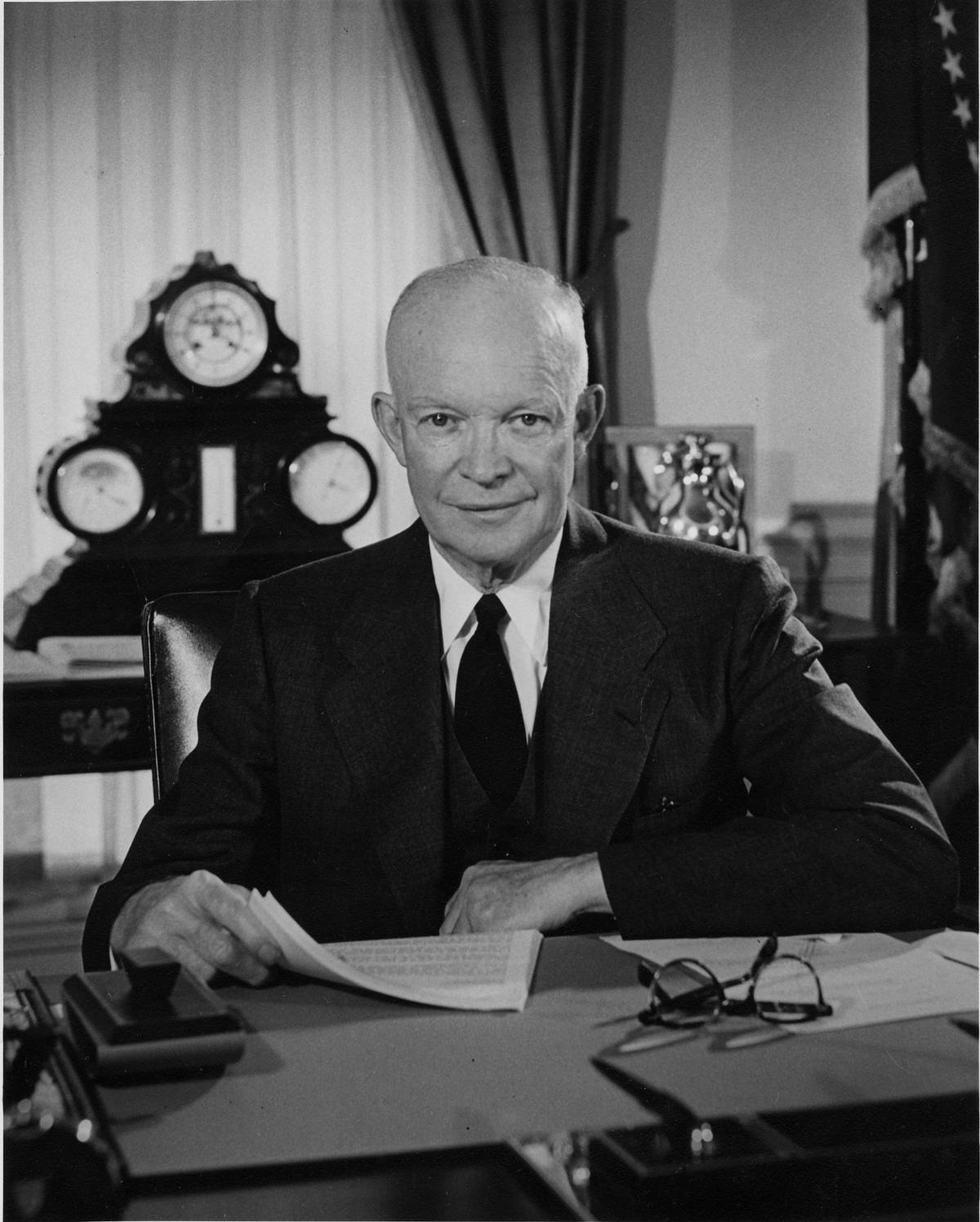
In office: 1953–1961
Party: Republican
Achievements: The Korean armistice, interstate highway expansion and enforcing integration at Little Rock
Main difficulties: Cold War tensions and covert intervention in Iran and Guatemala
The former Allied commander entered the White House with immense military prestige. His calm public manner suited voters seeking security after years of depression, global war and confrontation. An armistice ended organised combat in Korea in July 1953, although it did not reunify the peninsula or constitute a final peace settlement. Eisenhower Library: Korean War.
A country connected by highways
Eisenhower signed the Federal-Aid Highway Act of 1956, providing the framework and funding for a vast expansion of the interstate system. He saw modern highways as important to civilian transport and national defence. Their construction transformed movement between cities and became one of the most recognisable legacies of his presidency.
The project demonstrates that his preference for fiscal restraint did not mean rejecting every large federal undertaking. National infrastructure could command broad support even amid arguments about the proper limits of government. Eisenhower Library: interstate highways.
Enforcing desegregation
In 1957, Arkansas officials and hostile crowds obstructed school integration at Little Rock Central High School. Eisenhower federalised the Arkansas National Guard and sent Army troops to protect the nine Black students and enforce federal court orders. The intervention mattered because constitutional rulings were of little practical use if local resistance could prevent students from entering school. Eisenhower Library: Little Rock crisis.
The less visible Cold War
Abroad, his administration supported covert operations that helped overthrow governments in Iran in 1953 and Guatemala in 1954. Officials justified intervention through Cold War security concerns, but these operations undermined other nations’ political independence and helped empower authoritarian alternatives. They complicate any portrait of the Eisenhower years as simply peaceful or restrained. CIA institutional history: the agency and Congress.
In his 1961 farewell address, Eisenhower warned about the potential influence of the military-industrial complex. Coming from a career soldier who had governed a nuclear superpower, the warning captured an enduring tension: maintaining security without allowing the institutions built for defence to dominate public life. National Archives: farewell address.
35. John F. Kennedy: Ambition and the Edge of Nuclear War
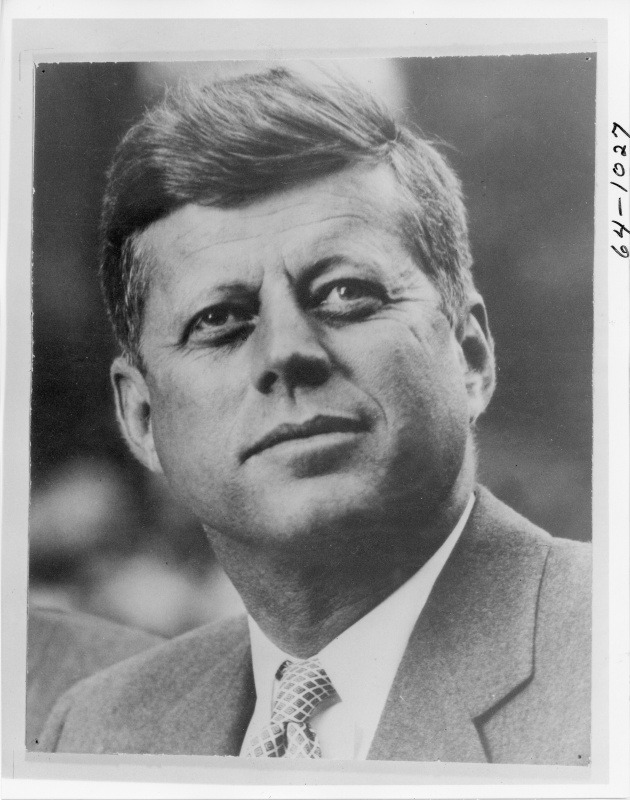
In office: 1961–1963
Party: Democratic
Achievements: Negotiating the Cuban Missile Crisis settlement, the lunar goal and advancing civil rights legislation
Main difficulties: The failed Bay of Pigs invasion, nuclear confrontation and an unfinished domestic programme
Kennedy projected youthful energy and a sense of national purpose. His presidency was brief, but its crises and ambitions left a strong impression on public memory. That image must be assessed against his decisions.
Failure and negotiation over Cuba
In April 1961, Kennedy approved the Bay of Pigs invasion by CIA-backed Cuban exiles, a project developed under Eisenhower. The effort to overthrow Fidel Castro failed, embarrassing the United States and reinforcing Cuban fears of further American intervention. Inheriting the plan did not remove Kennedy’s responsibility for authorising it. JFK Library: Bay of Pigs.
In October 1962, discovery of Soviet nuclear missiles in Cuba brought the superpowers dangerously close to war. Kennedy imposed a naval quarantine while negotiations continued. The eventual settlement involved Soviet removal of the missiles, an American non-invasion assurance and a private understanding concerning the removal of U.S. Jupiter missiles from Turkey.
The outcome was a major achievement in crisis management, but it was a negotiated compromise, not merely one leader forcing the other to surrender. The danger also exposed how easily miscalculation could produce catastrophe. Office of the Historian: Cuban Missile Crisis.
Promises at home and beyond Earth
Kennedy’s 1961 commitment to landing a person on the Moon and returning safely to Earth gave the space programme a clear national objective. Apollo 11 achieved that goal in 1969, years after his death, through the sustained work of many thousands of people and succeeding administrations. NASA: Apollo 11.
On civil rights, his June 1963 address presented segregation as a moral problem and called for major federal legislation. The movement’s demonstrations, organising and sacrifices had forced greater urgency on Washington. The resulting legislative struggle continued after Kennedy was assassinated in Dallas on 22 November 1963. Johnson, not Kennedy, signed the Civil Rights Act into law the following year. National Archives: Kennedy’s civil rights proposal.
Kennedy’s unfinished presidency invites speculation, but historical assessment is stronger when it distinguishes realised achievements from plans that remained incomplete.
36. Lyndon B. Johnson: The Great Society and the Burden of Vietnam
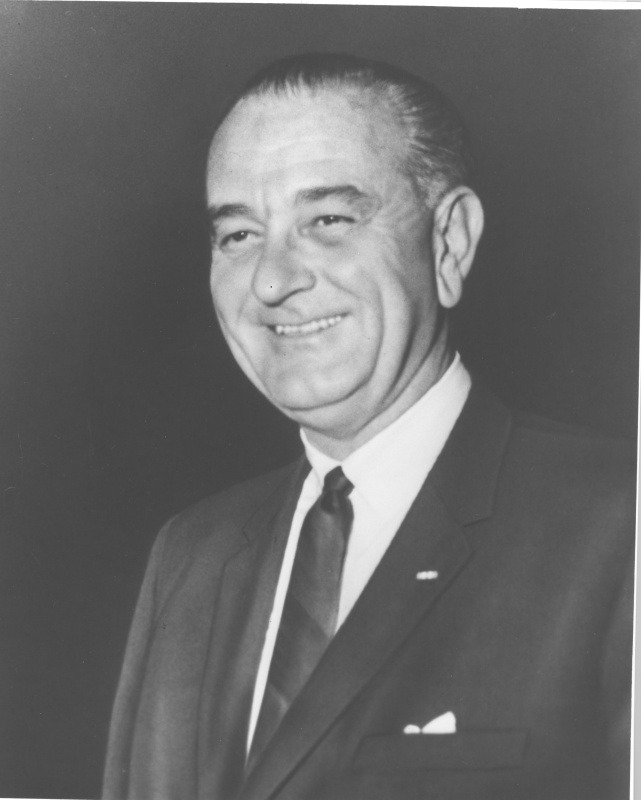
In office: 1963–1969
Party: Democratic
Achievements: Civil rights and voting rights legislation, Medicare and Medicaid
Main difficulties: Vietnam War escalation, mounting casualties and declining public trust
Johnson assumed office after Kennedy’s assassination and won a landslide election in 1964. His congressional experience and forceful negotiating style helped turn ambitious proposals into legislation. The scale of his domestic achievement sits alongside the damage caused by his decisions in Vietnam.
Civil rights and social provision
The Civil Rights Act of 1964 outlawed segregation in covered public accommodations and prohibited employment discrimination on specified grounds. The Voting Rights Act of 1965 provided powerful federal tools against discriminatory barriers to voting. Johnson’s leadership was important, but these laws also belonged to the civil rights movement and to the congressional coalitions that enacted them. National Archives: Civil Rights Act; Voting Rights Act.
In 1965, he signed legislation establishing Medicare and Medicaid. These programmes widened access to medical care for older Americans and eligible low-income groups through different federal and state arrangements. They became central parts of the social-policy legacy associated with his Great Society. Centers for Medicare & Medicaid Services: history.
Escalation and its consequences
Johnson also dramatically expanded the American war in Vietnam. The 1964 Gulf of Tonkin Resolution supplied broad congressional authority after reported naval incidents. A later National Security Agency investigation concluded that the reported second attack, on 4 August 1964, had not occurred. In 1965, sustained bombing and the deployment of U.S. ground combat forces transformed the scale of American involvement. Office of the Historian: Tonkin and escalation; National Archives: Tonkin Gulf Resolution.
The war brought enormous destruction and loss of life in Vietnam, mounting American casualties and widening distrust at home. Official claims of progress increasingly conflicted with the public’s experience of an apparently open-ended conflict. Military force did not produce the political outcome Johnson sought.
In March 1968, Johnson announced that he would not seek or accept his party’s nomination for another term. His domestic laws continued to change lives, while Vietnam overshadowed his remaining time in office. Neither side of that record can reasonably erase the other. Johnson’s 31 March 1968 address.
The Power to Change Lives
These presidents helped redefine the relationship between citizens and the federal government, while decisions made in Washington reached across the world. Their portraits can make an era feel personal. The wider history asks us to look further: at those who gained security and opportunity, those who demanded rights, and those who suffered when presidential judgement failed.
Discover more lives from the past in our history articles.
If you want your photos bringing back to life, send me a message on any of my social media accounts. Follow me across social media for historical photo restorations, AI colorizations, and videos bringing the past to life!
Instagram: https://www.instagram.com/bringing_history_to_life/
Facebook: https://www.facebook.com/bringinghistory2life | TikTok: https://www.tiktok.com/@bringing_history_to_life | YouTube: https://www.youtube.com/@bringing_history_to_life