From Bill Clinton to Joe Biden: American Presidents in a Changing World
American Presidents, Part 9
From the optimism of the post-Cold War years to terrorism, financial crisis and a global pandemic, the modern American presidency has been shaped by events that crossed national borders. The internet transformed political communication, economic change brought opportunities and insecurity, and arguments over presidential power became increasingly bitter.
This final instalment follows five individuals in the order they first entered the White House: Bill Clinton, George W. Bush, Barack Obama, Donald Trump and Joe Biden. Trump appears once, covering his nonconsecutive service as the 45th and 47th president. Biden, the 46th, therefore appears after him in this sequence.
Terms and current-office status were checked on 3 November 2026. Trump’s second presidency remains ongoing; the discussion below identifies its beginning without attempting a final assessment of an unfinished administration. U.S. House presidential chronology; USAGov: current president.
Clinton to Biden at a glance
- 42. Bill Clinton, 20 January 1993–20 January 2001: Democratic Party.
- 43. George W. Bush, 20 January 2001–20 January 2009: Republican Party.
- 44. Barack Obama, 20 January 2009–20 January 2017: Democratic Party.
- 45 & 47. Donald Trump, 20 January 2017–20 January 2021; 20 January 2025–present (checked 3 November 2026): Republican Party.
- 46. Joe Biden, 20 January 2021–20 January 2025: Democratic Party.
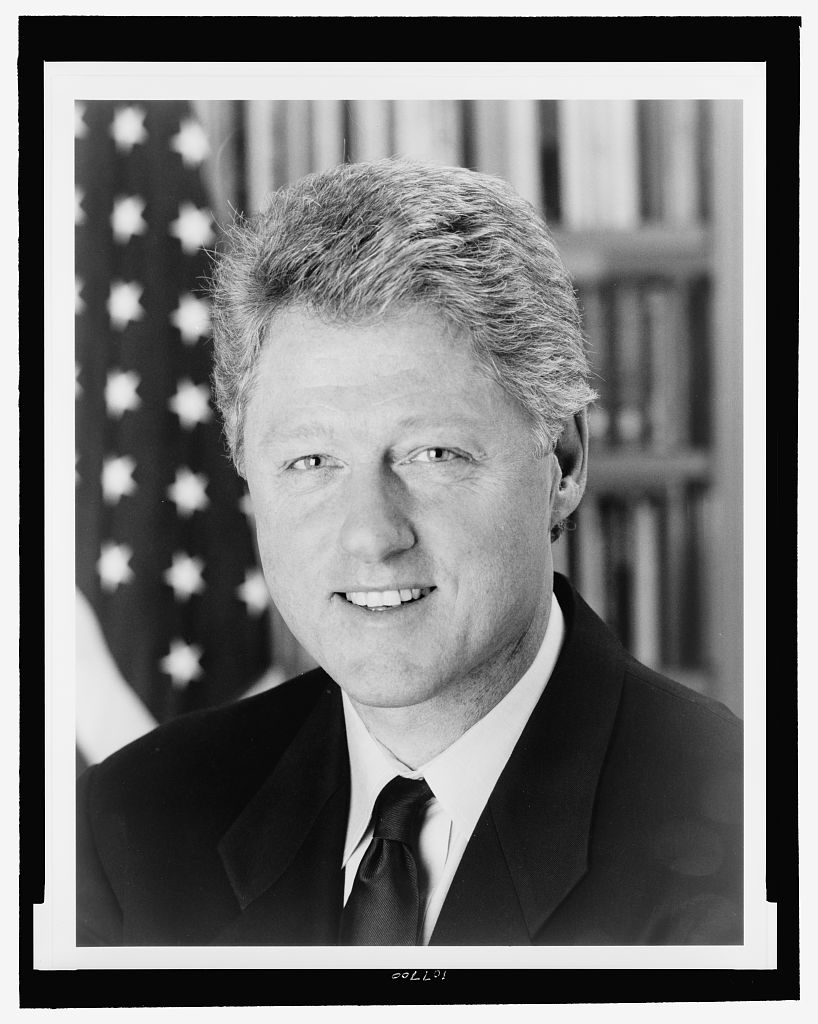
42. Bill Clinton: Prosperity, Compromise and Impeachment
In office: 20 January 1993–20 January 2001
Party: Democratic Party
Achievements: Family and Medical Leave Act, budget surpluses and the Dayton peace settlement
Main difficulties: Failed health-care reform, Rwanda and impeachment
Bill Clinton came to office presenting himself as a different kind of Democrat, combining support for social investment with an emphasis on fiscal discipline and personal responsibility. His presidency coincided with a long economic expansion, falling unemployment and the emergence of the internet as an important commercial force.
A changing domestic agenda
Clinton’s 1993 budget legislation raised taxes and restrained spending. Later, economic growth and agreements with a Republican Congress helped produce federal budget surpluses. Those results were not the work of one person alone: Congress, monetary policy, businesses and wider economic conditions all mattered.
His administration failed to secure comprehensive health-care reform, but other measures endured. The Family and Medical Leave Act provided qualifying workers with unpaid, job-protected leave. Clinton also signed welfare reform in 1996, replacing the previous federal assistance programme with a system centred on state grants and work requirements. Supporters welcomed the change; critics questioned its consequences for vulnerable families. Miller Center: Clinton’s domestic record; Clinton timeline.
Leadership after the Cold War
Clinton supported the North American Free Trade Agreement, advancing an approach to international commerce that attracted bipartisan support and opposition. Overseas, American diplomacy helped bring about the Dayton peace settlement in Bosnia, while NATO intervened in Kosovo in 1999. These interventions raised difficult questions about sovereignty, military force and humanitarian responsibility.
The record also includes grave failures. The United States did not act decisively to stop the 1994 genocide in Rwanda. The Somalia mission, inherited from George H. W. Bush, ended in withdrawal after American casualties and a loss of public support. Miller Center: Clinton’s foreign policy.
At home, the Monica Lewinsky scandal led to impeachment by the House in 1998 on charges of perjury and obstruction of justice. The Senate acquitted Clinton in 1999, and he completed his term. Economic success and constitutional crisis thus became inseparable parts of his presidential story. Senate impeachment records.
43. George W. Bush: September 11 and the Burdens of War
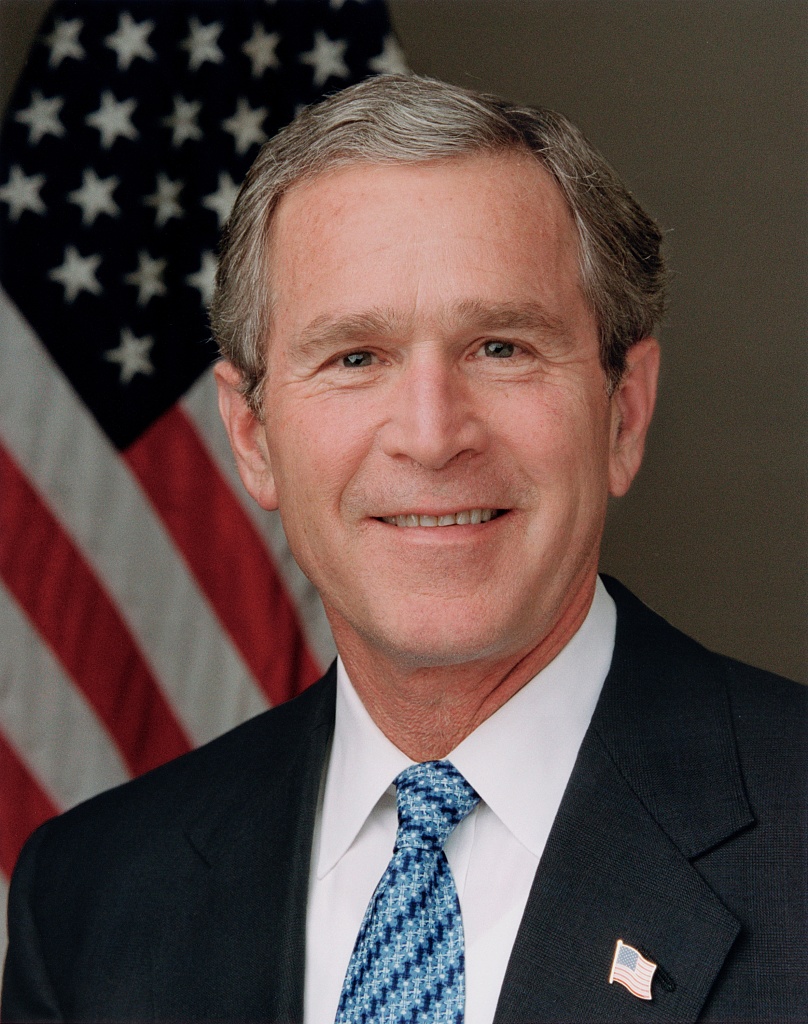
In office: 20 January 2001–20 January 2009
Party: Republican Party
Achievements: PEPFAR, education legislation and a Medicare prescription-drug benefit
Main difficulties: The Iraq War, detention and surveillance controversies, Katrina and the financial crisis
George W. Bush entered office after the disputed 2000 election, but the terrorist attacks of 11 September 2001 transformed his presidency. The destruction in New York and Washington, and the crash of United Flight 93 in Pennsylvania, brought national mourning and demands for security.
War and executive power
The United States invaded Afghanistan in 2001 to target al-Qaeda and the Taliban government sheltering it. In 2003, Bush launched the invasion of Iraq. Saddam Hussein was overthrown, but the anticipated stockpiles of weapons of mass destruction were not found, undermining a central justification for war.
Insurgency, sectarian violence and mounting casualties exposed the difficulties of occupation and reconstruction. Detention, interrogation and surveillance policies also provoked serious disputes about human rights and constitutional limits. The question of how far a president could go in the name of national security would outlast Bush’s time in office. Miller Center: Bush’s foreign policy.
Domestic reforms and humanitarian work
Bush’s domestic programme included major tax cuts, the No Child Left Behind education law and a Medicare prescription-drug benefit. Education reform sought accountability through testing, while attracting criticism about its demands on schools. His administration’s response to Hurricane Katrina in 2005 became a major failure of public confidence.
The financial crisis of 2008 then required extraordinary intervention to support the banking system. A president associated with market-oriented policies ended his term confronting the danger of systemic economic collapse. Miller Center: Bush’s domestic record.
One significant part of his legacy lies outside those defining crises. Announced in 2003, the President’s Emergency Plan for AIDS Relief, or PEPFAR, mobilised American resources against HIV/AIDS overseas. Its emphasis on treatment and prevention made global health a major presidential initiative, backed by cooperation across party lines. Remembering that work alongside the wars gives a fuller picture of an administration whose consequences extended far beyond the United States. State Department: PEPFAR’s origins.
44. Barack Obama: Recovery, Reform and Unfinished Promises
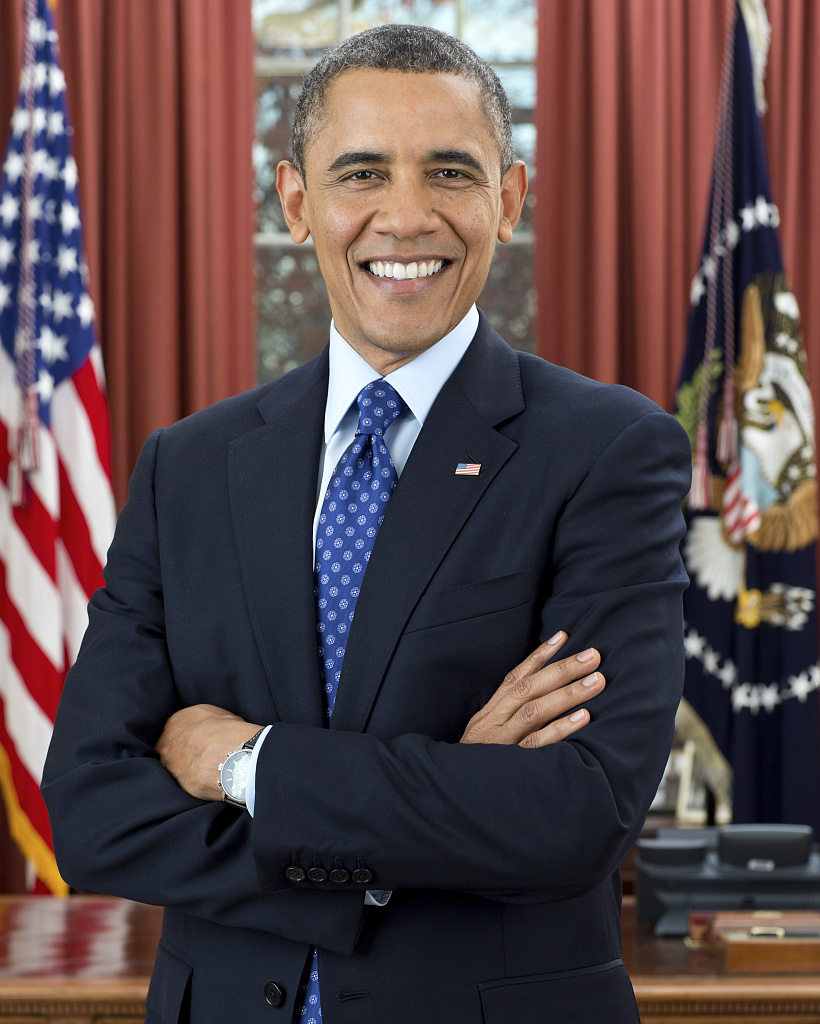
In office: 20 January 2009–20 January 2017
Party: Democratic Party
Achievements: The Affordable Care Act, financial reform and international agreements
Main difficulties: Uneven recovery, congressional opposition and continuing overseas conflicts
Barack Obama’s election as the first African American president was a landmark in the nation’s history. His message of change arrived, however, at a moment of severe economic danger. The financial crisis had become a deep recession, and the new administration faced urgent choices about employment, credit and industrial survival.
Rebuilding and expanding coverage
Obama signed an economic stimulus package, continued emergency support for the automobile industry and backed the Dodd-Frank financial reforms. Recovery followed, although its pace and distribution disappointed many Americans.
The Affordable Care Act of 2010 became his signature domestic legislation. It expanded insurance coverage and introduced protections for people with pre-existing conditions, while generating fierce disputes over costs, mandates and the federal government’s role. The troubled launch of the insurance website illustrated the gap that could separate legislative ambition from practical delivery.
Republican gains in Congress narrowed the space for further major legislation. Obama increasingly used executive action, including protections from deportation for certain people brought to the country as children. Supporters saw necessary action; opponents challenged the scope of presidential authority. Miller Center: Obama’s domestic record.
Diplomacy alongside continuing conflict
Obama authorised the 2011 operation that killed Osama bin Laden. His administration also helped negotiate the Iran nuclear agreement, pursued a diplomatic opening with Cuba and participated in the Paris climate agreement. These initiatives reflected confidence in negotiation and international cooperation.
Yet ending inherited conflicts proved difficult. He increased forces in Afghanistan before drawing them down. American troops left Iraq in 2011, but the rise of Islamic State brought renewed military involvement. Drone warfare and civilian casualties prompted ethical and legal criticism, while intervention in Libya was followed by prolonged instability.
Obama’s legacy consequently combines historic representation and substantial domestic reform with limits on the change he could deliver. His presidency also demonstrates how easily diplomatic agreements and executive policies can become vulnerable when a successor takes a different course. Miller Center: Obama’s foreign policy.
45 & 47. Donald Trump: Disruption and a Nonconsecutive Return
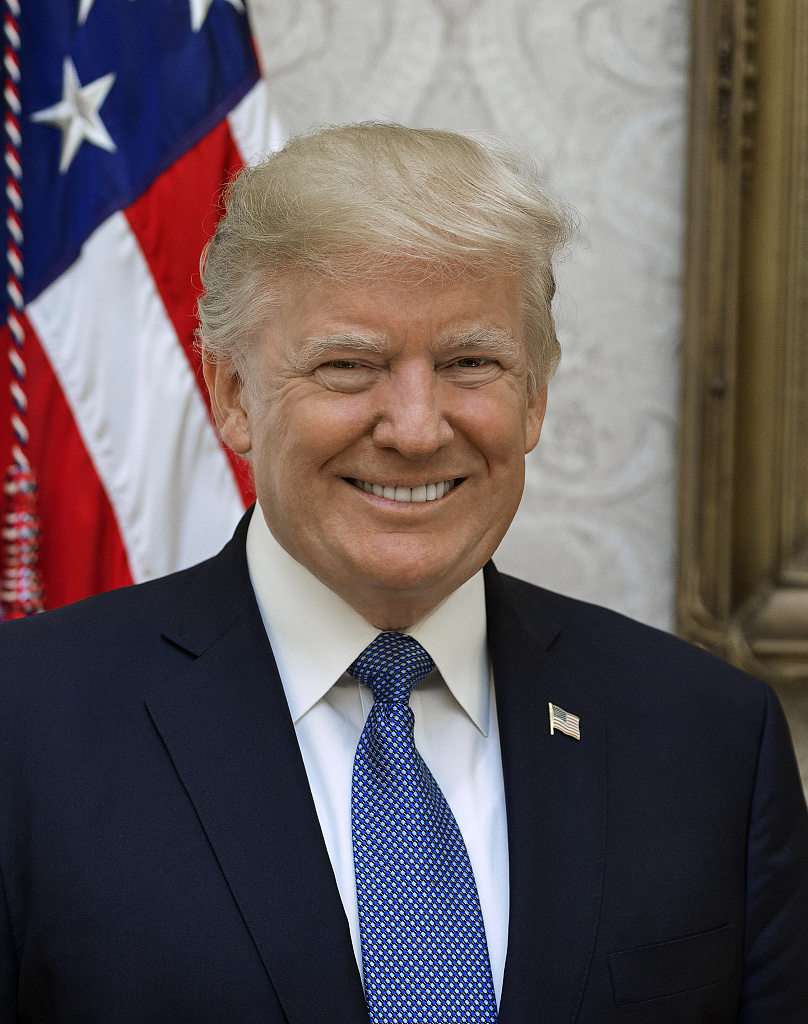
In office: 20 January 2017–20 January 2021; 20 January 2025–present (checked 3 November 2026)
Party: Republican Party
Achievements: First term: tax legislation, USMCA, the Abraham Accords and support for vaccine development
Main difficulties: First term: family separation, COVID-19 management, two impeachments and the 2020 election aftermath; second term ongoing
Donald Trump brought a confrontational political style to the White House, challenging established approaches to immigration, trade and international institutions. His first administration combined familiar Republican priorities with a nationalist message that altered the party’s direction.
The first presidency
The 2017 Tax Cuts and Jobs Act reduced corporate and individual taxes. Deregulation became another central priority, while attempts to repeal and replace the Affordable Care Act failed. Restrictive immigration policies, including family separation at the southern border, provoked widespread opposition.
The COVID-19 pandemic dominated his final year. Operation Warp Speed supported rapid vaccine development, but the administration’s public messaging and management of the crisis drew substantial criticism. Miller Center: Trump’s first-term domestic record.
Abroad, Trump renegotiated North American trade arrangements through the USMCA, supported the Abraham Accords between Israel and Arab partners, and imposed tariffs on Chinese goods. He also withdrew from the Iran nuclear agreement and moved away from several multilateral commitments. Supporters welcomed pressure on trading partners; critics warned of economic costs and weakened alliances. Miller Center: Trump’s first-term foreign policy.
The House impeached Trump in 2019 over his dealings with Ukraine and again in January 2021 following the attack on the Capitol. The second charge was incitement of insurrection. The Senate acquitted him in both trials. His refusal to accept the 2020 election result and the events of 6 January remain central to understanding the end of his first term. Library of Congress: Trump impeachment records; Senate trial outcomes.
A second, unfinished administration
Trump returned to office on 20 January 2025. Among his opening actions, he signed an order directing stricter border enforcement and declared a national emergency at the southern border. These documents establish decisions taken, rather than proving their eventual effectiveness. His second presidency requires continuing assessment, not a retrospective verdict written before its conclusion. Border executive order; Emergency declaration.
46. Joe Biden: Investment, Recovery and Political Strain
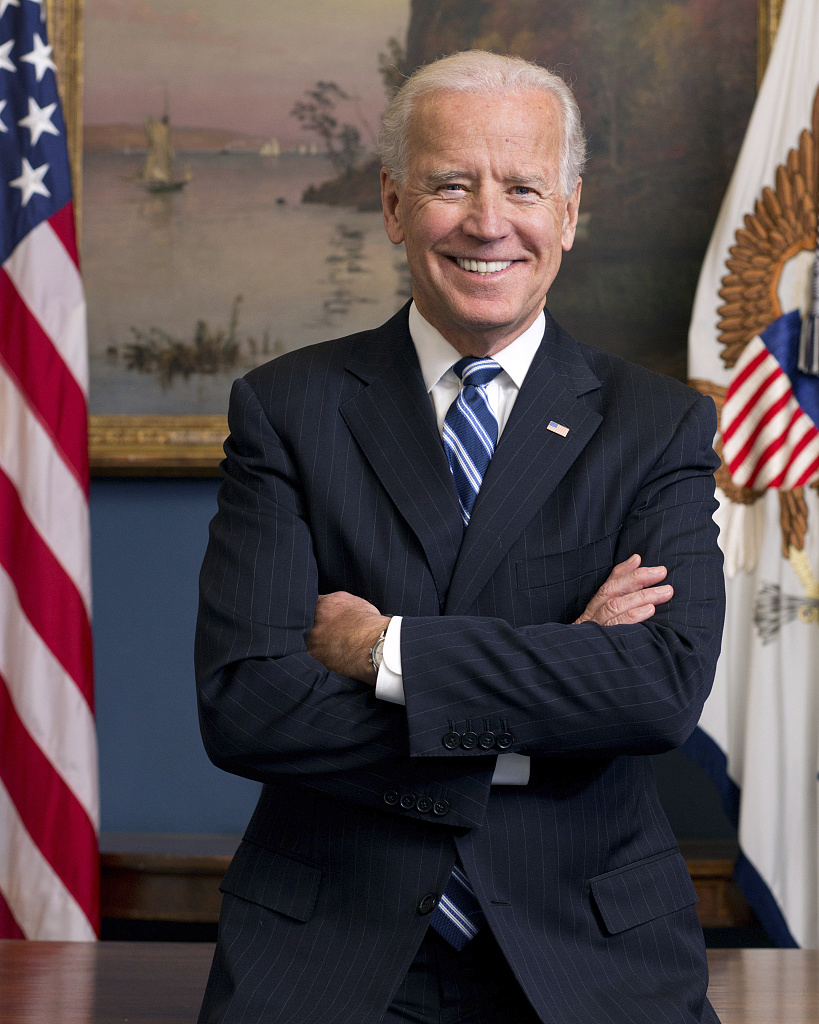
In office: 20 January 2021–20 January 2025
Party: Democratic Party
Achievements: Infrastructure, semiconductor and climate-investment legislation
Main difficulties: Inflation, border management, the Afghanistan withdrawal and the Gaza war
Joe Biden arrived with decades of Senate experience and eight years as Obama’s vice president. He inherited a pandemic, economic disruption and the political shock of the Capitol attack. Restoring stability was a central promise of his presidency.
Legislation and the cost of living
The American Rescue Plan provided pandemic-era economic support. Biden also secured major legislation on infrastructure, semiconductor manufacturing and climate-related investment. These measures placed renewed emphasis on federal investment in the country’s productive capacity.
Employment recovered, but high inflation placed pressure on household budgets and damaged public confidence. The contrast between favourable employment figures and the everyday experience of expensive food, housing and other necessities became a persistent political problem. Immigration and border management produced further controversy.
Biden’s age and capacity to campaign became increasingly prominent concerns. He withdrew from the 2024 presidential race in July, while remaining president until the end of his term. Miller Center: Biden’s domestic record; American Presidency Project: 2024 campaign chronology.
Alliances and the costs of conflict
Biden supported Ukraine after Russia’s full-scale invasion in 2022 and worked with NATO allies. His approach emphasised international partnerships, but foreign policy also produced some of his most difficult moments.
The 2021 withdrawal from Afghanistan ended America’s long military involvement there, but the evacuation was chaotic and the Taliban returned to power. The Kabul airport bombing killed American service members and Afghan civilians. The administration faced searching criticism over its planning and assessments.
After the Hamas-led attacks on Israel in October 2023, Biden supported Israel while also confronting demands to restrain the devastation in Gaza and expand humanitarian assistance. His handling of the war generated strong opposition, including within his own party.
His legacy includes substantial legislation alongside deep dissatisfaction over prices, migration and foreign conflicts. As with the other presidents in this instalment, assessing the record requires considering both stated intentions and the consequences experienced by people at home and abroad. Miller Center: Biden’s foreign policy.
Reading the Modern Presidency Through History
These five presidents governed a country with extraordinary resources but no immunity from crisis. Their records show that prosperity, reform and diplomatic achievement can coexist with exclusion, misjudgement and institutional conflict. Portraits preserve recognisable faces; history asks us to look beyond the image and examine decisions, evidence and consequences.
Explore more stories in our history articles.
If you want your photos bringing back to life, send me a message on any of my social media accounts. Follow me across social media for historical photo restorations, AI colorizations, and videos bringing the past to life!
Instagram: https://www.instagram.com/bringing_history_to_life/
Facebook: https://www.facebook.com/bringinghistory2life | TikTok: https://www.tiktok.com/@bringing_history_to_life | YouTube: https://www.youtube.com/@bringing_history_to_life